Harpsichords and Harlequins: Commedia dell’arte and the Migration of the Dulcken Family (1764)
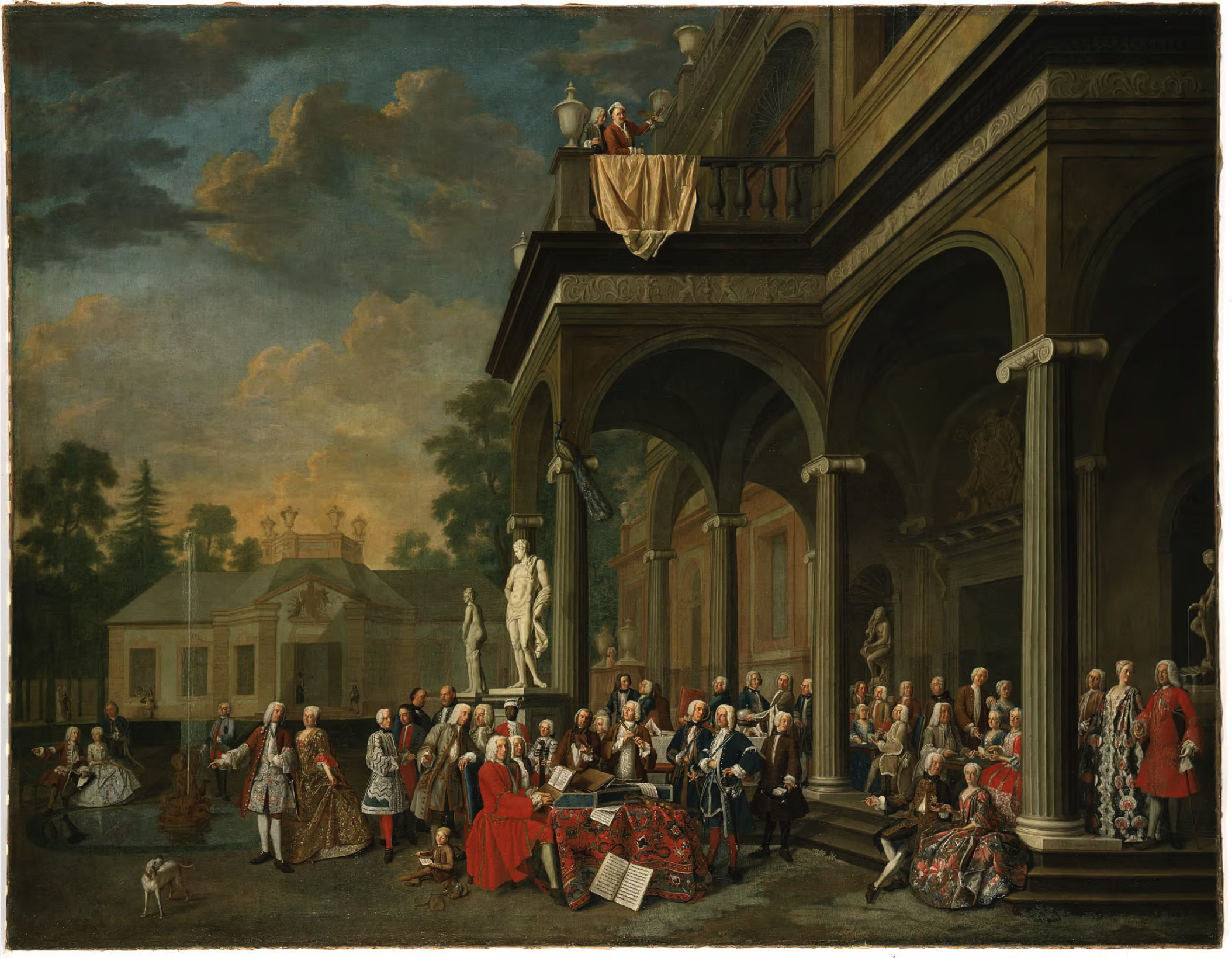
Peter Jakob Horemans 1733 – COURT CONCERT AT ISMANING PALACE (PAINTING)
Bavarian National Museum
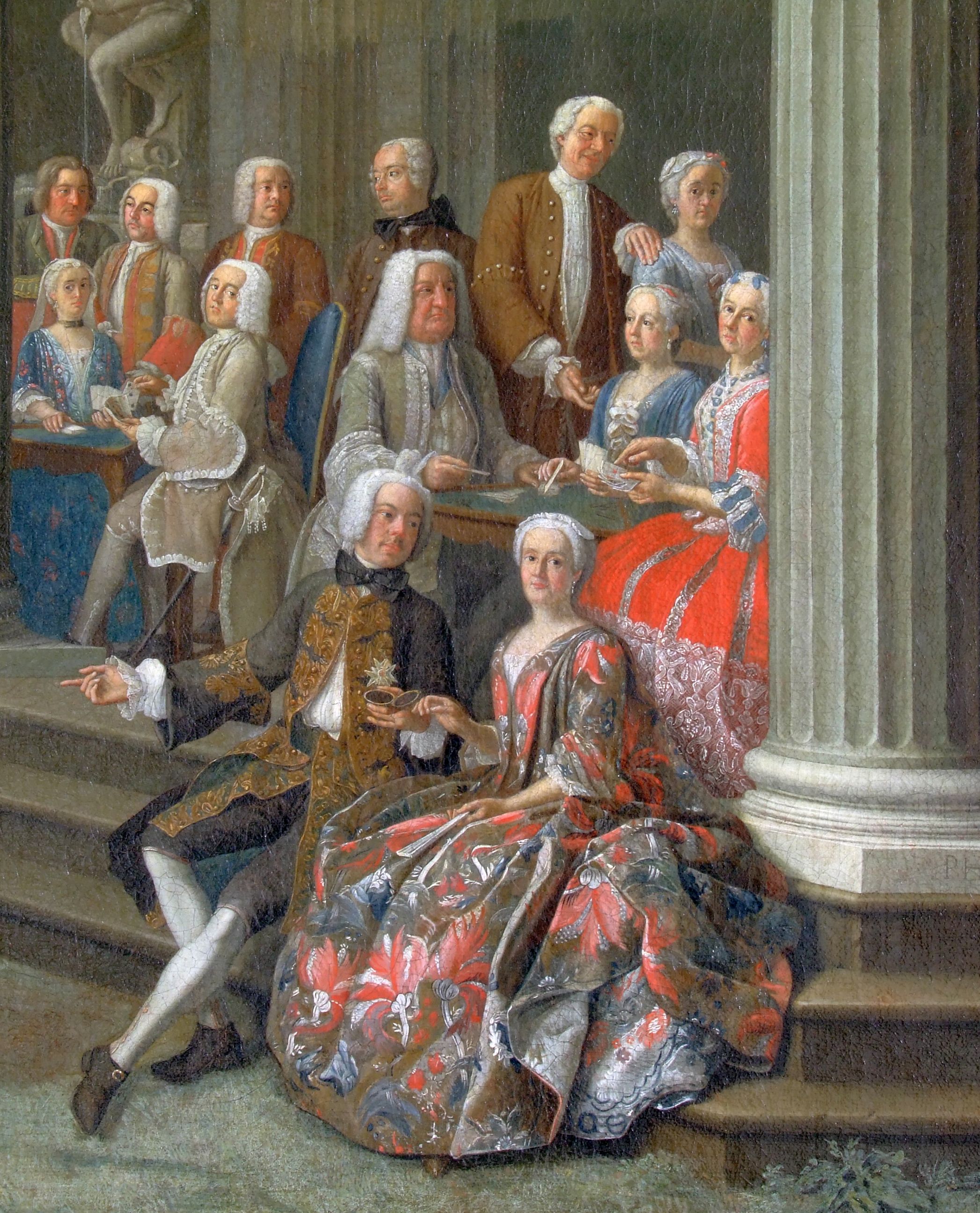
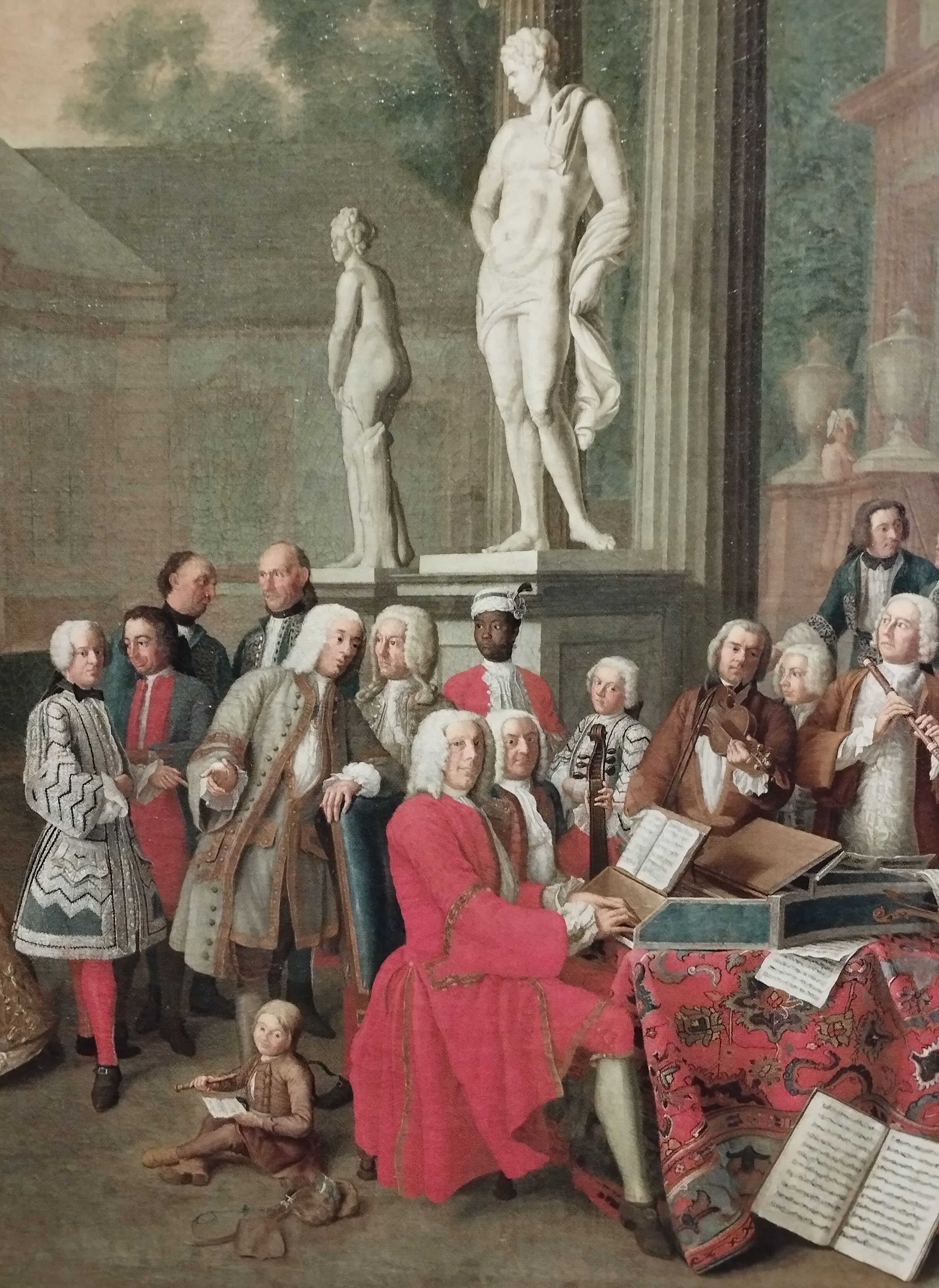
The court society has gathered in front of the summer palace of the Prince-Bishops of Freising in Ismaning. Whilst the table is being laid and the guests are playing cards at one of the gaming tables, a group has gathered in the foreground around a harpsichordist with his instrument. The host, Prince-Bishop Johann Theodor, leans casually against the back of the musician’s chair. The younger brother of the reigning Bavarian Elector can be identified by his features and the diamond-studded pectoral cross. The painter of the picture has depicted himself. He looks down from the first floor of the palace, leaning over the balustrade. Peter Jacob Horemans, a native of Antwerp, conveys a vivid picture of life at the Bavarian electoral court in his numerous portraits and genre scenes.
From Antwerp to Bavaria: The Surprising Bond Between the Dulcken and Horemans Families
In eighteenth-century Europe, painters and musical instrument makers frequently belonged to the same close-knit networks. A wonderful example of this is the double connection between two famous families from the Southern Netherlands: the Horemans family of painters and the Dulcken family of harpsichord and piano makers. Their paths crossed during a pivotal family moment in Antwerp and found an unexpected sequel years later at the electoral court in Munich.
Antwerp, 1764: An Emotional Farewell on Canvas
In the mid-eighteenth century, Antwerp was a thriving center for both painting and the construction of high-quality keyboard instruments. It was in this city that the renowned harpsichord maker Johannes Daniel Dulcken (1706–1757) and his wife Susanna Maria Knopff had made their name. Following Johannes Daniel’s death in 1757, his widow Susanna remained in Antwerp for a few more years, until a new chapter began in 1764: the departure of part of the family from Antwerp to Brussels.
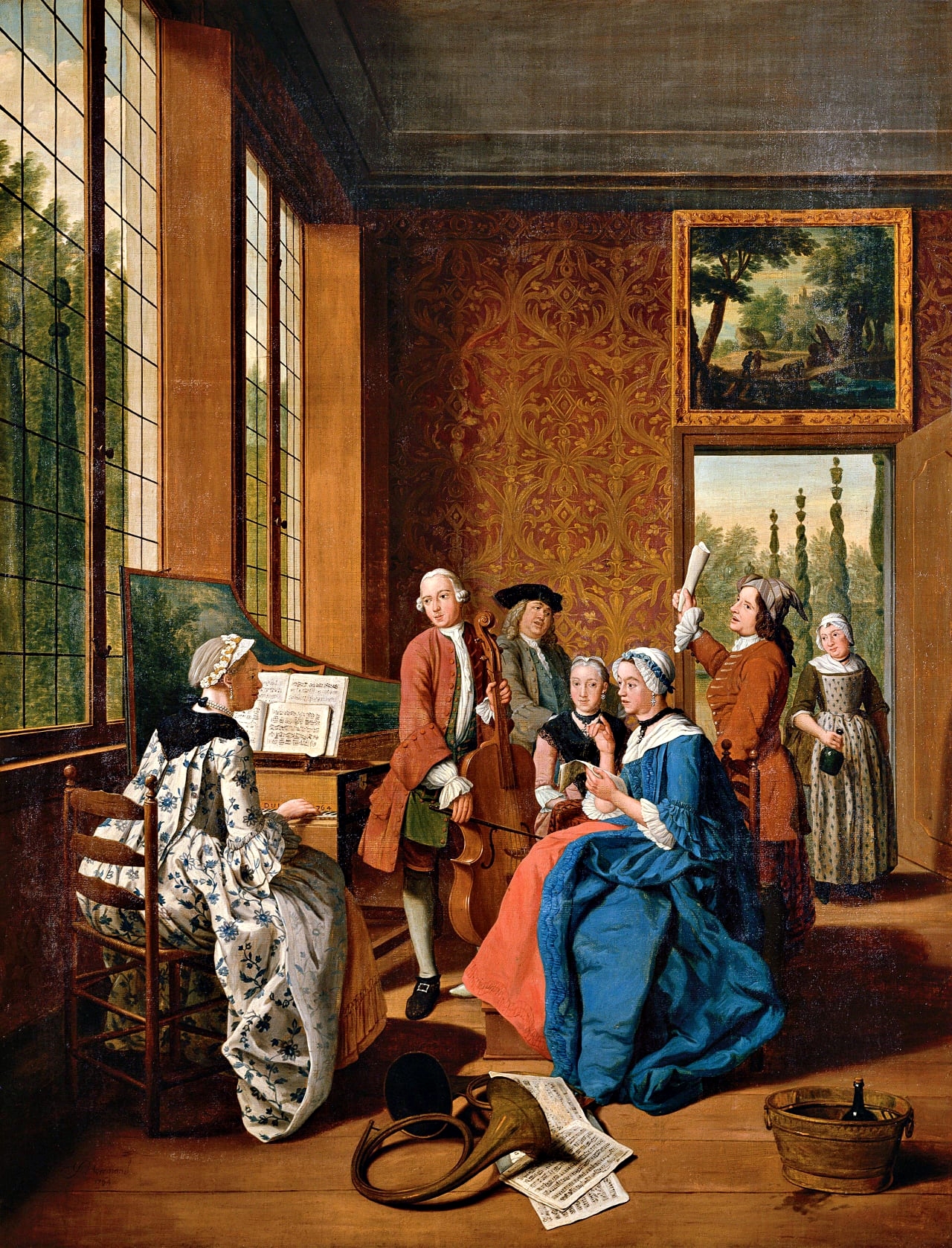
This specific moment of departure in 1764 was immortalized by the Antwerp painter Jan Josef Horemans (the Younger, 1714–1792). In this remarkable genre and family portrait, Horemans captured the farewell and departure of grandmother Susanna, together with her daughter, her son-in-law, and Louis’s uncle Johannes Dulcken, bound for Brussels. At that time, little Johann Ludwig (Louis) Dulcken (born in 1761) was still a toddler of about three years old.
After a few years, however, the Brussels adventure came to an end. When things went wrong there between 1765 and 1769, grandmother Susanna decided to leave the city and settle in Hasselt (Overijssel), where the family built a new life.
From the Low Countries to the Bavarian Court
Yet young Louis Dulcken’s future did not lie in the Northern Netherlands, but in southern Germany. Around 1779, he moved to Munich, then one of Europe’s foremost cultural hubs under Elector Karl Theodor. Within a few years, he rose to become court fortepiano maker (Mechanischer Hofklaviermacher).
Remarkably, the trail of the Horemans family had led to that very same court city decades earlier. Peter Jakob Horemans (1700–1776)—great-uncle of Jan Josef Horemans the Younger—had moved to Munich as early as 1727, building a distinguished career as electoral court painter, famed for his portraits and musical conversation pieces. Across generations and borders, both Antwerp artistic dynasties became intertwined with the same Bavarian court circle.
A Musical Wedding Gift in Munich (1799–1800)
The close bond between these artistic and musical families reached a wonderful musical culmination in Munich around the turn of the century. When Johann Ludwig (Louis) Dulcken married the celebrated pianist and composer Sophie Lebrun in April 1799, her uncle—the composer and conductor Franz Danzi—wrote his Piano Concerto in E-flat major, Op. 4 specifically for the occasion.
It is no coincidence that the work bears the personal dedication “à Madame Dülcken née Le Brun.” In 1800, the concerto had its premiere in Munich, most likely with Sophie herself at the fortepiano, accompanied by members of the renowned Münchener Hofkapelle. Thus, the journey once captured on an Antwerp canvas by Horemans reached a brilliant artistic climax: a marriage between two great musical dynasties, sealed with a new masterpiece performed on a Dulcken instrument.