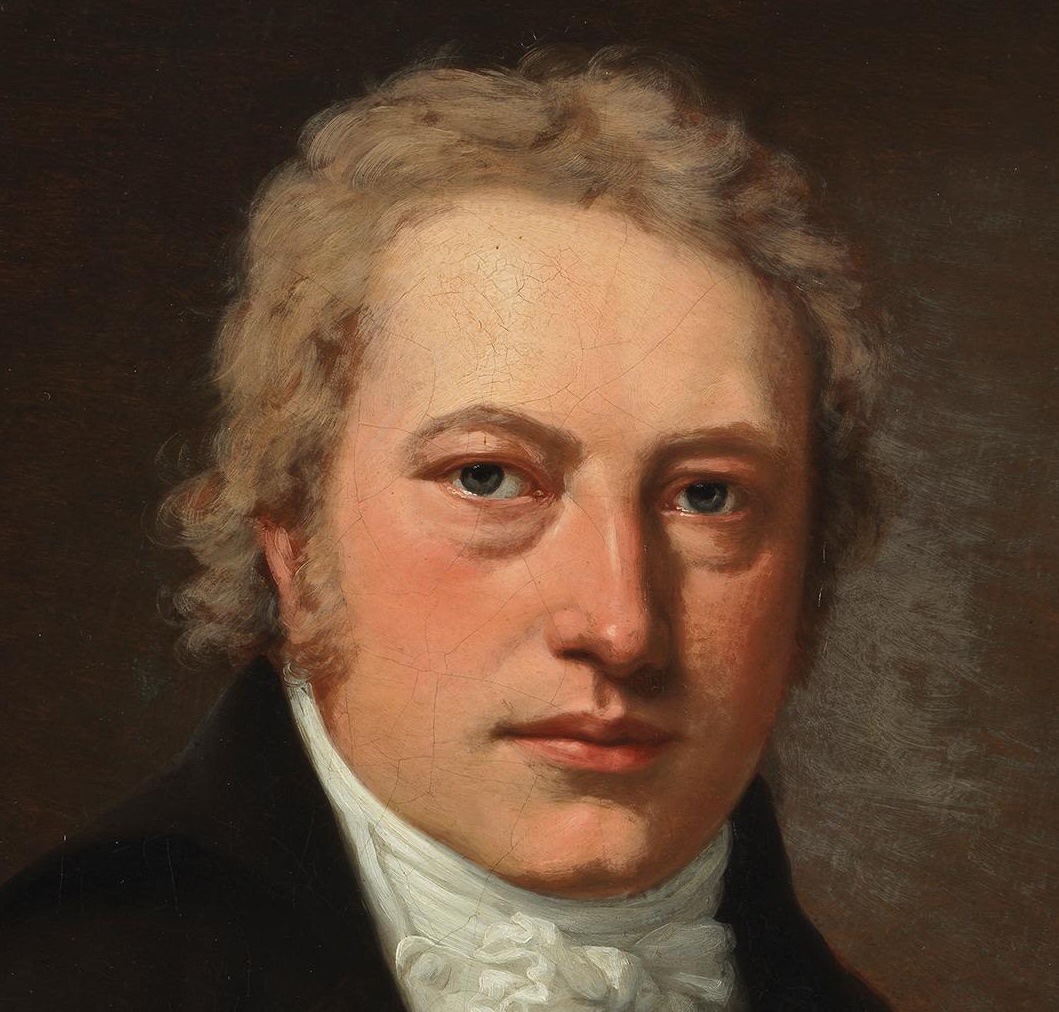
 Foundation Musick's Monument
The Musick's Monument Foundation has launched the “Dulcken, three generations of harpsichord and fortepiano builders” project.
When you say Dulcken, you say Antwerp. A famous figure, but one with a very brief biography to date.
J. Lambrechts-Douillez, The History of Harpsichord Making in Antwerpen in the 18th Century, in Friedemann Hellwig (ed.), Studio Organ logica: Festschrift für John Henry van der Meer zu seinem fünfundsechzigsten Geburtstag.
A.J. Gierveld, Het Nederlandse huisorgel in de 17e en 18e eeuw. Ver. voor Ned. Muziekgeschiedenis, 1977
A.H. Vlagsma 'Friese orgels tussen 1500 en 1750' Fryske Akademy - Ljouwert 2003
Dr. J.B. de Buy: De geschiedenis van den Brabandschen Olijfberg, Brussel 1960
When “Dulcken” is one of your direct ancestors, you want to tap into all sources to create an honest picture of his life. Going back to the sources means checking what others have already found, sifting through meaningful archives2* and endlessly searching for clues on untrodden paths. The result is surprising new facts about his origins, family and work. Progenitor of master instrument makers.
Hans Meijer's genealogical research into his ancestors revealed Jan Dulken, born in Hasselt. Jan Dulken's parents were J.L. Dulcken and Catrina Kooningh.

Dr. Burney's Musical Tours in Europe, Volume II. An Eighteenth-Century Musical Tour in Central Europe and the Netherlands
The harpsichord-maker of the greatest eminence was J. Dan. Dulcken; he was a Hessian. At present there is a good workman at Antwerp, of the name of Bull, who was Dulcken's apprentice, and who sells his double harpsichords for a hundred ducats each, with only plain painted cases, and without swell or pedals; the work too of Van den Elsche, a Flamand, has a considerable share of merit; but, in general, the present harpsichords, made here after the Ruckers model, are thin, feeble in tone, and much inferior to those of our best makers in England.

Johannes Daniel Dülcken
(Wingeshausen 21 april 1706 – † Antwerpen 11 april 1757 - begraven Putte)
ENGLISH VERSION
&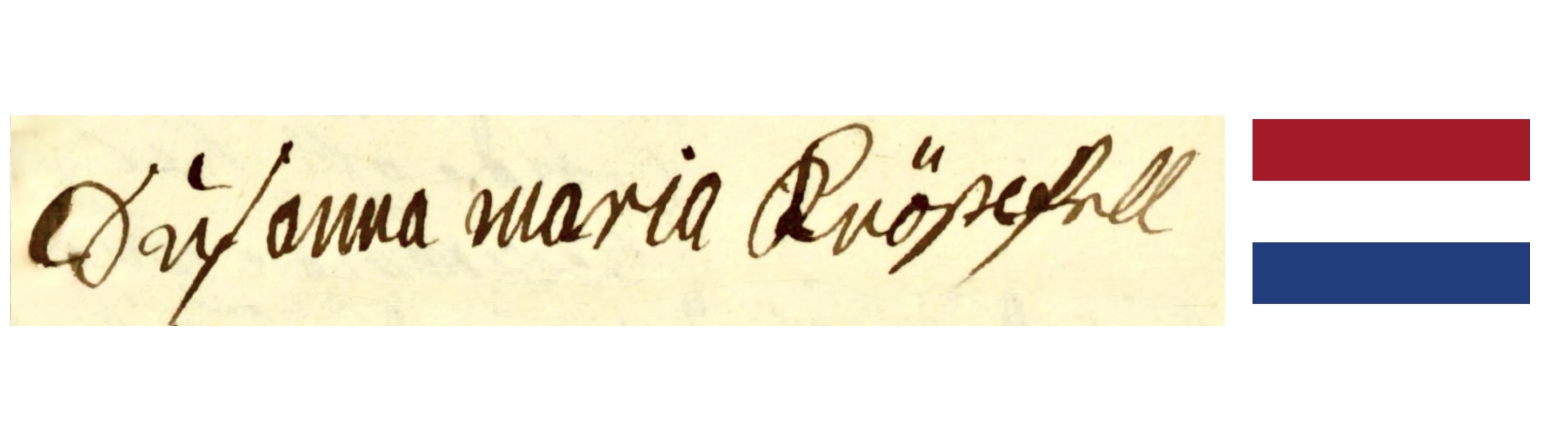
Susanna Maria Knöpffel (Knoepfell, Knöpffel, Knoeffel, Knifflein, Knopfell, Kneffeling)
(Sankt Goar 11 september 1706- † Heerde 12 juni 1789)
🇬🇧 The Life of Susanne Maria Knöpffel
🇩🇪 Das Leben von Susanne Maria Knöpffel
🇳🇱 Het leven van Susanne Maria Knöpffel
1.
Doop van Susanna Maria Knöpffel, dochter van Johann Conrad Knöpffel, Proviant-Commissair en Stift-Kellner in St. Goar, op 11 september 1706
(Archiv der Evangelischen Kirche im Rheinland, Boppard, KB 149/1 (St. Goar ref.), p. 149.)

Taufeintrag Susanna Maria Knöpfel - transcriptie Dr. Johannes Burkardt
Compleet
Den 11 t[en] [Novem]bris wurde Don[n]erstag Nachmittags zwisch[en] 12 u[nd] 1 Uhren
nach gehaltener
Beth=Stunde in öffentl[icher] Versam[m]lung getaufft Susanna Maria,
H[errn] Johann Conrad Knöpffels, Proviant-Com[m]issarii u[nd] Stiffts=
Kellners allhier Töchterlein. Gevattern waren Herr Oswald
Wollff, Nachgänger am hiesigen Hoch=Fürstl[ichen] Gesam[m]t-Rhein=
Zoll, u[nd] Fr[au] Maria Barbara, H[errn] Samuel Kellers, Stadt=
Lieutenants allhier ehel[iche] Hauß-Frau, wie auch H[errn] Pfarrers Geissel
Fr[au] Eheliebste von Wollroda
des H[errn] Vatters Schwester.*
* Die letzten 12 Wörter mit blasserer Tinte später nachgetragen.
Conrad Knöpfel, geboren in Wolfershausen in 1662, ingeschreven aan de universiteit van Marburg in 1680, werd provisiecommissaris in het Hessische fort Rheinfels bij St. Goar.
Conrad Knöpfel trouwde Regina Magdalena Dirx op 29. April 1695. Conrad Knöpfel stierf voor 1721.

Archiv der Evangelischen Kirche im Rheinland, Boppard - Heirat von Conrad Knöpfel und Regina Magdalena Dirx am 29. April 1695 (KB 149/1, S. 255)
Burg Rheinfels bij St. Goar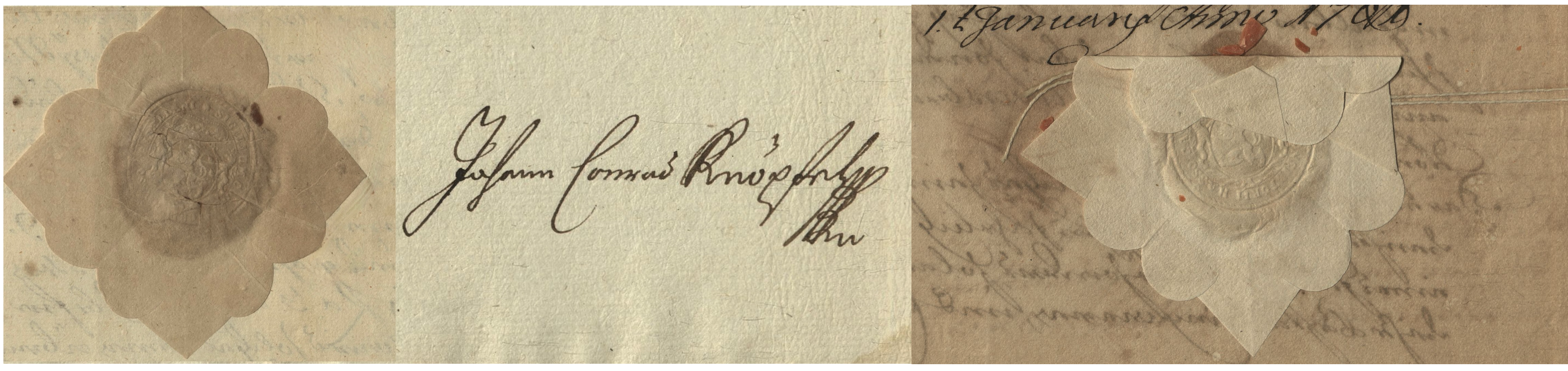
Hessisches Landesarchiv complete files
🇩🇪 Johann Conrad Knöpfel - Sankt Goar/Burg Rheinfels
H[errn] Johann Conrad Knöpffels, Proviant-Com[m]issarii u[nd] Stiffts-Kellners allhier
🇬🇧 Johann Conrad Knöpfel - Sankt Goar/Burg Rheinfels
Mr. Johann Conrad Knöpffel, Commissar of Supplies and Collegiate Monastery Cellarer here
🇳🇱 Johann Conrad Knöpfel - Sankt Goar/Burg Rheinfels
De heer Johann Conrad Knöpffel, proviantcommissaris en stichtsrentmeester alhier

Burg Rheinfels bij St. Goar - links
2.
Huwelijk van de koopman en handelaar Johann Daniel Dülcken, zoon van de predikant Dülcken zu Wingeshausen in het graafschap Berleburg, met Susanna Maria Knüpfelin, dochter van de overleden Proviant-Commissair en Stift-Kellner Johann Conrad Knüpfel, op 17 december 1733
(Voor de huwelijksinschrijving van 1733 staat er: Archiv der Evangelischen Kirche im Rheinland, Boppard, KB 149/1 (St. Goar ref.), p. 287.)

2. Heiratseintrag Johann Daniel Dülcken und Susanna Maria Knüpfelin transcriptie Dr. Johannes Burkardt
Compleet
17. [Decem]ber * Sindt H[er]r Johann Daniel Dülcken, Kauff- u[nd] Handels=mann,
H[errn] Pfarrers Dül=
ckens zu Winches=hausen (sic!) in der Graffschafft Berlenburg
Ehel[icher] Sohn, u[nd] J[ung]fer
Susanna Maria Knüpfelin, des weyland H[errn] Johann Conrad Knüpfels
gewesenen proviant=Com[m]issarii u[nd] Stiffts=Kellers allhie,
nachgelasene Ehel[iche]
Tochter, copuliret u[nd] den 23 t[en] augusti hui[us] anni zum
I stenmal p[ro]clamiret word[en].
* Darunter Eintrag mit blasserer Tinte, aber von gleicher Hand: „16. hui[us] de infra. N[ota] B[ene].“

Johannes Lodewijk (Louis)Dülcken
(Maastricht 15 april 1735 – † between August 31, 1795 and December 27, 1799)
INFO
ENGLISH VERSION
&
Catrina Kooningh
(Amsterdam 23 januari 1732- † ?)
🇬🇧 Amok on St. Paul's Day: How Harpsichord Maker Louis Dulcken Defied the Ruling Elite of Hasselt
🇩🇪 Aufruhr an Pauli Bekehrung: Wie der Cembalobauer Louis Dülken die Machtelite von Hasselt herausforderte
🇳🇱 Amok op St.-Pauli: Hoe klavecimbelbouwer Louis Dulcken de machtselite van Hasselt tartte
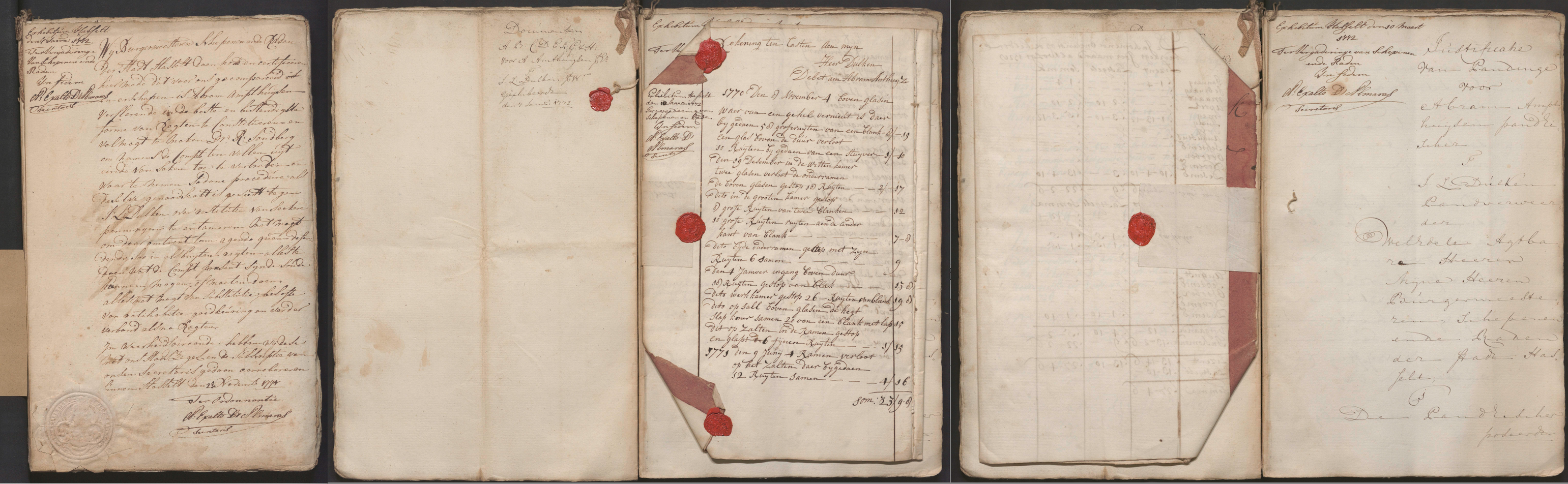
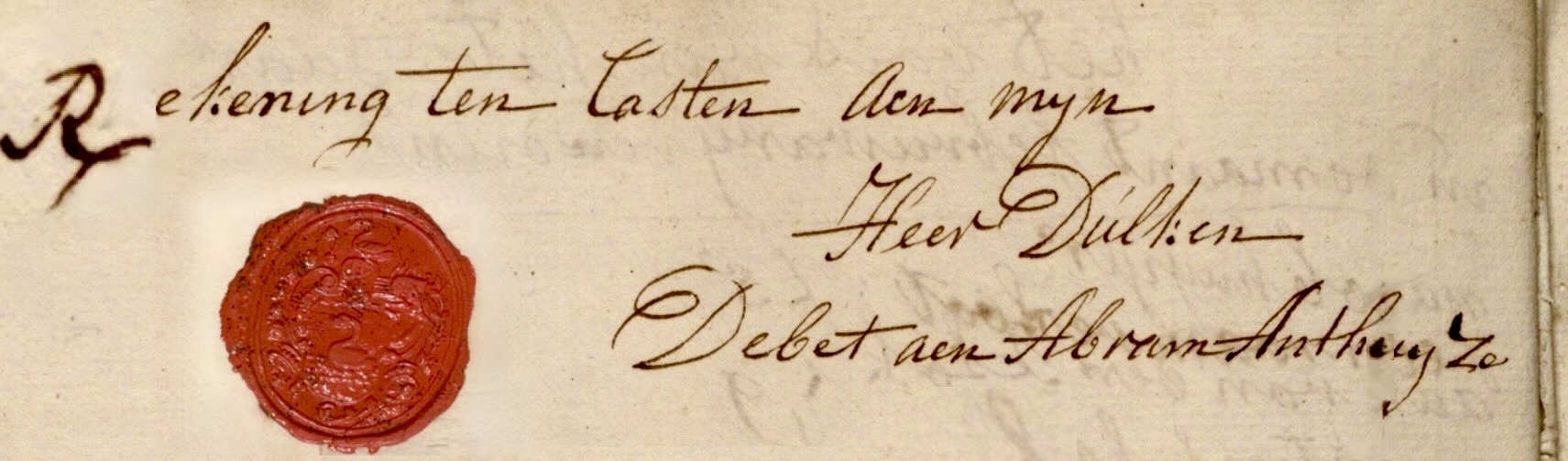
IV Op 30 april 2024 werd bij Collectie Overijssel een document in inv. nr. NL-ZICO 0058.2. Dossier 475 geopend waarop vier lakzegels zijn bevestigd.
VIDEO
Wat is het verhaal hierachter?
Johannes Lodewijk Dulcken - Meester Clavecimbelbouwer Hasselt 1762-1776
Johannes Dülcken
(Antwerpen 10 september 1742 – † 22 juli 1775)
ENGLISH VERSION
&
Sara Brull
(Gulpen- † ?)
Johannes Lodewijk (Louis) Dülcken
(Amsterdam 9 augustus 1761 – † München 1836)
ENGLISH VERSION
&
Sophie Lebrun
(London 20 Juli 1781 – † München 23 Juli 1863)

Papieren raakende de zaak van Ds Dipelius. Prediki te Antwerpen 1774. welke moeten worden opgebragt in de Synod: Kast.
Papers concerning the case of Rev. Dipelius, Preacher at Antwerp 1774, which must be deposited into the Synodal Chest.
Papiere, betreffend die Angelegenheit des Pfarrers Dipelius, Prediger zu Antwerpen 1774, welche in die Synodalkasse/Synodalschrank eingebracht werden müssen.
🇬🇧 : Intended for the Synodal Archive:
The Forgotten Dossier of Rev. Dipelius: From Haiger to Antwerp
🇩🇪 : Für das Synodalarchiv bestimmt:
Die vergessene Akte des Pfarrers Dipelius: Von Haiger nach Antwerpen
🇳🇱 : Bestemd voor de Synodale Kast:
Het vergeten dossier van Ds. Dipelius: Van Haiger tot Antwerpen

Modern Nederlands:
"In Artikel 12 hebben de Gedeputeerden besloten om vooralsnog van deze latere feiten (postfacta) en de daarin genoemde brieven, getuigschriften (attestaties) en verklaringen (declaratoiren) niets officieel in de registers/boeken op te nemen. In plaats daarvan moeten al deze stukken bij elkaar in een enveloppe worden bewaard in de lade van het kleine kastje van de Gedeputeerden. Dit is opgetekend aan het begin van de akten van de Buitengewone Coetus (kerkelijke vergadering) die begon op 12 september 1774."

Archief Utrecht
Felix Archief Antwerpen
Den Eerw: Heer Johannes Diepelius
J:M: geboren te Heijger* uit Nassau
dillenburghe, bedienaer des goddé,,
lijken woonts inde Kruisgemeente
te Antwerpen
met
Juffu Johanna Elizabet Eichartin
zijne Nigte J:D: ook aldaer
geboren, en wonagtig te Ant,,
werpen voor het tegenwoordige.
Desen endertrouis geschiet in te,,
genwoordighijt van den Heer
ouderling Johan Daniel Tulken*
* Haiger bij Dillenburg
* Dulcken
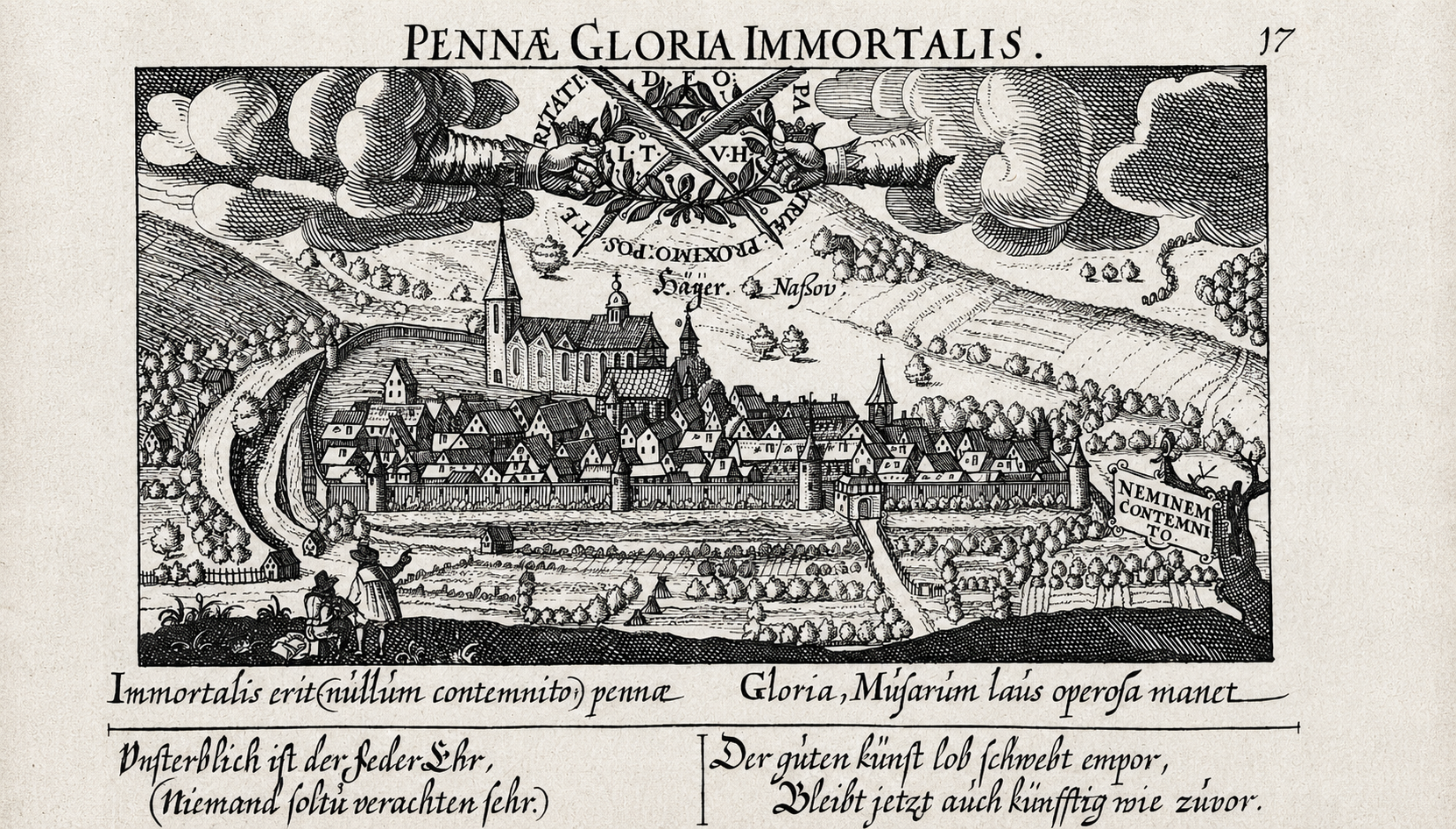
HÄGER NAßOU
In het Album studiosorum Academiae Lugduno Batavae (het officiële studentenregister van de Universiteit Leiden) staat Johannes Diepelius ingeschreven.
Hieronder volgen de details van zijn inschrijving en achtergrond:
- Inschrijvingsdatum: Hij schreef zich in op 14 september 1735.
- Herkomst: Haegera-Nassovius.
- Studie: Hij was ingeschreven voor de studie Theologie, wat aansluit bij zijn latere loopbaan als predikant.
- Leeftijd bij inschrijving: Hij was bij zijn inschrijving in 1735 19 jaar oud, wat zijn geboortejaar inderdaad bevestigt als 1716.

•••••niets te boek te brengen, maar alle deeze stukken bij malkanderen in een enveloppe te bewaaren in het laadje van het kleine kastje van Deputaaten. •••••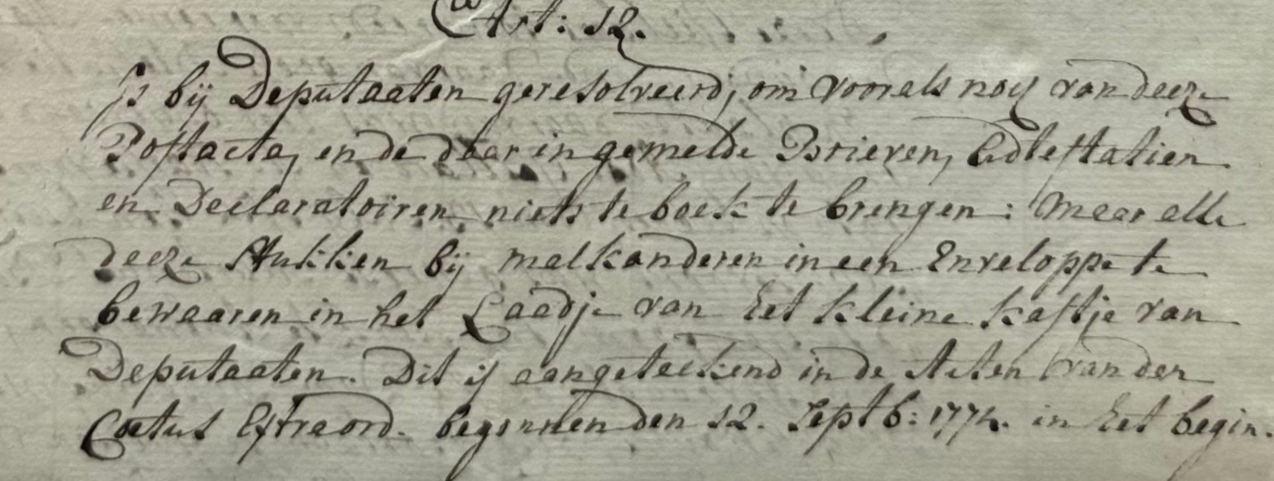
Archief Utrecht

Snijders & Rockoxhuis
VIDEO
signed and dated lower left: J Horemans 1764 on the floor
Susanne Maria Knöpffel (Sankt Goar 11 September 1706 – † Heerde 12 June 1789)
Conrad Knöpfel, born in Wolfershausen in 1662, enrolled at the University of Marburg in 1680, became provisions commissioner at the Hessian fort of Rheinfels near St. Goar.
Conrad Knöpfel married Regina Magdalena Dirx on 29 April 1695. Johann Konrad Knöpfel died before 1721.
1.
Baptism of Susanna Maria Knöpffel, daughter of Johann Conrad Knöpffel, Provisions Commissioner and Stift-Kellner in St. Goar, on 11 September 1706.
2.
Marriage of merchant and trader Johann Daniel Dülcken, son of Pastor Dülcken zu Wingeshausen in the county of Berleburg, to Susanna Maria Knüpfelin, daughter of the late Proviant Commissioner and Stift-Kellner Johann Conrad Knüpfel, on 17 December 1733

Joanna Henrietta Dulcken 10 February 1737 & Jean Herman Faber 1734
Maria Sophia Dulcken 26 January 1740 – †17 January 1805
Joannes Dulcken (Antwerp 10 September 1742 – † 22 July 1775)
Joanna Eliezabetha 2 February 1747
Harpsichords and Harlequins: Commedia dell’arte and the Migration of the Dulcken Family (1764)
Klavecimbelbouw en Komedie: De Commedia dell’arte en de Migratie van de Familie Dulcken (1764)

THE DULCKEN FAMILY, INSTRUMENT MAKERS - MUSICIANS
• Johannes Daniël Dulcken (21 april 1706 – Antwerpen 11 april 1757) x Susanna Maria Knopffllin
• Johannes Lodewijk (Louis)Dulcken I (1735 - † tussen 1793 en 1795 München) x Catharina Koning
• Johannes Lodewijk (Louis) Dulcken II (1761 - † München 1836) [brother Johannes Dulcken ( 26 December 1768 - †?)]
Louis Dulcken x Sophie Le Brün
Brün, (Sophie Le), the daughter of the famous Bavarian court musician Ludwig August Le Brün, and the great singer Franziska Le Brün, née Danzi, was born in London on 20 July 1781, learnt the basics of music in Munich with Knechtl, the piano with Streicher, and the basso continuo with Schlett, and married the royal Bavarian mechanical piano maker Johann Ludwig Dülken in Munich on 18 April 1799. She is a true artist on the piano in every respect, and plays this instrument with spiritual expression, true feeling and extraordinary skill. When she travelled to Paris, Switzerland and Italy, her excellent playing enchanted every listener, and connoisseurs and artists conceded her the first rank in this art. In addition to this, she sings very well, has a deep insight into the essentials of music, combines her great practical musical knowledge with theoretical knowledge to the same degree, and has a thorough understanding of composition. She has composed several concertos, sonatas and the like for the piano; it is a pity that they have not become generally known through engraving or printing.
On 25 June 1831 Louis Dulcken relinquished his post as royal keyboard instrument maker; he died five years later. In his will Dulcken named as heirs his wife Sophie Lebrun (b London, 20 June 1781–d Munich, 23 July 1863), his sons Theobald and Heinrich, his married daughters Louise and Franziska Bohrer, and his then unmarried daughters Violande, Johanna, and Caroline Dulcken. Theobald as business manager and Heinrich as builder apparently completed their father’s commitments after his death but soon closed the shop. Both sons eventually moved to London where Theobald became a wool merchant and Heinrich an organist. Louise and Franziska had married the brothers Max and Anton Bohrer; Louise became court pianist in Stuttgart. Violande became a concert singer in Munich. Dulcken's son Theobald became Louis partner about 1816, and the business continued until 1831, when Louis Dulcken retired.
1800 - Theobald Ludovicus, zoon van Jan Lodewijk (Louis) en Sophia - Théobald Dulcken - Married in 1828, Munich, Bavière, Allemagne, to Louise Marie David 1811-1850

1801 - Philippus Henricus, zoon van Jan Lodewijk (Louis) en Sophia - Heinrich Dulcken, organist - Married to Auguste Burghaagen
1803 - Louise, dochter van Jan Lodewijk (Louis) en Sophia
Female piano prodigies:(with their ages at the time of their first public performance)
Louise Dulcken, married to Bohrer (1803–1857), aged 11
Leopoldine Blahetka (1809–1885), aged 8
Fanny Sallamon (1809–after 1839), aged 10
Antonie Oster (1811–1828), aged 10
Louise David, married to Dulcken (1811–1850), aged 10
Marie Moke, married to Pleyel (1811–1875), aged 8
Delphine Schauroth (1813–1887, aged 9
Josephine Seipelt (1816–1841), aged 9
Clara Wieck, married to Schumann (1819–1896), aged 10
Freia Hoffmann, Instrument und Körper, Frankfurt am Main, Leipzig 1991, chapter ‘Wunderkinder’, pp. 309–335; Ingrid Fuchs, ‘,Bewundrungswerthes Kind! deß Fertigkeit man preißt …’
Louise Dulcken kreeg samen met haar zus Fanny pianoles van hun moeder. Hun eerste openbare optreden vond plaats in 1814 in München. 20 jul 1824 trouwde ze met cellist Max Bohrer (1785-1867). Haar zus Fanny trouwde 20 jul 1824 met zijn broer Anton. In 1826 werd hun zoon Carl Theodor geboren. In 1827 verhuisden beide echtparen naar Parijs, waar ze samen concerten gaven. In augustus 1828 schreef de Münchener Allgemeine Musik-Zeitung over een concert in Parijs: "Mad. Max. Bohrer, die nog niet in Parijs te horen was geweest, speelde een trio van Beethoven en variaties op haar eigen compositie op het lied: der Schweizerbub” (Münchener aMZ 1828, Sp. 720). Tijdens de gezamenlijke concerten, waarop werken van Beethoven, Mozart en Haydn werden gespeeld, bracht Louise Bohrer ook solostukken ten gehore, bijvoorbeeld werken van Henri Herz. Door de julirevolutie in 1830 verdreven, verlieten de Bohrers Parijs en verhuisden eerst naar Londen en daarna naar Stuttgart. Louise Bohrer was vanaf ongeveer 1831 hofpianiste en lerares van de prinsessen in Stuttgart.

Prinzessin Sophie Friederike Mathilde von Württemberg & Prinzessin Marie Friederike Charlotte von Württemberg
Sophie Friederike Mathilde prinses van Württemberg (* 17 juni 1818 in Stuttgart; † 3 juni 1877 in Huis ten Bosch) was als eerste echtgenote van de Nederlandse koning Willem III van 1849 tot 1877 koningin der Nederlanden.
Prinses Sophie Friederike Mathilde van Württemberg (1818–1877) was de eerste vrouw van koning Willem III van Nederland en koningin-gemalin van Nederland en groothertogin-gemalin van Luxemburg van 1849 tot aan haar dood in 1877.
Ze werd op 17 juni 1818 in Stuttgart geboren als dochter van koning Willem I van Württemberg en groothertogin Catharina Pavlovna van Rusland. Hierdoor was ze een volle nicht van haar toekomstige echtgenoot, koning Willem III, aangezien haar moeder de zus was van zijn moeder, Anna Pavlovna van Rusland.
Sophie trouwde op 18 juni 1839 met Willem, toen nog prins van Oranje. Het huwelijk was moeilijk, gekenmerkt door persoonlijkheidsconflicten en meningsverschillen, maar ze stond algemeen bekend als een intellectueel, een verzamelaar en een toegewijde moeder. Ze was ook een prominente figuur in de Nederlandse samenleving, bekend om haar sterke wil en haar inzet voor verschillende maatschappelijke doelen.
Sophie Friederike Mathilde Princess of Württemberg (born 17 June 1818 in Stuttgart; died 3 June 1877 in Huis ten Bosch) was Queen of the Netherlands from 1849 to 1877 as the first wife of King William III of the Netherlands.
Prinzessin Sophie Friederike Mathilde von Württemberg (1818–1877) was the first wife of King William III of the Netherlands and the Queen consort of the Netherlands and Grand Duchess consort of Luxembourg from 1849 until her death in 1877.
Born in Stuttgart on June 17, 1818, she was the daughter of King William I of Württemberg and Grand Duchess Catherine Pavlovna of Russia. This made her a first cousin to her future husband, King William III, as her mother was the sister of his mother, Anna Pavlovna of Russia.
Sophie married William, then the Prince of Orange, on June 18, 1839. The marriage was challenging, marked by personality clashes and differing views, but she was widely known as an intellectual, a collector, and a devoted mother. She was also a prominent figure in Dutch society, known for her strong will and engagement in various social causes.

Sophie Friederike Mathilde Princess of Württemberg
Queen of the Netherlands from 1849 to 1877
Zie de geboorten van Wilhelm Maria Friederich & Sophie Marie Johanne
Samen met haar man en diens broer Anton Bohrer gaf Louise Bohrer in 1833 en 1834 concerten in Stuttgart. In september 1835 werd hun zoon Wilhelm Maria Friedrich geboren, in 1837 hun dochter Sophie Marie Johanne. In 1842/43 ondernam Max Bohrer een concertreis naar Amerika. Of Louise Bohrer haar man vergezelde, is niet te achterhalen.
Louise Dulcken and her sister Fanny received piano lessons from their mother. Their first public performance took place in Munich in 1814. On 20 July 1824, she married cellist Max Bohrer (1785-1867). Her sister Fanny married his brother Anton on 20 July 1824. In 1827, both couples moved to Paris, where they gave concerts together. In August 1828, the Münchener Allgemeine Musik-Zeitung wrote about a concert in Paris: “Mad. Max. Bohrer, who had not yet been heard in Paris, played a trio by Beethoven and variations on her own composition on the song: der Schweizerbub”. (Münchener aMZ 1828, Sp. 720). During the joint concerts, at which works by Beethoven, Mozart and Haydn were played, Louise Bohrer also performed solo pieces, for example works by Henri Herz. Driven out by the July Revolution in 1830, the Bohrers left Paris and moved first to London and then to Stuttgart. From around 1831, Louise Bohrer was court pianist and teacher to the princesses in Stuttgart. See the births of Wilhelm Maria Friederich & Sophie Marie Johanne
Together with her husband and his brother Anton Bohrer, Louise Bohrer gave concerts in Stuttgart in 1833 and 1834. In September 1835, their son Wilhelm Maria Friedrich was born, followed by their daughter Sophie Marie Johanne in 1837. In 1842/43, Max Bohrer undertook a concert tour of America. It is not known whether Louise Bohrer accompanied her husband.


1805 - Franzisca Magdalena , dochter van Jan Lodewijk (Louis) en Sophia
Francisca (Fanny) kreeg, net als haar zus Louise, les van haar moeder. In 1824 trouwde ze met de violist Joseph Anton Bohrer (1783-1863) en verhuisde in 1827 met hem, haar zus en diens man Max naar Parijs. Over haar concertactiviteiten kunnen geen betrouwbare uitspraken worden gedaan. In de “Allgemeine musikalische Zeitung” worden vaak concerten van “Mad. Bohrer” vermeld, maar een eenduidige toewijzing aan Fanny Bohrer is niet mogelijk. Volgens Schilling stond ze “als praktisch pianiste vrijwel op gelijke voet” met haar zus, waardoor kan worden aangenomen dat ze net als haar zus samen met haar man optrad en in een trio of mogelijk ook in een kwartet met Max en Louise Bohrer speelde. Ze is de moeder van Sophie Bohrer.
Like her sister Louise, Francisca (Fanny) was taught by her mother. In 1824, she married the violinist Joseph Anton Bohrer (1783–1863) and moved with him, her sister and her sister's husband Max to Paris in 1827. No reliable statements can be made about her concert activities, although the Allgemeine musikalische Zeitung frequently mentions concerts by “Mad. Bohrer”, although it is not possible to clearly identify these as Fanny Bohrer. According to Schilling, she was “probably quite equal to her sister as a practical pianist,” so it can be assumed that, like her sister, she performed with her husband and played in a trio or possibly also in a quartet with Max and Louise Bohrer. She is the mother of Sophie Bohrer.
1807 - Violanda Dulcken, dochter van Jan Lodewijk (Louis) en Sophia
1808 - Juliana Johanna , dochter van Jan Lodewijk (Louis) en Sophia
1813 - Alexander, zoon van Jan Lodewijk (Louis) en Sophia
1817 - Carolina Charlotte, dochter van Jan Lodewijk (Louis) en Sophia
Ferdinand Quentin Dulcken (1837–1901)
Sophie (Louise Auguste) Dulcken 6 March 1835 in London, † 15 July 1923 in Dinard (Brittany), pianist
(Sarah) Isabella (Auguste) Dulcken, Dulken, married name Braun
• VIDEO PROJECT HASSELT RAADHUIS


17-08-1756
• Keizersgracht 187 te Amsterdam & Louis Dulcken Sr “superbe Koninglyk Cabinet Orgel” project

AREND JAN GIERVELD - HET NEDERLANDSE HUISORGEL 1977
Kabinetorgelkast ca. 1765
stichting „Voor en met Orgel", Haarlem.
De stichting „Voor en met Orgel" te Haarlem kwam in 1975 in het bezit van de grootste kabinetorgelkast van ons land (ruim 4 meter hoog!). Het binnenwerk is in 1920 gesloopt; het orgel stond toen (van 1820-1975) in de n.h. kerk van Jutphaas. Het instrument zou, indien nog compleet, ongetwijfeld het belangwekkendste huisorgel in ons land geweest zijn. Het is omstreeks 1765 gebouwd. Ik vond in de Amsterdamse Courant van 1778 de oorspronkelijke dispositie, die eveneens bijna geheel uit de bewaard gebleven registeropschriften kan worden opgemaakt.
De kast is van een buitengewone schoonheid en is bekroond met een beeldengroep van vergulde kinderfiguren, putti en een vogel (ooievaar?). Het orgel was uitgerust met een „apart", afneembaar pedaal. Blijkens het registeropschrift „Calokant" was er steeds een balgentreder vereist. De werken heetten, volgens de registeropschriften, manuaal (MaL) en bovensecreet? (Bot). Het bovenwerk bezat een afsluiter.

The largest known organ that was offered for sale in Amsterdam in 1778 and stood for many years in the Dutch Reformed Church in Jutphaas, the Dulcken organ— “superbe Koninglyk Cabinet Orgel”
De advertentie, in de Amsterdamse Courant nummer 9 van 20 januari 1778 luidt:
Uit de hand te koop een ongemeen fraai Huis- of Kerk- orgel, in zijn superbe Noteboome Wortelhoute Cabinet met gebooge Deuren en Snywerk, bestaande het binnenwerk in de volgende Registeren: als Prestant 8 vt., Holpijp 8 vt., Fluit 4 vt., Quintadeen 8 vt., Viool di Gambe 4 vt., Vox Humana 8 vt., Dulciaan 8 vt., Fagot 16 vt., Houbois 8 vt., Gemshoorn 2 vt., Octaaf 4 vt., Octaaf 2 vt., Cornet 3 sterk, Mixtuur 3 sterk, Quint 1 en 1 half vt, Sexquialter 2 sterk, Trembulant, Coppeling c., met twee Clavieren van uitgezogt Paerl D’ Amour en een apart Pedaal, ’t welk man ken aanhangen, zijnde de Registers meest gehalveert. nader onderrigting bij den Organist A. Munnikhuysen, op de Keizersgragt bij de Rheestraat, te Amst.
This “superbe Koninglyk Cabinet Organ” is still in its unrestored state. It may be of interest to the Rijksmuseum to ensure that the organ is returned to its former location at Keizersgracht 187, “The Amsterdam Canal Room”: the Beuningkamer in the Rijksmuseum.
VIDEO-RECORDINGS
“afgevrezingt” = het moet nog afgepaald worden.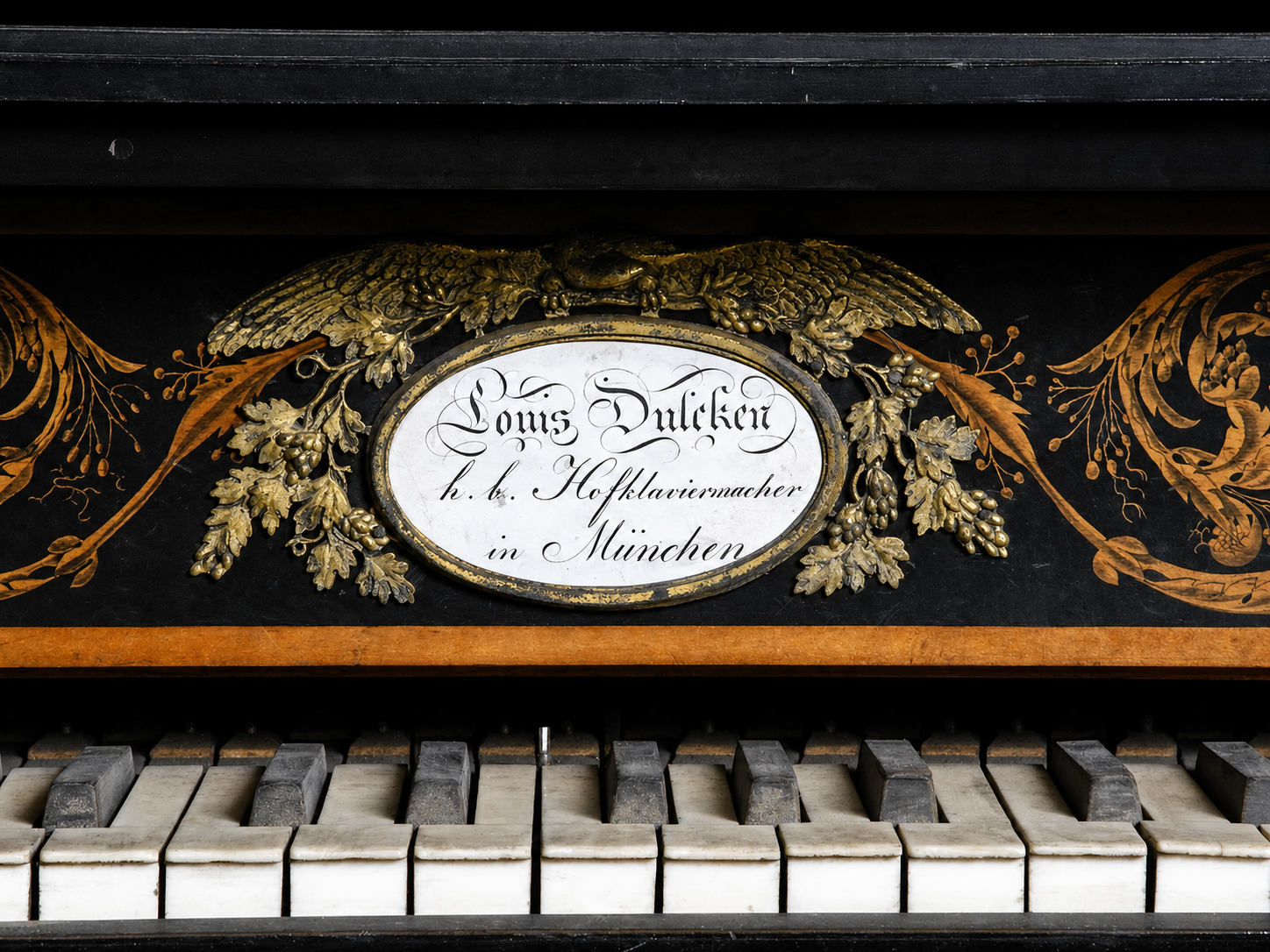
"Louis Dulcken / h. b. [herzoglich bayrischer] Hofklaviermacher / in München"