 Foundation Musick's Monument
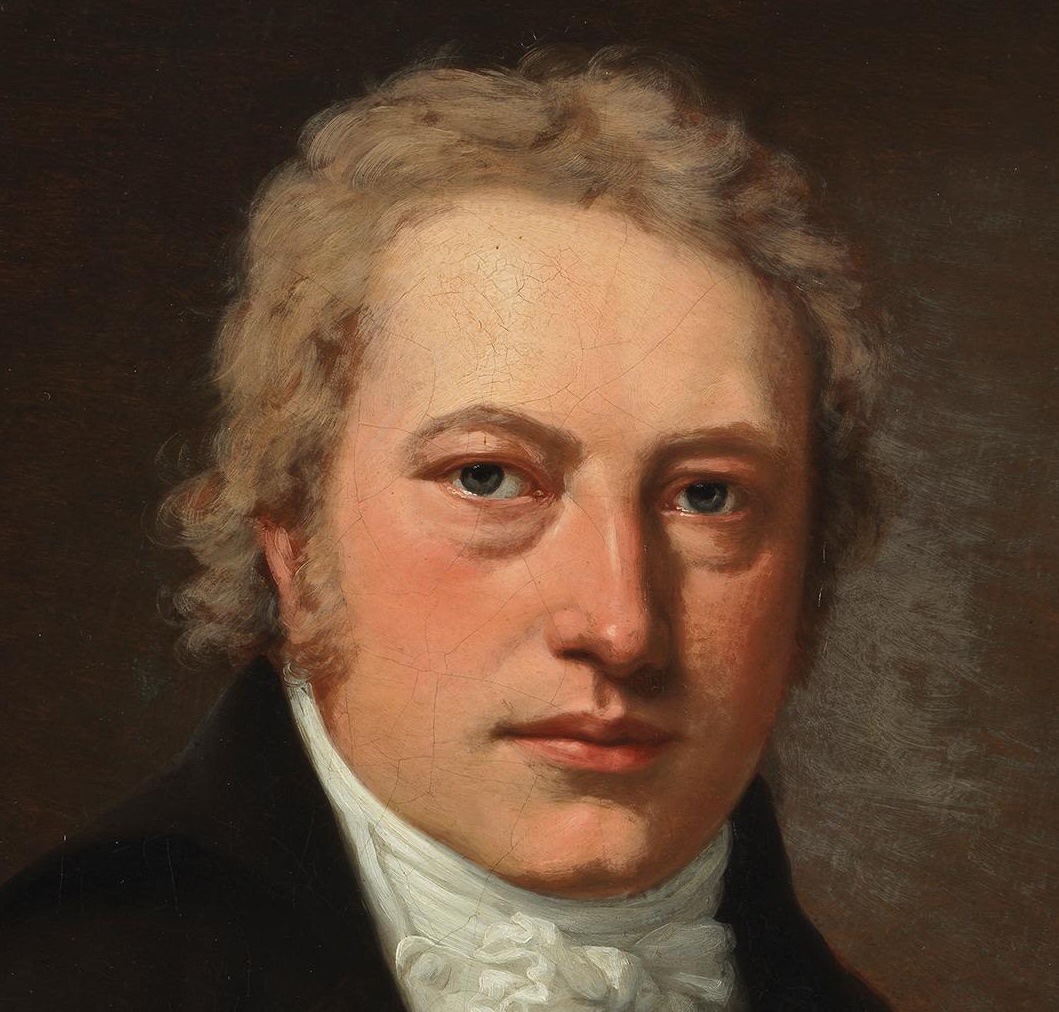
Spohr, Louis, born April 25, 1784 at Brunswick, died October 22, 1859 at Cassel, was one of the most renowned of violinists and a celebrated composer. He was the son of a young physician; both parents were musical, his father a flautist and his mother a pianist and vocalist. At five years of age he commenced the study of the violin, and when fourteen, undertook alone, his first artistic tour to Hamburg; but returned home to Brunswick without obtaining a hearing and with finances exhausted. Struck by the lad's talent and bearing, the Duke of Brunswick gave him a position in his band and later paid the expenses of his continued musical education. Spohr travelled through Holland and Germany, and being offered the position of leader in the orchestra of the Theatre an-der-Wien, Vienna, resided there from 1812- 15, and then made a tour through Italy. He returned to Germany in 1817, visited Holland and was appointed opera conductor at Frankfurt. It was here that he composed his opera Faust which produced in 1818 was quickly followed by Zemire and Azor, or The magic rose, in two acts, which gained greater popularity than its predecessor. The libretto on the well-known fairy tale, Beauty and the beast, was composed by Spohr in 1819, first performed March 24, 1822, and produced at Covent Garden Theatre, London, April 5, 1831. In this opera, Spohr writes a guitar accompaniment to the tenor aria of Ali, which is scored for guitar, first and second violins, viola, 'cello and bass; the first violins are divided and the other strings are played pizzicato. Extracts from the guitar part are here reproduced from the original manuscript of the opera in the British Museum, London; this extract is evidence of Spohr's familiarity and knowledge of the guitar. One song from this opera, Rose softly blooming, has remained a favourite to the present day. In 1820 he made his first visit to London when he played one of his violin concertos at the Philharmonic Concerts and he repeated his visits to conduct many of his own works. Spohr was a musician, second only to the most illustrious and as an executant and conductor takes rank among the greatest. His works comprise many operas, oratorios, symphonies and compositions for strings and also his famous violin method. Several of his songs with guitar accompaniment were published by Schott, Mayence. In his autobiography Spohr records his associations with guitarists, particularly Methfessel. On page 147 he writes: "Fine voices joined and sang quartets and canons; Herr Methfessel taking his guitar, would entertain the company with pleasing ballads and touching romances of his own composition; by way of change, he then sang a comic song or two and exhibited his liveliness of fancy, his richness of invention, wit, and humour of expression, as well as his intimate knowledge of tone and harmony. Herr Hachmeister, the assessor of mines from Clausthal, taking then the guitar from him, in turn charmed the company with national songs in the Thurin- carried his instrument slung by a band over his shoulders.
" Vol. II, page 90, speaking of himself Spohr says: "The Duke of Sussex received me with great distinction... during a conversation we had upon the subject of English national songs, the Duke even sent for his guitar and sang to me some English and Irish national songs which afterwards suggested to me the idea of working up some of the most popular of these as a potpourri for my instrument and of introducing the same at my concert. This is Up. S9, the second of my works written in London." Un page 124 he writes concerning his Third Violin Concerto: " The third part of this concerto is a Spanish Rondo, the melodies of which are not mine but genuine Spanish. I heard them from a Spanish soldier who was quartered in my house and who sang to the guitar. I noted down what pleased me and wove it into my Rondo. In order to give this a more Spanish character I copied the guitar accompaniments as I heard them from the Spaniard into the orchestral part." His autobiography, in two volumes is a remarkable record of his observations, and his memoirs by various editors, have appeared and a Spohr Museum established in Cassel.

