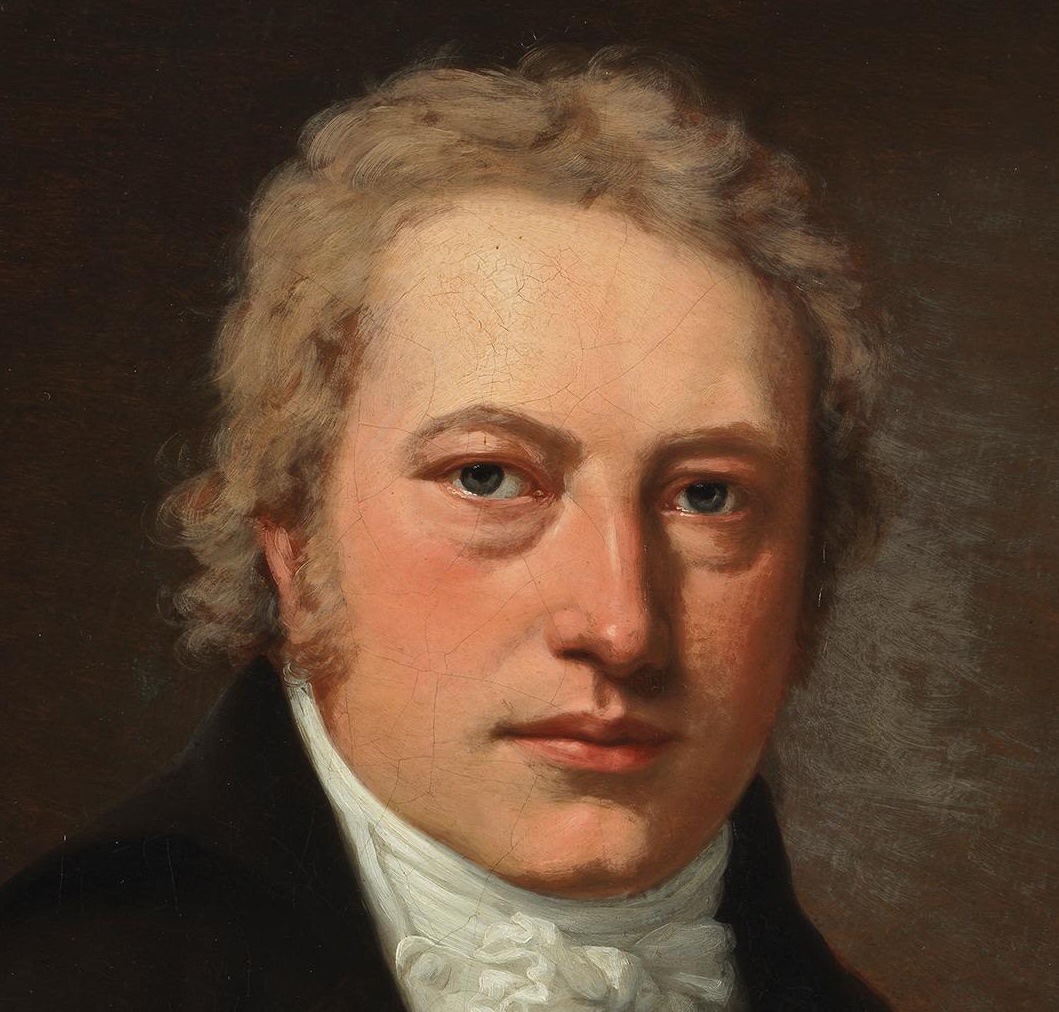
 Foundation Musick's Monument
Weber, Carl Maria von, born December 18, 1786, at Eutin, Holstein, and died in London, June 4, 1826, was the founder of German national opera and probably the most widely influential German composer of that century. He was a life-long ardent admirer of the guitar and as accomplished a performer on this instrument as on the piano. Baron Max von Weber, writing of his father, said, because of its subdued sympathetic tone, he made the guitar his constant companion. His most beautiful songs were written with guitar accompaniment, and these melodies, at first unknown, sung by him in a not powerful, yet pleasant voice with inimitable expression, and accompanied on the guitar with the highest degree of skill, were the most complete of anything ever accomplished in this manner. Weber was a musician invwhose family music was long a hereditary gift; but the wandering, restless nature of his father did not act favourably on the gifted child's education. The family removed from Eutin in 1787 when the parent was leading a wandering life as director of a dramatic troupe, featured mainly by his grown up children. They visited all the German cities ot importance, and, injudicious as this roving lite appeared, young Weber grew up behind the scenes, so, from earliest infancy his home was in stage-land. In 1797, a new theatrical speculation took the family to Salzburg where Michael Haydn gave the boy gratuitous instruction in composition. When the family removed to Vienna, shortly after, Weber made the acquaintance of a young military officer, Gänsbacher, an amateur musician, excellent guitarist and a pupil of Vogler, the eminent music teacher of the city. This acquaintance developed into a life-long friendship and the two young men with other youthful musical companions formed a society where at their convivial meetings, sang their latest vocal compositions to guitar accompaniment and performed their newest compositions. Grove states that when he had removed to Breslau, "He had also acquired considerable skill on the guitar, on which he would accompany his own mellow voice in songs mostly of a humorous character, with inimitable effect. This talent was often of great use to him in society, and he composed many lieder with guitar accompaniment." Julius Benedict—later Sir Julius-Weber's pupil, life-long companion and his biographer writes: " Weber was an admirable performer on the guitar and knew all the peculiarities of the instrument to perfection." In Breslau, after his resignation at the theatre, he lived by teaching the piano and guitar, and when in 1810 he visited Mannheim he form- ed a life friendship with Gottfried Weber-also a guitar player, but of no relation—who arranged concerts for him. It was at one of these that he played for the first time his piano Concerto in C. A member of the audience was Princess Stephanie of Baden whose father, the Crown Prince Ludwig of Bavaria, had met Weber at Baden Baden a few months previous, and had been so delighted and enraptured by Weber's serenades with the guitar, that he walked about with him all the night. The Princess was therefore desirous of hearing him in this capacity, so after the concert he sang to her a number of his songs with guitar. Such an impression did he make that the Princess promised to procure for him the position of capellmeister of Mannheim, or grant him an allowance of one thousand guldens from her private purse. A message from the Princess was sent to Weber a few weeks later, however, saying that her promise had been made too hastily. For a period Weber lived in Darmstadt, where with Meyerbeer he studied under the Abbe Vogler and it was here in 1811 that he composed his one-act comic opera Abu Hassan. This was the first of his operas which retains its influence on the stage; the second aria sung by Hassan in this work is accompanied by two guitars. Its first performance was on June 4, 1811, in Munich. During his residence in Darmstadt Weber composed many songs with the guitar. For Kotzbue's Der arme Minnesinger, he contributed four, and in a letter to his friend Gottfried Weber, dated May 16, 1811 he writes: "You will have received my guitar songs and noticed that I have set no accompaniment to the Madchen. How can you possibly think I should have been so silly?" This song Madchen ach meide, composed in 1802, is a canon, the last of the series of Six Songs with guitar, Op. 13, published by Gombart, Augsburg. The autographed manuscripts of these were contained in a volume, which, after being for some years in the possession of F. W. Jahns, disappeared mysteriously, fortunately the owner had carefully copied the contents. Grove says: "In February 1812 Weber visited Berlin and Professor Lichenstein, one of the foremost members of the Berlin Singakademie, was influential in introducing him to cultivated and musical families, where he soon became a favourite by his pleasing manners, his admirable pianoforte playing and extemporising, his inspiring way of leading concerted music, and above all his charming songs and his guitar." At Carlsbad, too, he took part in the musical evenings at Prince Eugene's, the principal attraction was his songs with guitar. Weber's roving life came to an end in 1813 when appointed capellmeister in Prague. He reorganised and conducted the opera until 1816 and while there composed on March 8, 1814 an Andante for guitar and piano. Apparently this
composition was never published, for only the title page and a portion of the work prove evidence of its existence. Weber composed much for the guitar during residence in Prague, and with other compositions published in the city was an album of Five songs with guitar accompaniment, Op. 25. During the summer of 1816, on the anniversary of Waterloo, he visited Berlin to conduct his cantata, and when he resigned his position at Prague, in September, he spent the remainder of that year in Berlin, occupied in composition and to the month of December belongs the duo for guitar and piano Op. 38, Divertimento assai facile per la chitarra ed il pianoforte, composta da Carlo Maria di Weber. It comprises an Andante in C, Valse with two trios in A minor, Andante with five variations in G, and a Polacca in A Extracts from the guitar parts of the Andante, the third variation and the Polacca are reproduced; it was published by Schlesinger, Berlin. The following year Weber was appointed capellmeister of German opera in Dresden; but this position from the outset was far from enviable, however, after a time matters improved and he was accustomed to pass the summertime at a small country farm house in Klein Hosterwitz, near Pillnitz. This house is still standing and bears a gilt bronze plaque commemorating the musician's stay there. It was there in August 1818 that he composed certain pieces for the guitar which were to be played in Max von Klinger's Die Zwillingen (The twins), Dr. A. Rublack's version of the tragedy. Weber's diary of August 15, 1818 says: "Composed the guitar pieces for Zwillingen, have sent them and written to Hellwig." Hellwig was director of the Royal Theatre, Dresden, and Weber's guitar compositions were performed for the first time in that city on August 18. The manuscripts of these works cannot now be found. Weber was living in Dresden during September 1821 and in that month composed the music to Donna Diana, libretto by Moreto, and in this comic opera he introduced a Duo for two guitars. This play had been set to music previously and performed in Dresden on October 2, 1817. The duo is reproduced from the original manuscript in the Royal Court Theatre Library, Dresden, and it was also in Dresden that he composed on January 10, 1821, the part song and chorus with guitar, Tell me, where is fancy bred?, for three female voices (two soprano and one alto) the original manuscript, also in the Dresden library. Weber's pupil and biographer, Sir Julius Benedict, writing of this period of the master's life says: "The dire disease which but too soon was to carry him off had made its mark on his noble features; the projecting cheek bones, the general emaciation, told their tale; but in his clear blue eyes, too often concealed by spectacles, in his mighty forehead, fringed by a few straggling locks, in the melodious voice, there was a magic power which attracted irresistibly all who approached him." In 1824 Weber received a commission to write an opera for Covent Garden Theatre, London; he chose Oberon, and the sad, indeed tragic story of his visit to conduct this opera is well known. Sick unto death—he was but thirty-nine- and aware that his days were fully numbered, only the prospect ot making provision for his wife and family had induced him to under- take the work and roused him from the languor and depression that possessed him. On February 5, he conducted for the last time in Dresden, then took leave of all the members of the orchestra, except Fürstenau, the flautist and guitarist who was to travel with him. He arrived in England on March 5, 1826 and his brief visit was strangely intermingled with sunshine and gloom. For a time all passed smoothly, and when the opera was produced April 12, the enthusiasm was intense, and although his life was fast ebbing he took part in concerts until a week previous to his death, but sank under his sufferings June 4, in the house of his host, Sir George Smart. Although the last effort of a dying man, this opera shows no trace of mental exhaustion; it engraves Weber's name among the immortals. Constant in his love of the guitar, he displays the beauties of the instrument in his final work by setting it in an unparalleled atmosphere of charm and colour, the centre of a sublime situation, for the guitar is the instrument which accompanies in Vision No. 3, Rezia's song to Oberon, Oh, why art thou sleeping? The song with its accompaniment is a rare gem; its setting the impress of genius, for with his profound command of tone colour, Weber introduces the guitar in a remarkably effective manner. introductory bar for the horns, succeeded by four bars of plaintive diminuendo for clarinets and bassoon, the guitar breaks forth in its most sonorous key (E major), and when the song and accompaniment fade, oboes, clarinets and bassoon, with a mysterious tenderness, which only Weber can divulge, continue the final six bars. Sir George Smart presented Weber's tuning fork in its original kid embroidered case to John Black; it passed to the author of this volume, who presented it to Luton Museum. Max Muller states that he heard the entire opera Der Freischütz emerge from Weber's guitar before it took the form as we now know it. Weber composed more than ninety songs with guitar accompaniment, and compositions for the guitar in combination with other instruments. Grove says: "His musical treatment too, of songs in dialect, especially those of a humorous rollicking character was excellent. The form of these songs is most simple and generally strophi- cal; the accompaniment frequently for the guitar." A complete list is impossible; the following are the most widely known: Op. 13, Six Songs with guitar, composed in 1811; Op. 25, Five songs with guitar, published in Prague and Leipzig; Op. 29, Three Canzonets with guitar ; Op. 38, Duo for Guitar and Piano, issued by Schlesinger, Berlin; Op 42, Sax Songs with guitar, Diabelli, Vienna; Op. 54 and 64 Folk songs with guitar, Schlesinger, Berlin; Op. 71, Six Songs with guitar, Schummerled, a part song for four male voices with guitar, Diabelli Vienna; Four Songs with guitar for Kotzebue's Der Arme Minnesinger; Romance with guitar for Costelli's Diana von Poiters, composed in 1816 ; Song with guitar for Kind's Der Abend am Waldbrunner, composed in 1818; The third scene of act 3, of Gaston's Rundgesang is accompanied by guitar, two clarinets, two bassoons, two trumpets and two kettle drums, and in the fifth scene of act 2, he writes Minuet for flute, viola and guitar. The originals of the majority of the foregoing are in Dresden State Library. Weber wrote innumerable similar works and it is certain that all such incidental compositions cannot now be brought to light. Boosey & Co. published an album of Eighteen Songs-English and German words-with their original guitar accompaniments, and many others were issued by Leuckart, Successors, Leipzig. In the Life of Carl von Weber by his son, Baron Max von Weber, interesting facts are recorded relative to his songs with guitar, for speaking of his tather and his father's friend, Gottfried Weber, he says: " Most of their songs were composed tor the guitar, an instrument so appropriate to these pieces, and one which misuse and tasteless treatment have alone brought out of fashion. A rich treasury of songs of this description has been left to the world by Carl Maria von Weber; and assuredly one day, when that world has been sufficiently surfeited with its present food for epileptic soul sufferers, and can find once again a taste for the solid, genuine, and true in ate, will they again emerge into lighost of the darkness of their temporary oblivion." He also writes: the songs composed by Carl and Gottfried Weber were written with guitar accompaniment; but the romantic music which succeeded, degenerated into guitar tinkling, and unrightfully brought discredit on the beautiful instrument, whose nature is so adapted for vocal accompaniment. There are many of the most beautiful song compositions that require just this style of accompaniment, and which not only reject the tone of the piano as antipathic, but when combined with it, entirely lose their character and fineness of feeling." It must be noted that several new editions of the collections of Carl Weber's Songs with guitar were published in Vienna during 1921—a century after their original publi- cation. The following extracts are culled from the Life of C. von Weber, by his son, Baron Max Weber. " In merry social meetings of artists and lovers of art, of which he himself, with his joyous songs and sparkling guitar, was always the life and centre." " Referring to his life in Heidelberg and the students; he naturally won at the first start, all the hearts of the merry crew. He sang some of his sprightliest songs to them, tickled their fancies with his sparkling guitar. " Often might they be seen, on such occasions, strolling by moonlight along the valley of the Neckar, whilst the sprightly notes of the guitar and the sound of sweetly murmured songs floated on the still night air." "Often, too, on bright nights, the three sworn friends, after their quiet supper at the Three Kings, would wander through the hushed streets of Mannheim, with their guitars and by their newest songs, gently wake. "New ideas every now and then started and improvised upon piano or guitar." Most of their (Gottfried and Carl von Weber) lieder were composed for the guitar; an instrument so appropriate to their pieces, which misuse and tasteless treatment have alone brought cut of fashion. A rich treasury of songs of this description has been left to the world by Carl Maria von Weber." "The merry Carl Maria would jump upon some garden table of a pot house, with his guitar around his neck, and sing with his old glad joviality, his most roguish songs to the soldiers and their girls, until the welkin rang with the loud merriment." "Their travelling carriage was packed with guitars, musical scores and bottles of wine. "The Princess said that she heard so much from cousin Ludwig ot Bavaria, of his beautiful singing to the guitar, that she would feel personally obliged if he would allow her also the chance of enjoying so great a pleasure. A guitar was fetched, and, standing in the midst of a small circle of the Court party, Carl Maria sang some of his sprightliest songs. The Princess, now with tears in her eyes, now with laughter on her lips, forgot all to linger on, and hear more, and yet still more." Writing to his friend Gottfried, Carl said, , "I have found no soul to which to cling like yours—no hours such as we have passed together- none of that exhuberance of heart's joy, which makes me take guitar in hand, and sing in spite of myself." "Carl was scarcely allowed out of the Duke's sight and partook with him of every meal. Melodies had to be improvised on the piano or guitar to the Duke's poetry." "He used to sing us his own songs which were not then generally known, with somewhat weak, but charmingly seductive voice with ini- mitable expression; his accompaniment on the guitar was the most perfect thing of the kind ever heard and won all hearts " At other times the music of seductive serenades arranged by the young Capellmeister (Weber) whose guitar moved his hearers, now to laughter, now to tears, floated over the waters of the Elbe." "And when the young pair (Weber and his wife) sang some of Weber's liveliest comic songs together, to the accompaniment of piano and guitar, the concert became one of universal jubilee." "Often might the lively, lovely girl (Wilhelmine Schroder, after- wards Mme. Schroder Devrient) on those bright summer days be seen lying in the garden at the feet of Caroline (Mrs. Weber) singing with her to her guitar." Carl Maria von Weber and his Songs with the Guitar, was the title of a volume by K. L. Mayer published in Munich in 1921. His life written by his son Baron Max von Weber, was published in three volumes 1864-8 and also by his pupil, Sir Julius Benedict. His favourite guitar, a gift from his fiancée, Caroline Brandt, was presented by his grand- daughter, Frau von Wildenbruch to the Institut fur Musikforschung, Berlin, and numbered 723 in the permanent collection. The curator, Dr. A. Berner informed the author of this work that it was totally destroyed during air raids of the second world war, and stated that it was made about the year 1800 of maple wood inlaid with pearl and ebony
and the letters 'C.B., the initials of his bride to be, were inlaid on the table; the maker was not known. By kindness of Weber's great granddaughter, Fraulein Mathilde von Weber, an illustration of the guitar is reproduced, also his English autographed visiting card tendered to an ancestor of E. J. Tyrreli, Esq., and presented by him to Luton Public Museum.

Een van de toehoorders was prinses Stephanie van Baden, wier vader, kroonprins Ludwig van Beieren, Weber enkele maanden eerder in Baden-Baden had ontmoet en zo onder de indruk was geraakt van Webers serenades op de gitaar dat hij de hele avond met hem had rondgelopen. De prinses wilde hem daarom graag in deze hoedanigheid horen, dus na het concert zong hij een aantal van zijn liederen voor haar met gitaarbegeleiding. Hij maakte zo'n indruk dat de prinses beloofde hem de functie van kapelmeester van Mannheim te bezorgen of hem een toelage van duizend gulden uit haar privévermogen te schenken. Een paar weken later kreeg Weber echter een bericht van de prinses dat haar belofte te overhaast was gedaan.
“De vrolijke Carl Maria sprong met zijn gitaar om zijn nek op een tuintafel van een pottenbakkerij en zong met zijn oude vrolijke jovialiteit zijn meest ondeugende liedjes voor de soldaten en hun meisjes, totdat de hemel weerklonk van het luide gelach.” "Hun reiswagen zat vol met gitaren, partituren en flessen wijn. "De prinses zei dat ze zoveel had gehoord van haar neef Ludwig van Beieren, over zijn prachtige zang bij de gitaar, dat ze zich persoonlijk verplicht zou voelen als hij haar ook de kans zou geven om van zo'n groot genoegen te genieten. Er werd een gitaar gehaald en, staande in het midden van een kleine kring van het hofgezelschap, zong Carl Maria enkele van zijn vrolijkste liedjes. De prinses, nu met tranen in haar ogen, dan weer met een glimlach op haar lippen, vergat alles om te blijven luisteren, en nog meer te horen, en nog meer.“ In een brief aan zijn vriend Gottfried schreef Carl: ”Ik heb geen ziel gevonden om me aan vast te klampen zoals de jouwe - geen uren zoals we samen hebben doorgebracht - geen van die uitbundigheid van hartelijke vreugde, die me ertoe brengt de gitaar ter hand te nemen en ondanks mezelf te zingen.“ ” Carl mocht nauwelijks uit het zicht van de hertog verdwijnen en nam elke maaltijd met hem mee. Melodieën moesten worden geïmproviseerd op de piano of gitaar bij de poëzie van de hertog. Hij zong ons zijn eigen liederen voor, die toen nog niet algemeen bekend waren, met een ietwat zwakke, maar charmant verleidelijke stem met een onnavolgbare expressie; zijn begeleiding op de gitaar was het meest perfecte dat ooit was gehoord en won alle harten. Op andere momenten zweefde de muziek van verleidelijke serenades, gearrangeerd door de jonge Capellmeister (Weber), wiens gitaar zijn toehoorders nu tot lachen, dan weer tot tranen bracht, over het water van de Elbe. En wanneer het jonge paar (Weber en zijn vrouw) samen enkele van Webers vrolijkste komische liedjes zongen, begeleid door piano en gitaar, werd het concert een waar feest voor iedereen. Vaak was het levendige, lieftallige meisje (Wilhelmine Schroder, later Mme. Schroder Devrient) op die stralende zomerdagen te zien liggen in de tuin aan de voeten van Caroline (mevrouw Weber), zingend met haar op haar gitaar.
