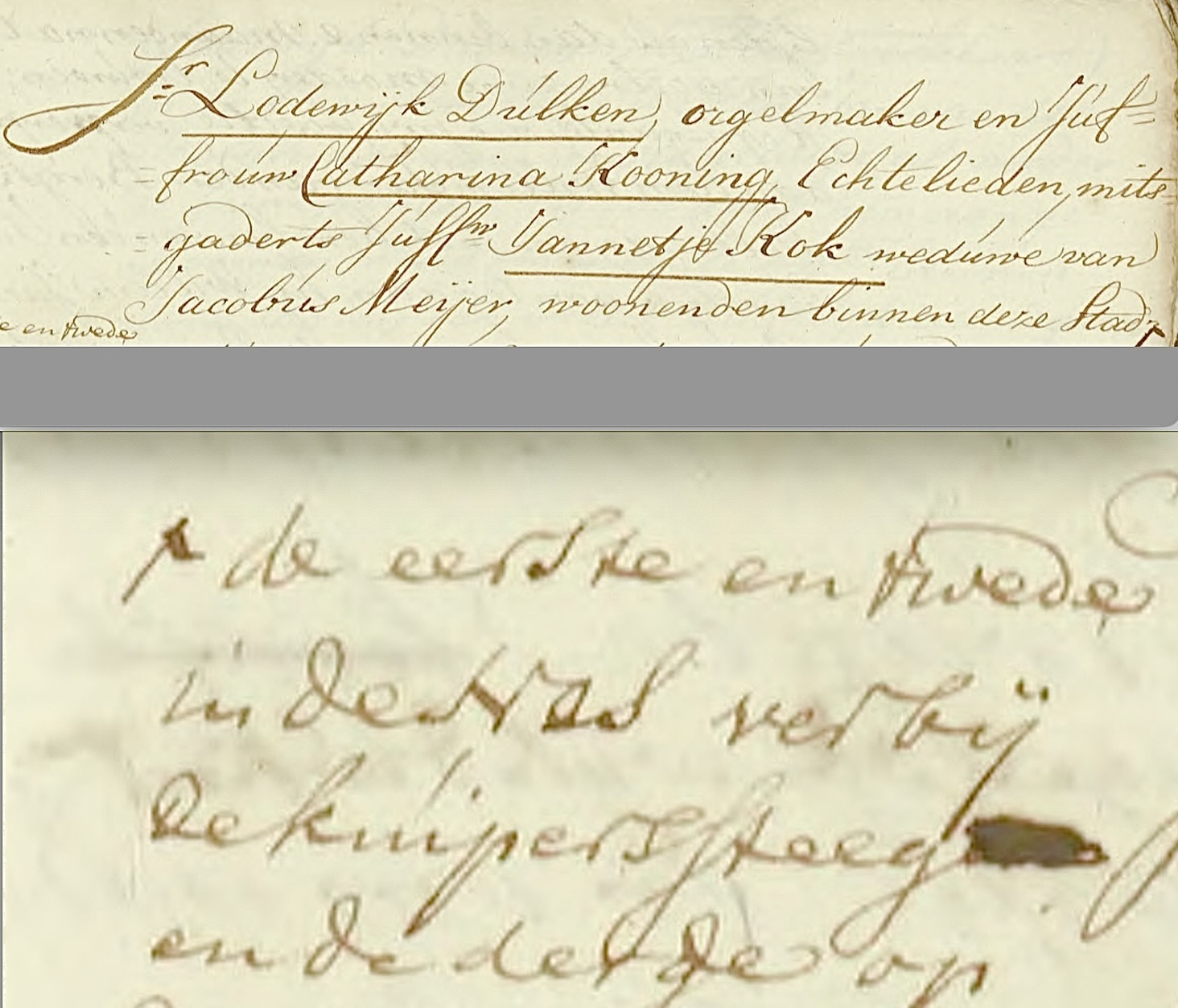
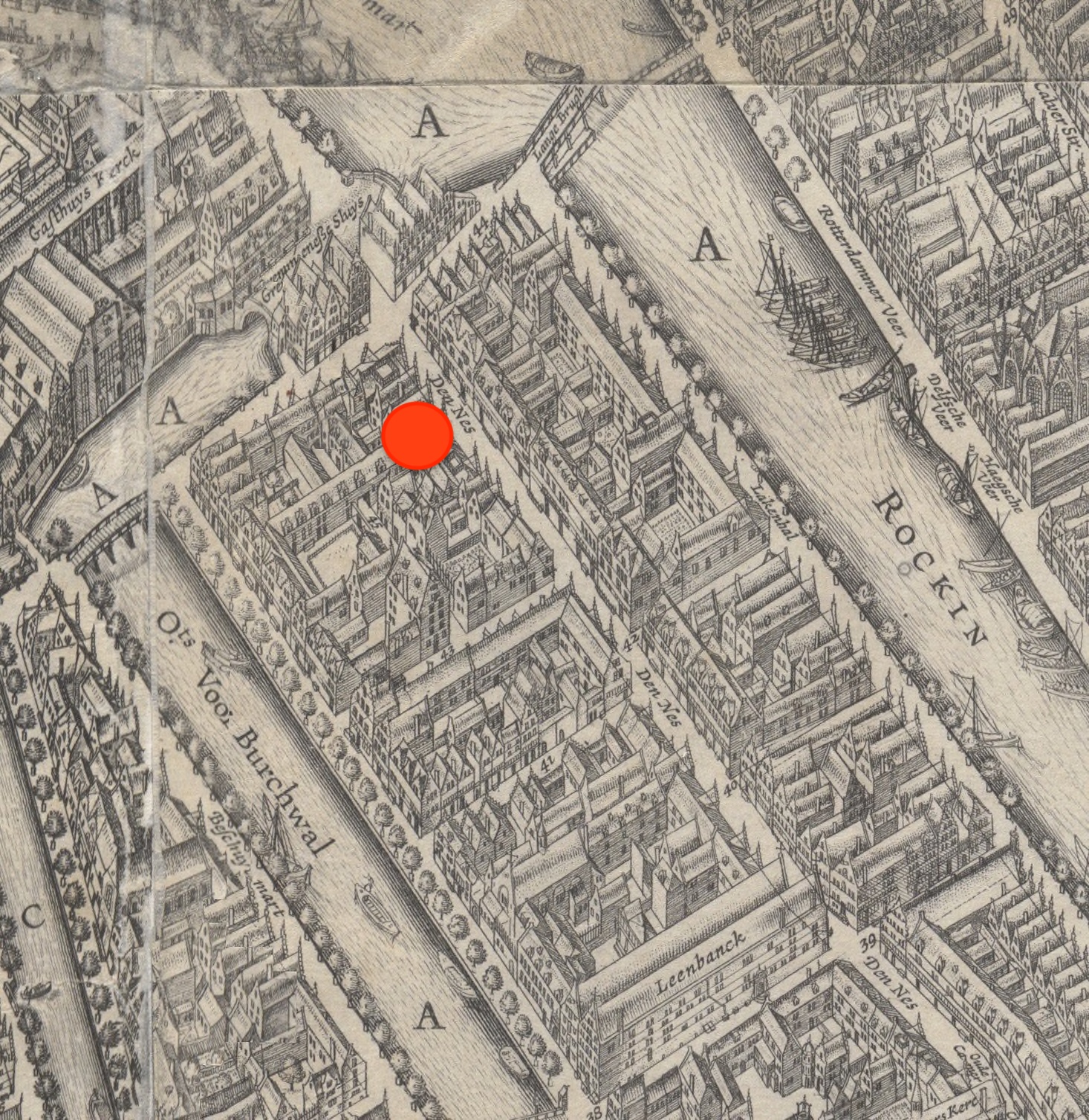
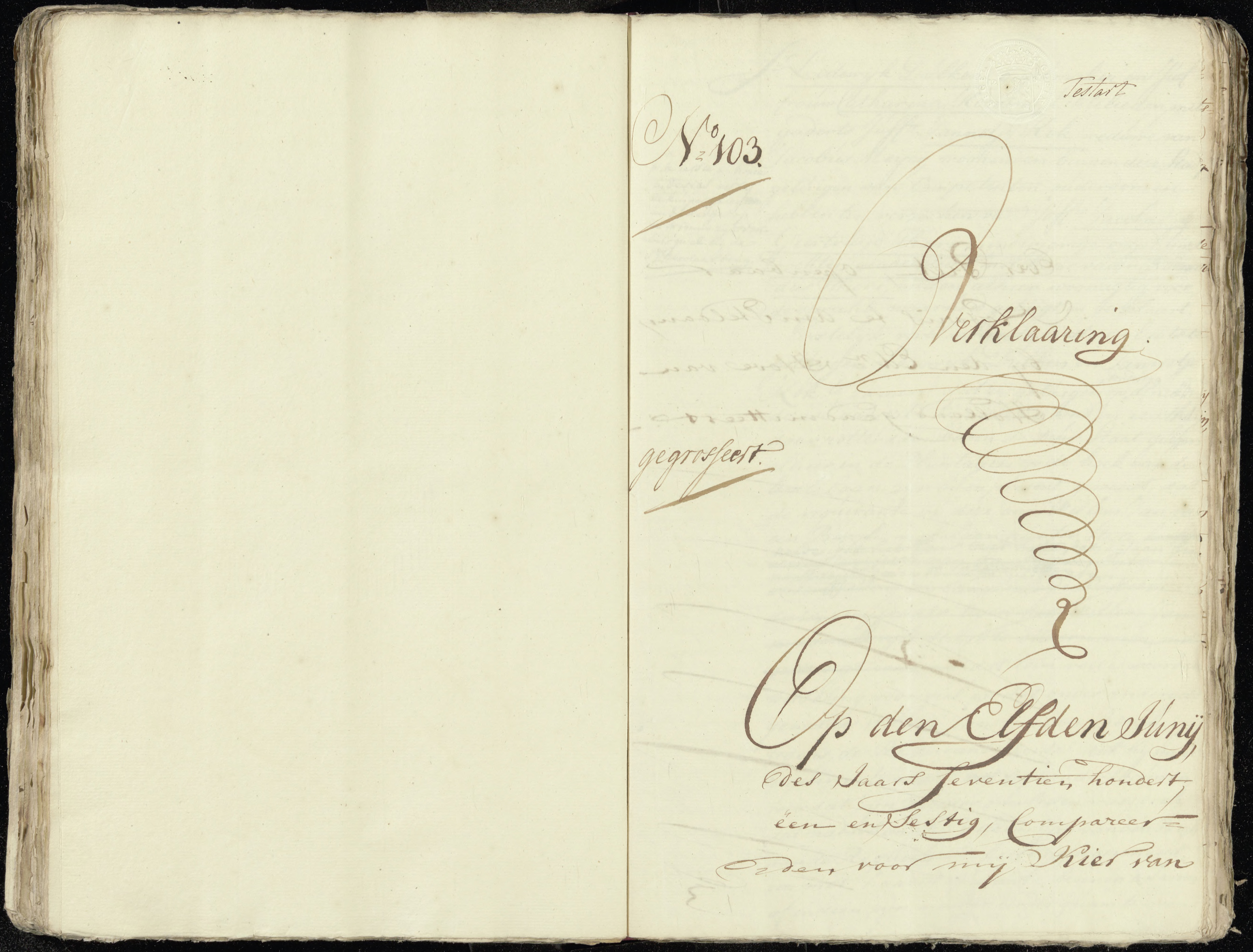
The first and second in the Nes: witness statement, 11 June 1761. Mr Lodewijk Dülken, organ builder, and Catharina Kooning, husband and wife. Residential address in the Nes, near Kuipersteeg.
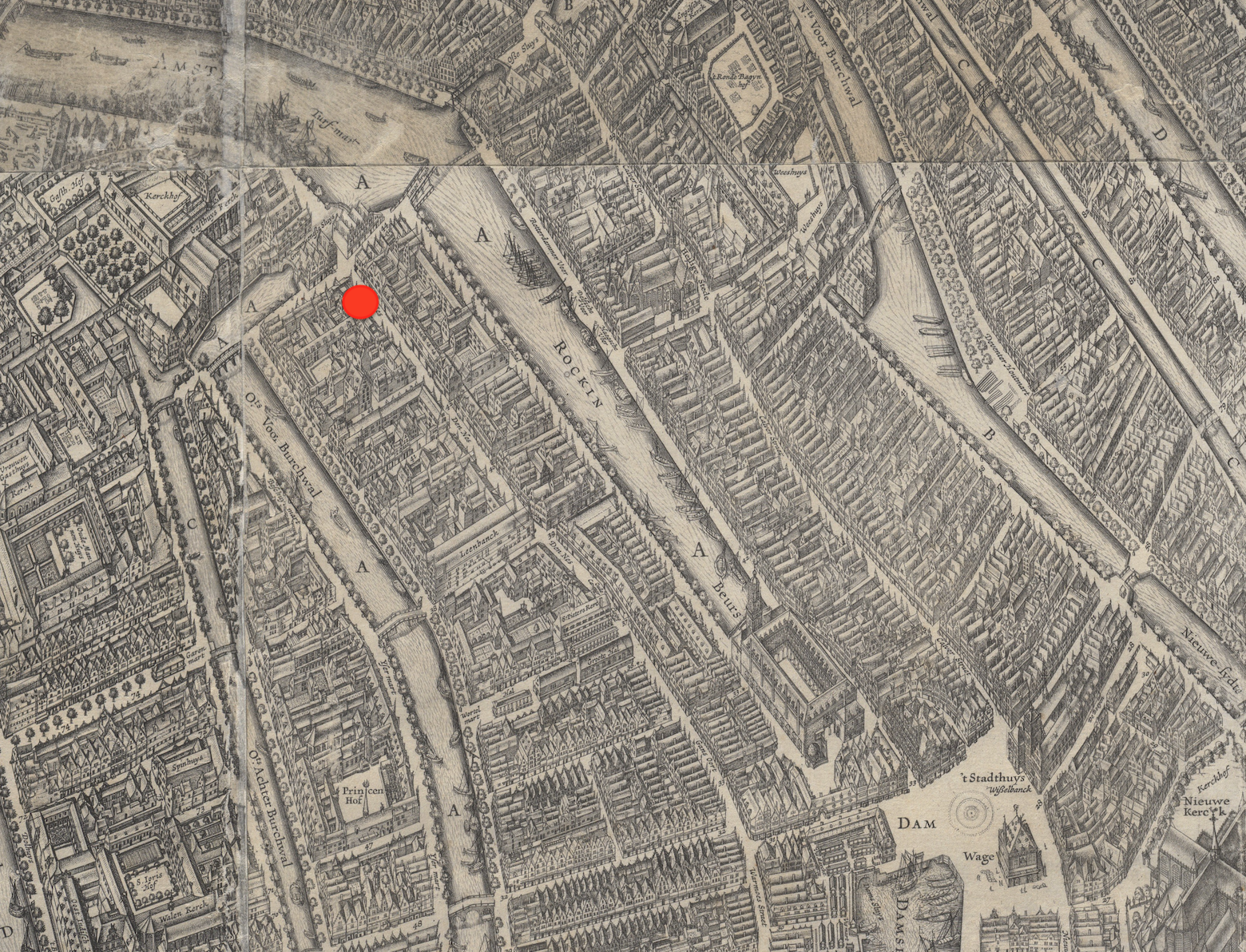
Harpsichords in Amsterdam’s Nes: From Innkeeper Beudeker to the Family Network of Dulcken and Scheffer
Anyone strolling through Amsterdam’s Nes in the second half of the eighteenth century found themselves in the beating heart of both the city's nightlife and its music trade. The street was lined with taverns, inns, and bustling activity. A small advertisement in the Amsterdamsche Courant of Thursday, January 16, 1777, offers a fascinating glimpse into this world:
"At HENDRIK BEUDEKER, Innkeeper of 'De Star' in the Nes in Amsterdam, is for private sale, an exceptionally fine HARPSICHORD, being a grand instrument with two manuals and three registers, made by H. RUCKERS, and rebuilt by the famous master VAN DEN ELSKEN, of Antwerp; for sale at a moderate price, to be viewed at the aforementioned."
An Antwerp Masterpiece in an Amsterdam Inn
An innkeeper offering a valuable harpsichord for sale was quite common at the time. Inns like De Star (located near today’s Nes 47–49) functioned as informal trading exchanges and meeting places for merchants, travelers, and musicians.
The instrument Hendrik Beudeker promoted was no ordinary harpsichord. It was built by a member of the legendary Antwerp Ruckers family, whose seventeenth-century soundboards were renowned for their unmatched tone. Furthermore, the instrument had been "vermaakt" (rebuilt) by "mr. Van den Elsken"—a phonetic spelling for the celebrated Antwerp harpsichord maker Jacobus van den Elsche (1689–1772). In eighteenth-century trade jargon, vermaken (also known as ravalement) meant thoroughly modernizing and widening an older instrument to meet contemporary musical demands. Such a restored and enlarged Ruckers was considered the pinnacle of craftsmanship at the time.
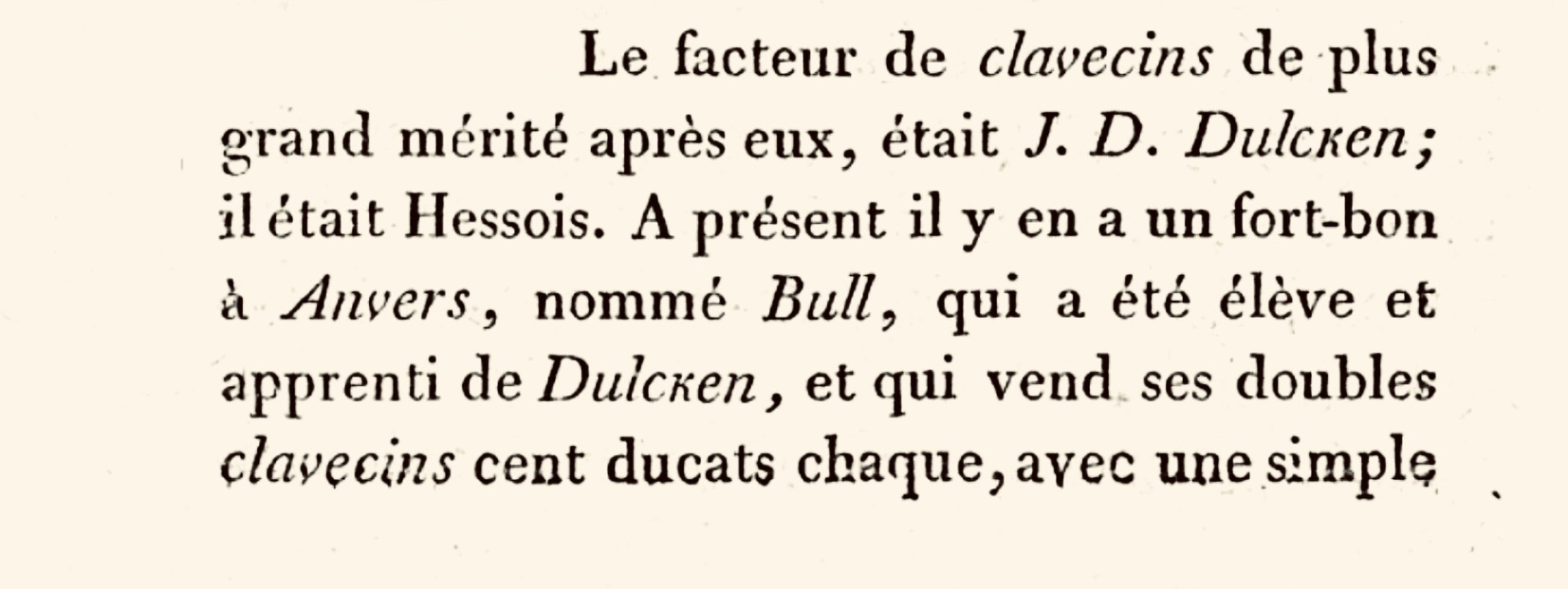
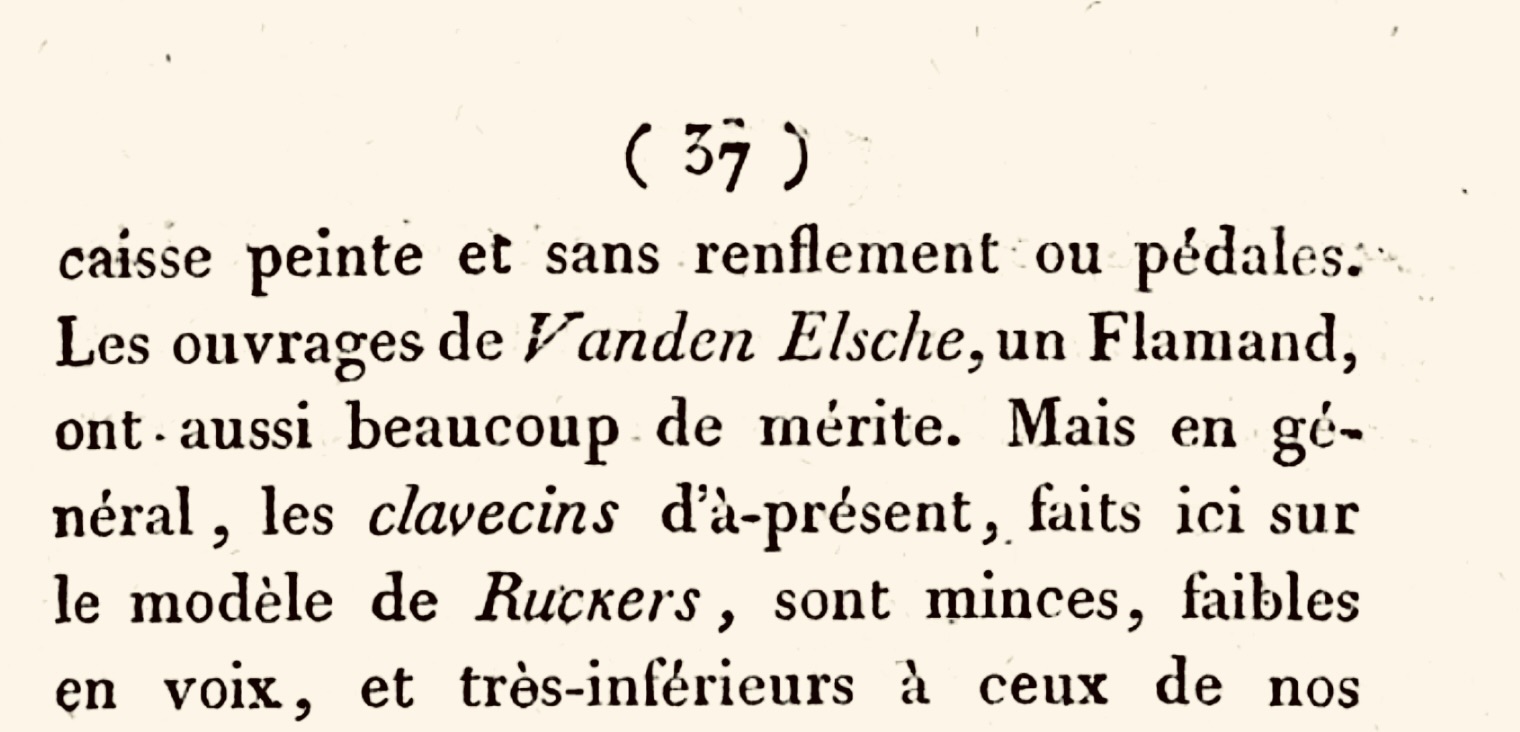
Le facteur de clavecins de plus grand mérité après eux, était J. D. DULCKEN; il était Hessois. A présent il y en a un fort-bon à Anvers, nommé Bull, qui a été élève et apprenti de DULCKEN, et qui vend ses doubles çlaveçins cent ducats chaque, avec une simple caisse peinte et sans renflement ou pédales. Les ouvrages de Vanden Elsche, un Flamand, ont aussi beaucoup de mérite. Mais en général, les clavecins d'à-présent, faits ici sur le modèle de Ruckers, sont minces, faibles en voix, et très-inférieurs à ceux de nosmeilleurs facteurs en Angleterre." De l'état présent de la musique, Charles Burney, 1810, p. 36
The most distinguished harpsichord maker after them was J. D. DULCKEN; he came from Hesse. At present, there is a very good harpsichord maker in Antwerp, named Bull, who was a pupil and journeyman of DULCKEN and who sells his double harpsichords for one hundred ducats each, with a simply painted soundboard and without a curved back or pedals. The works of Vanden Elsche, a Flemish craftsman, also deserve much praise. But in general, the harpsichords currently being made here, modelled on those of Ruckers, are thin, weak in tone and fall far short of those made by our finest builders in England.” On the Present State of Music, Charles Burney, 1810, p. 36
From Antwerp and Karthuizersstraat to the Nes: The Dulcken Family
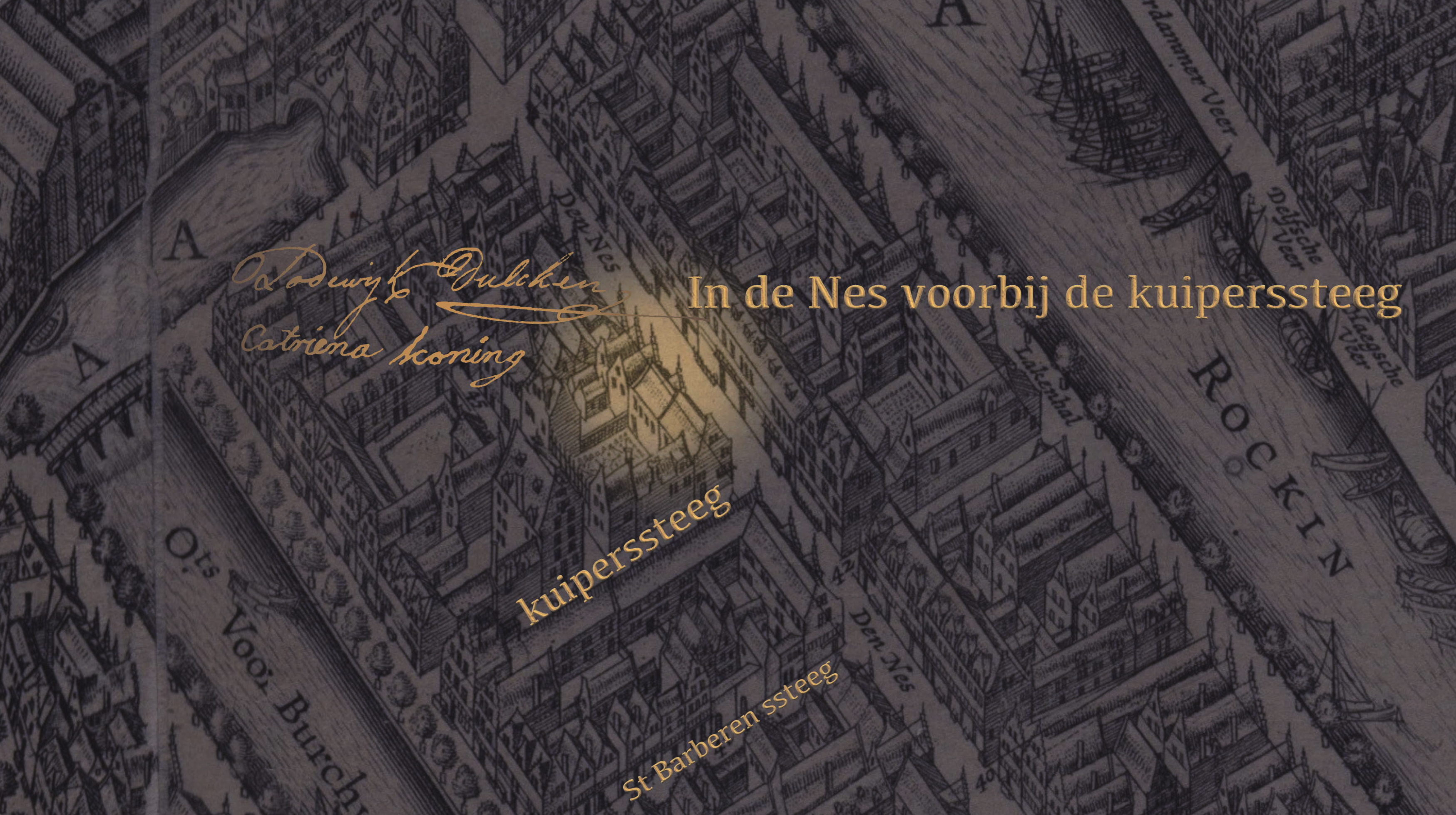
Less than a hundred meters down the street from De Star, just past the Kuipersteeg (opposite Barberstraat), another significant chapter in keyboard history had unfolded sixteen years earlier. Around 1761, the harpsichord maker Johan Lodewijk (Louis) Dulcken I lived there with his wife, Catrina Koning.
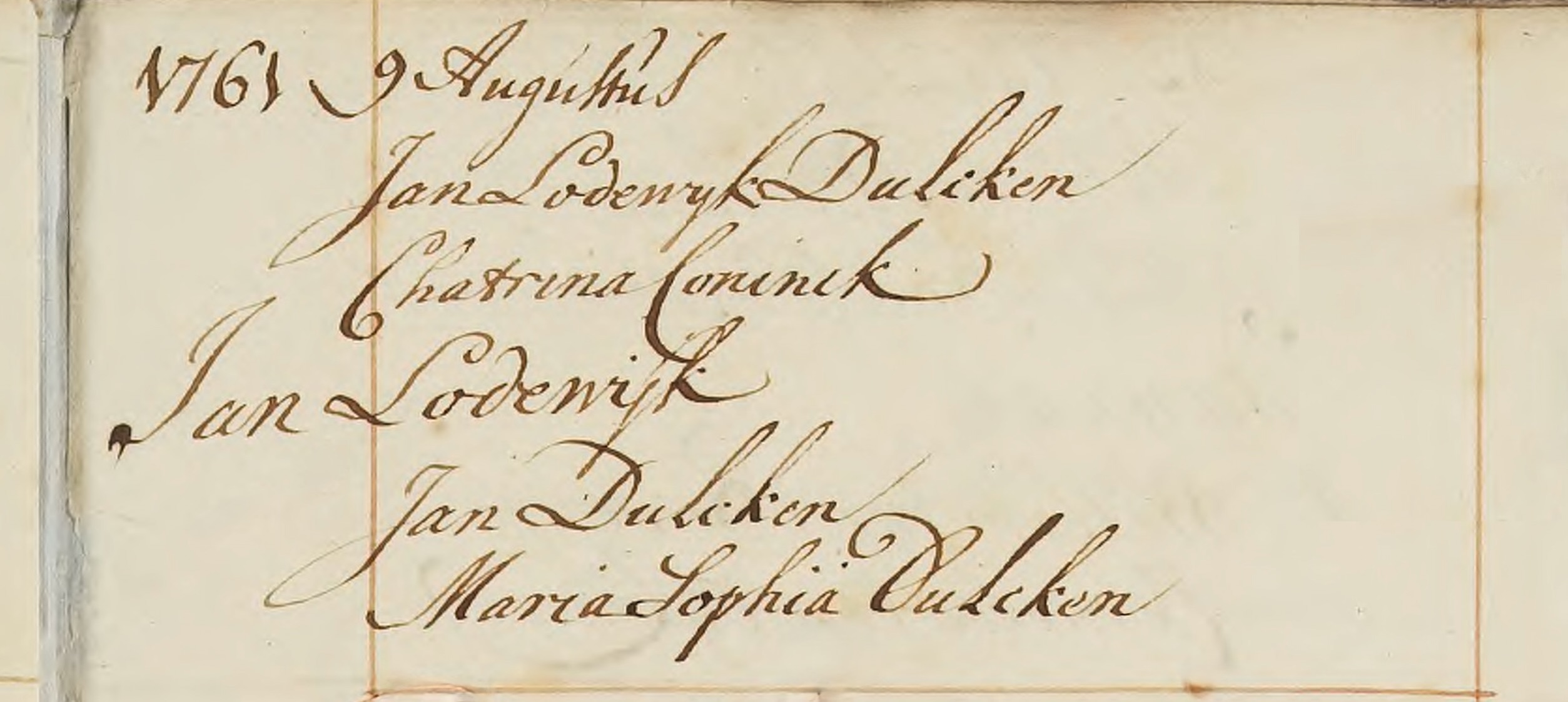
Amsterdam marriage banns from May 7, 1756, reveal that the then 22-year-old Johan Lodewijk hailed from Maastricht and was the son of the renowned Antwerp harpsichord maker Daniel Dulcken. He married 24-year-old Amsterdam native Catrina Koning. During his early years in Amsterdam, the young Dulcken had both lived and worked on the Karthuizersstraat (in the Jordaan district), in a building named "De Vier Seizoenen" (The Four Seasons)—located right next to the Karthuizer Weduwenhofje, likely the last house in the block. Later, he moved with his family to the residential address in the Nes ("past the Kuiperssteeg, next to 'De Son"), while keeping his workshop on the Karthuizersstraat. On August 9, 1761, their son Johan Lodewijk (Louis) Dulcken II was born at this residence in the Nes. This young Amsterdam native would later become one of Europe’s most famous piano makers, rising to the rank of Hofklaviermacher (Court Piano Maker) at the Bavarian court in Munich.
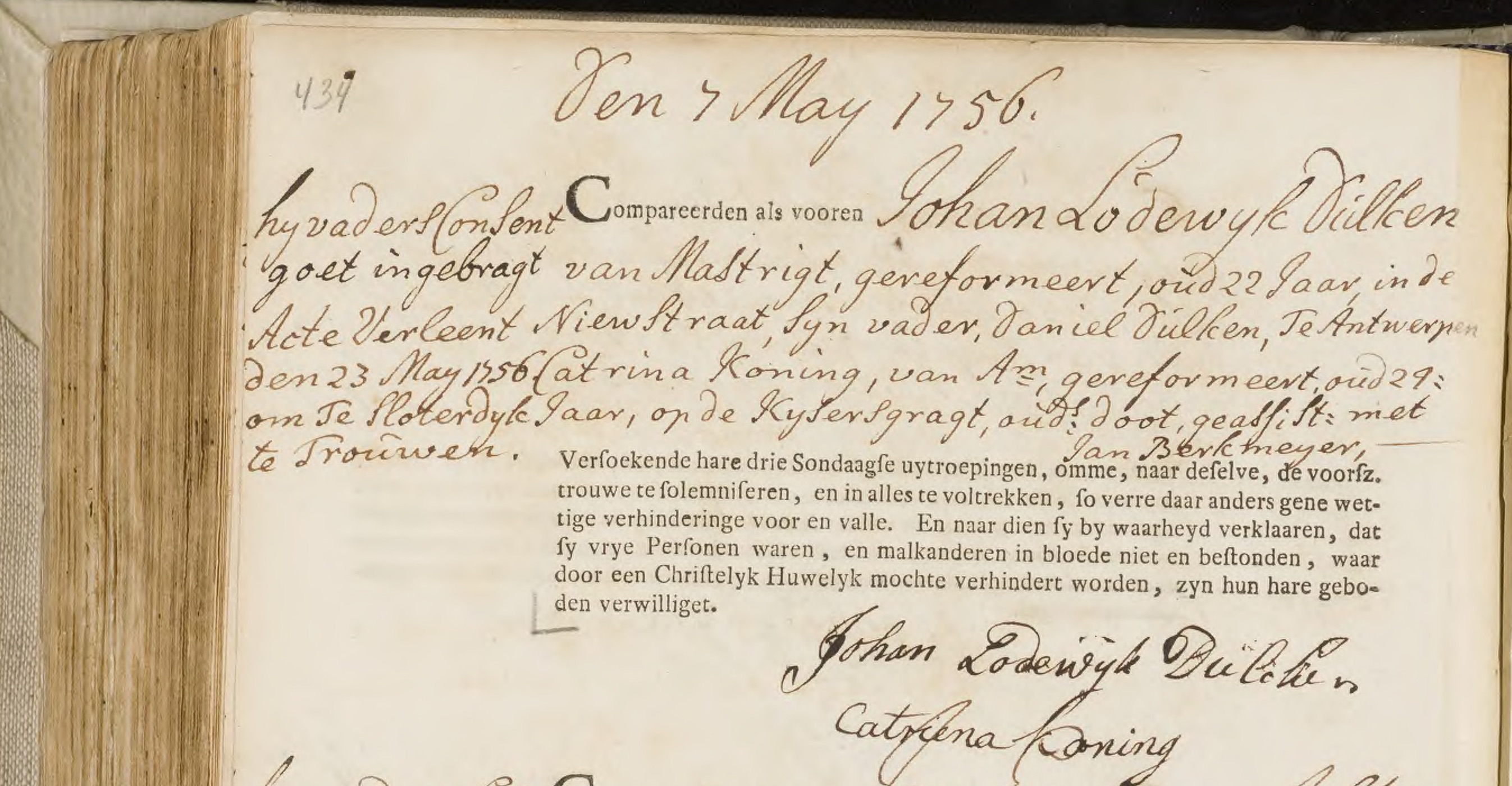
Amsterdam Marriage Banns Register, May 7, 1756. Twenty-two-year-old Johan Lodewijk Dulcken (son of Daniel Dulcken of Antwerp) registers his marriage banns with 24-year-old Catrina Koning. Jan Berkmeyer of Osnabrück—almost certainly the brother of Scheffer's bride—acts as witness. (Amsterdam City Archives)
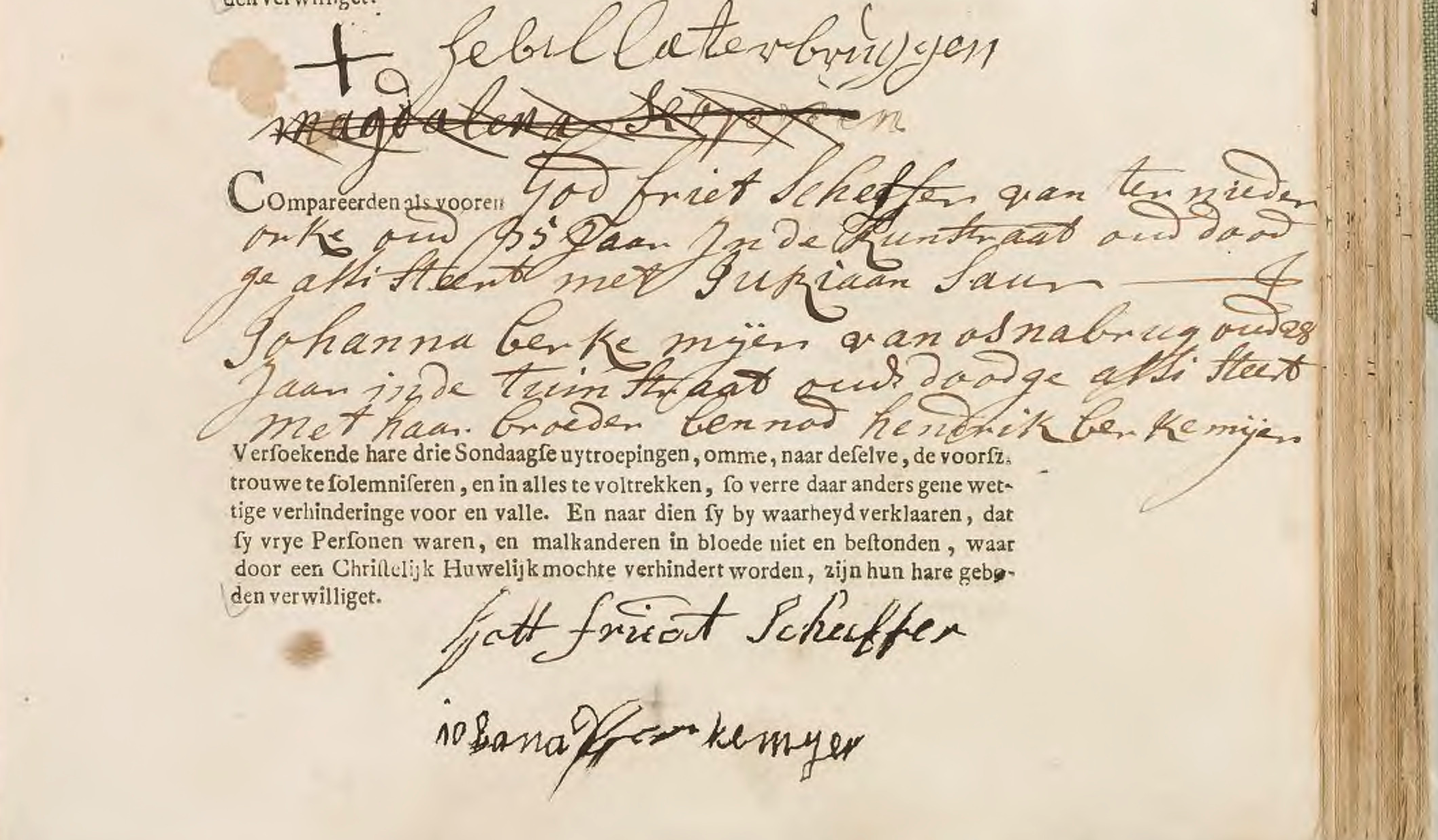
Amsterdam Marriage Banns Register, April 28, 1755 (bottom right). Harpsichord maker Godfriet Scheffer registers his marriage banns with Johanna Berkemijer of Osnabrück, assisted by her brother Hendrik Berkemijer. (Amsterdam City Archives)

A Tight-Knit Network: Godfried Scheffer and the Berkemeyer Family
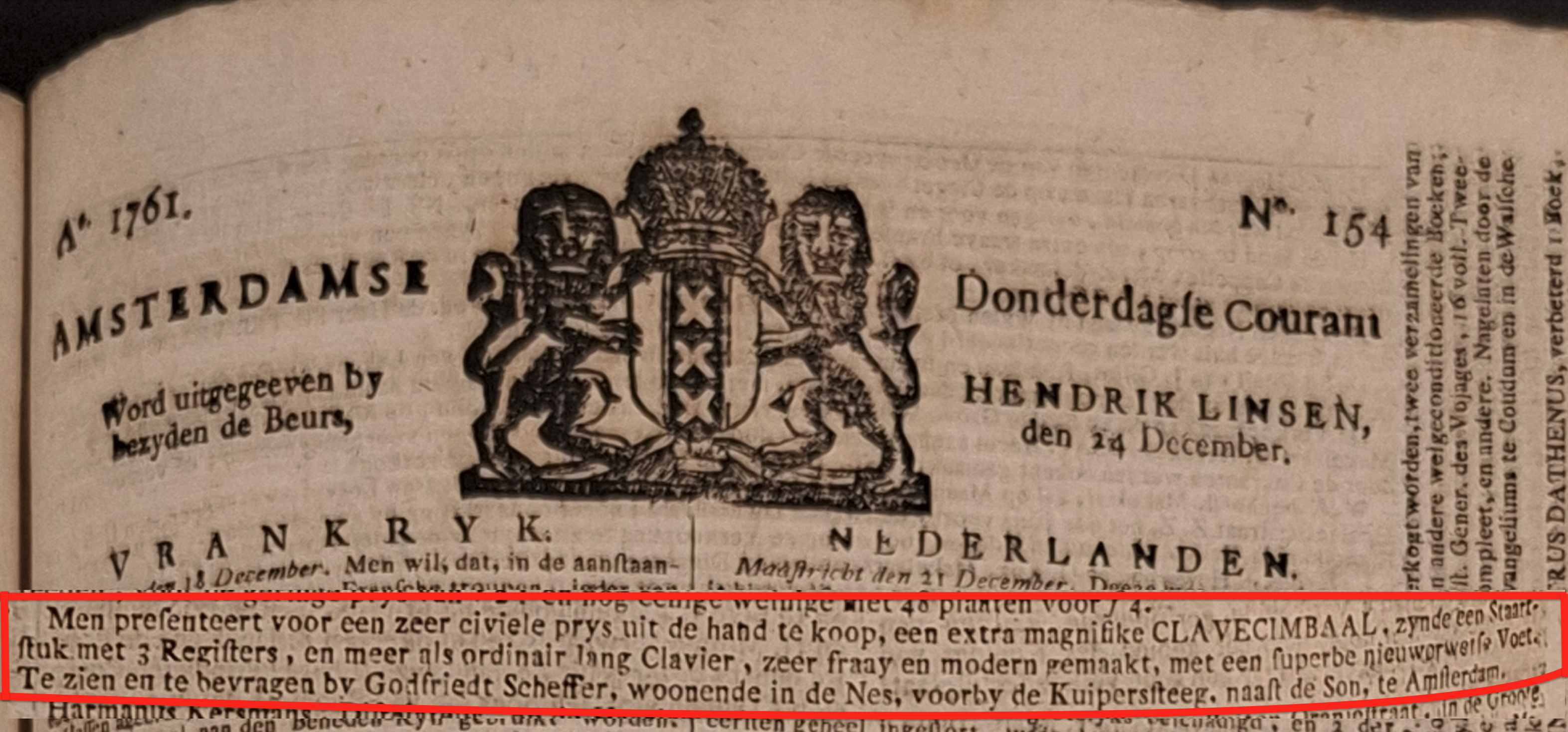
Shortly after his son’s birth, Louis Dulcken I abruptly left Amsterdam with his family to settle in Hasselt, in the province of Overijssel. Comparing Amsterdam newspapers from those months reveals a striking clue. Four months after young Louis’s baptism, on Thursday, December 24, 1761, another German-speaking harpsichord maker placed an advertisement in the Amsterdamse Donderdagse Courant: Godfriedt Scheffer (also spelled Godfried Schiffer). His address? The exact same residential house in the Nes as Dulcken’s:
"Offered for private sale at a very reasonable price, an exceptionally magnificent HARPSICHORD, being a grand instrument with 3 Registers, and an unusually long Keyboard, very finely and modernly crafted, with a superb fashionable Stand. To be viewed and inquired about at Godfriedt Scheffer's, residing in the Nes, past the Kuiperssteeg, next to 'De Son', in Amsterdam."
The fact that Scheffer took over Dulcken’s home turns out to be no coincidence. Amsterdam marriage banns uncover a close-knit family network behind the scenes:
On April 28, 1755, Godfried Scheffer registered his marriage banns with Johanna Berkemijer from Osnabrück, who was assisted by her brother Hendrik Berkemijer.
A year later, on May 7, 1756, Jan Berkmeyer—also from Osnabrück and almost certainly Johanna’s brother—acted as witness at the marriage banns of Louis Dulcken and Catrina Koning.
Dulcken and Scheffer were therefore not merely fellow craftsmen or possibly master and journeyman in the Karthuizersstraat workshop; they belonged to the same German-speaking circle centered around the Berkemeyer family.
A Legal Tug-of-War in Hasselt (1763–1765)
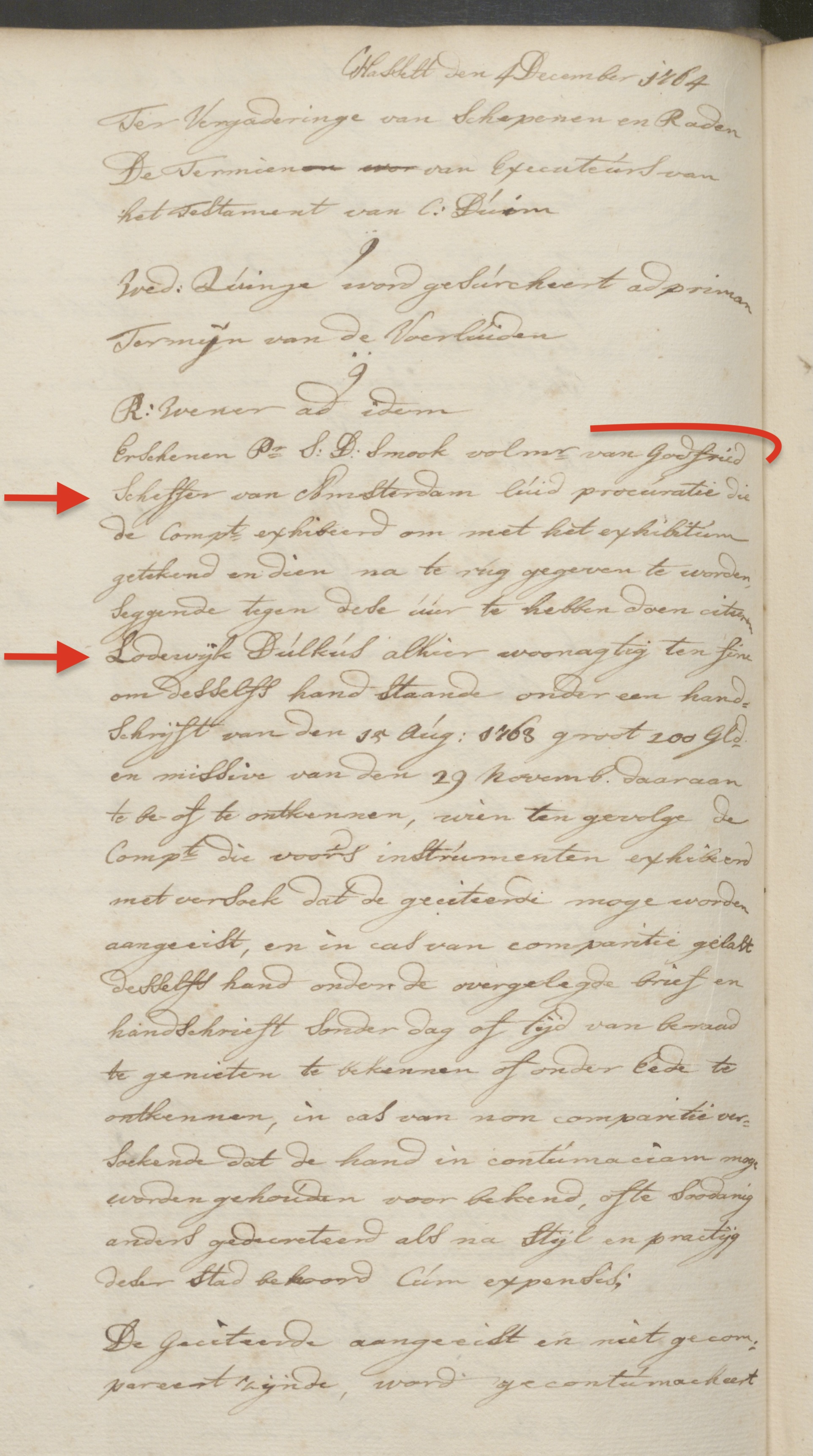
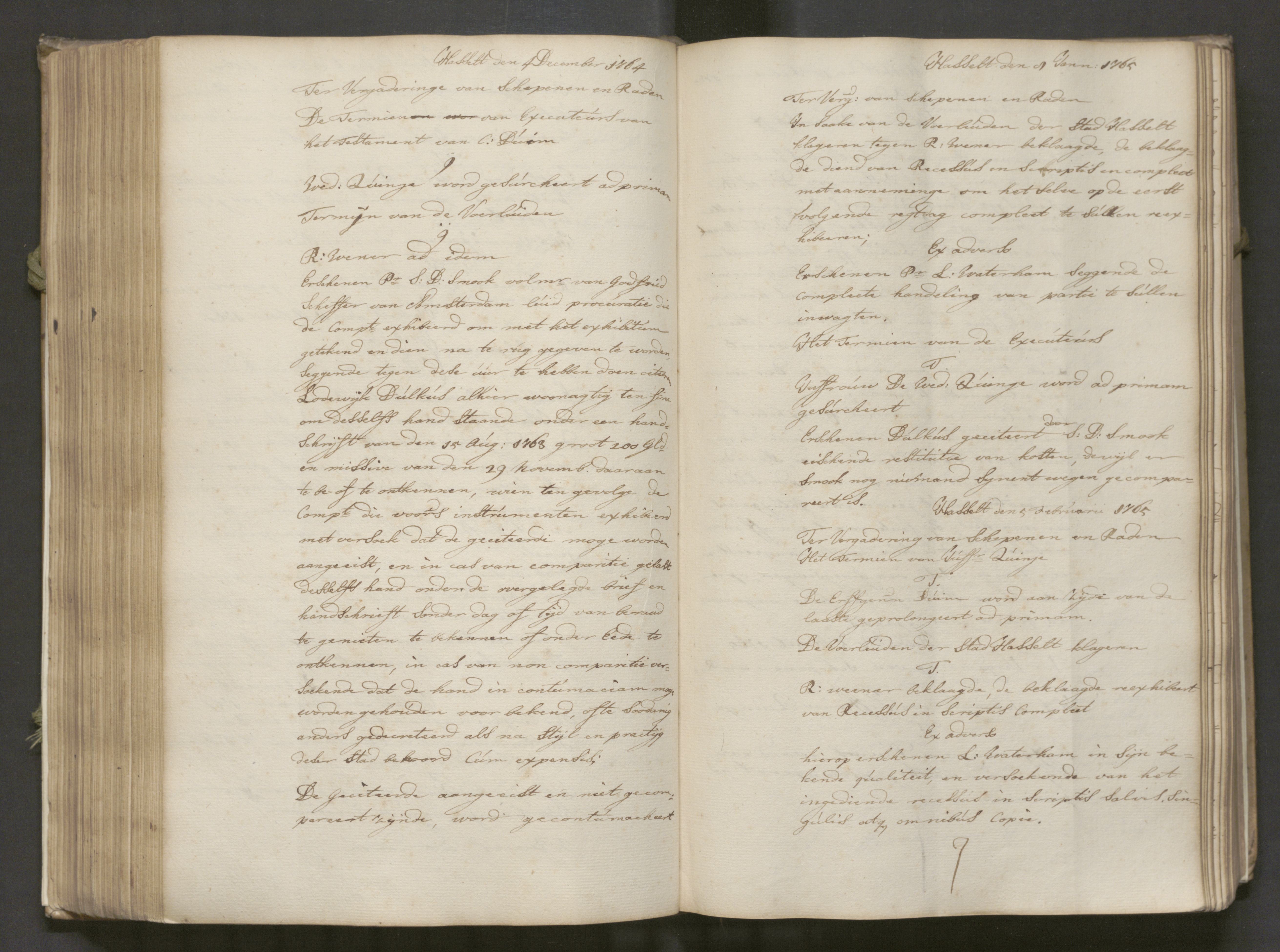
Just how closely their lives and finances were intertwined is shown by court records from the Aldermen and Council of the city of Hasselt, where Louis Dulcken was now living. On August 14, 1763, Dulcken had signed a promissory note (handschrift) for 200 guilders in favor of Godfried Scheffer, followed by a letter (missive) on November 29 of that year. For an eighteenth-century artisan, 200 guilders was a substantial sum, roughly equivalent to half a year's wages.
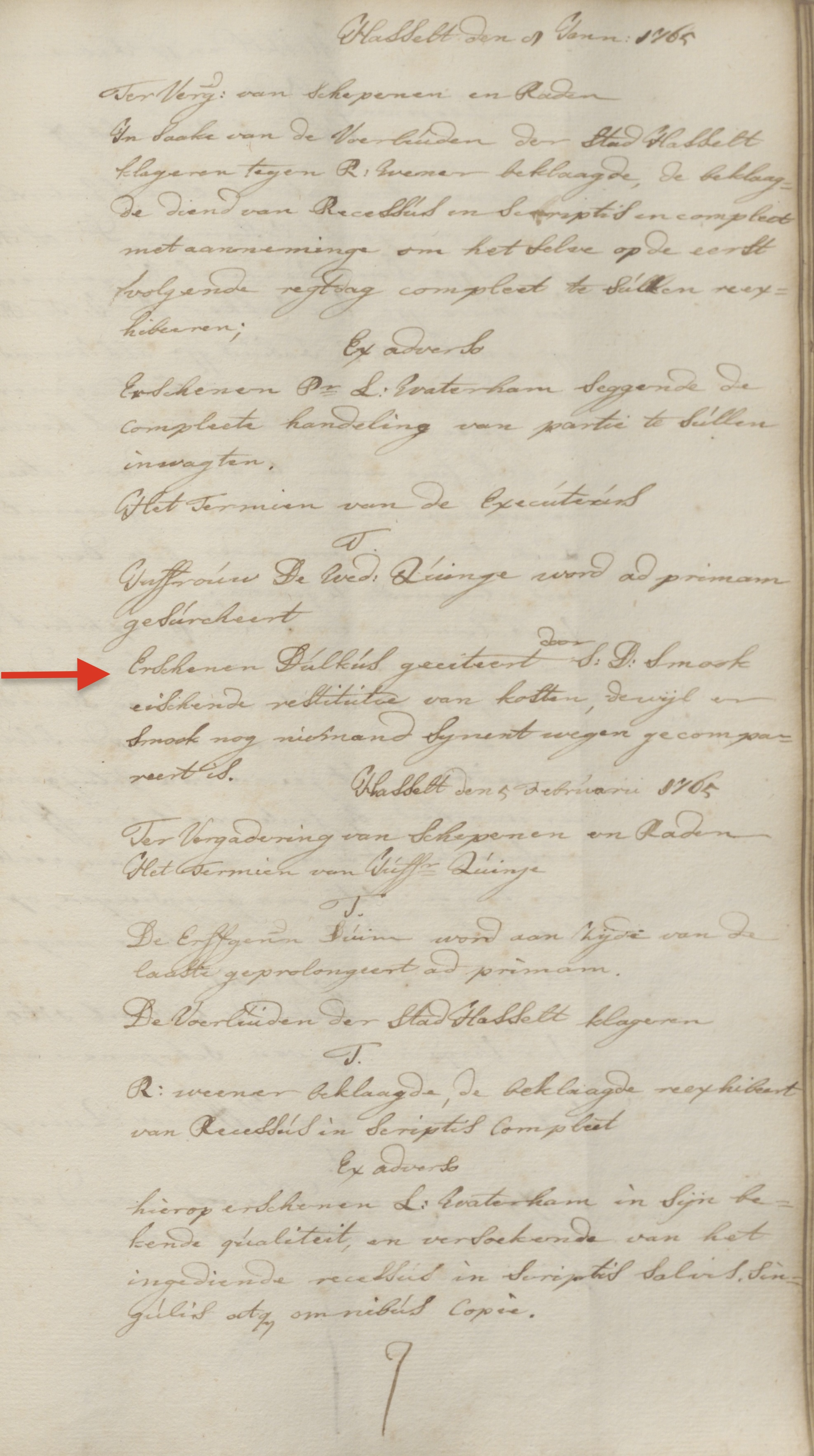
When payment was not forthcoming, "Godfried Schiffer of Amsterdam" engaged a local attorney in Hasselt. On December 4, 1764, "Lodewijk Dulkus" was summoned to acknowledge his signature on the promissory note, but he failed to appear. A month later, on January 9, 1765, Dulcken did appear before the Hasselt court. Because no one was present on Scheffer’s behalf at that session, Dulcken immediately demanded reimbursement for his legal costs. Whether the 200-guilder debt stemmed from unpaid wages or a loan with which Scheffer had financed Dulcken’s departure from Amsterdam, the court record proves how deeply their shared past continued to reverberate for years to come.
A Musical Crossroads
Together, these archival discoveries paint a vivid picture of eighteenth-century musical Amsterdam. While innkeeper Hendrik Beudeker facilitated the trade in exclusive Antwerp harpsichords by Ruckers and Van den Elsche at De Star, craftsmen like Dulcken and Scheffer—just a few doors past the Kuipersteeg, united by friendship, family ties, a workshop on the Karthuizersstraat next to the Widows' Almshouse, and a home in the Nes—were busy building the future of the keyboard.
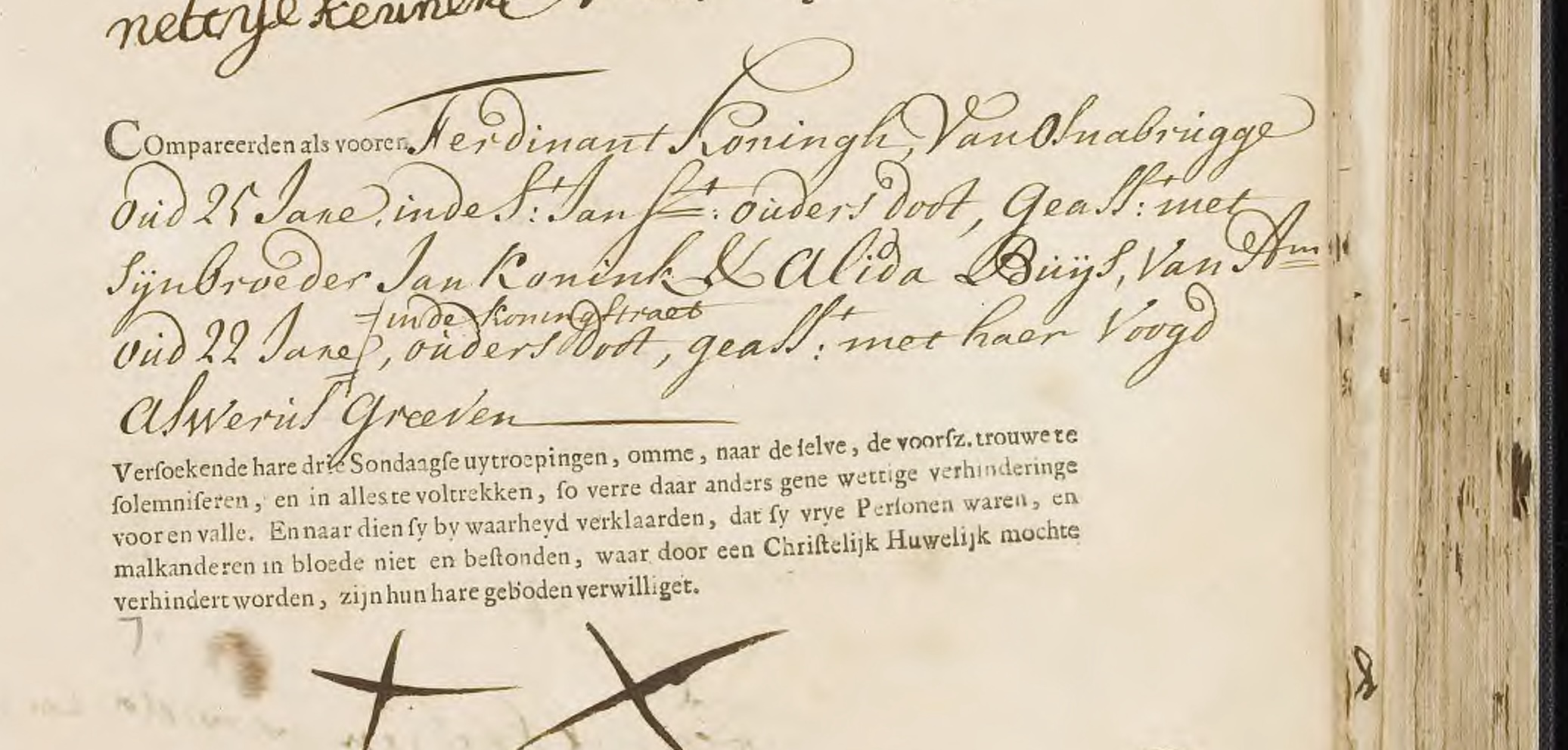
Ferdinand Koningh Van Osnabrugge (Catharina Coningh’s father)