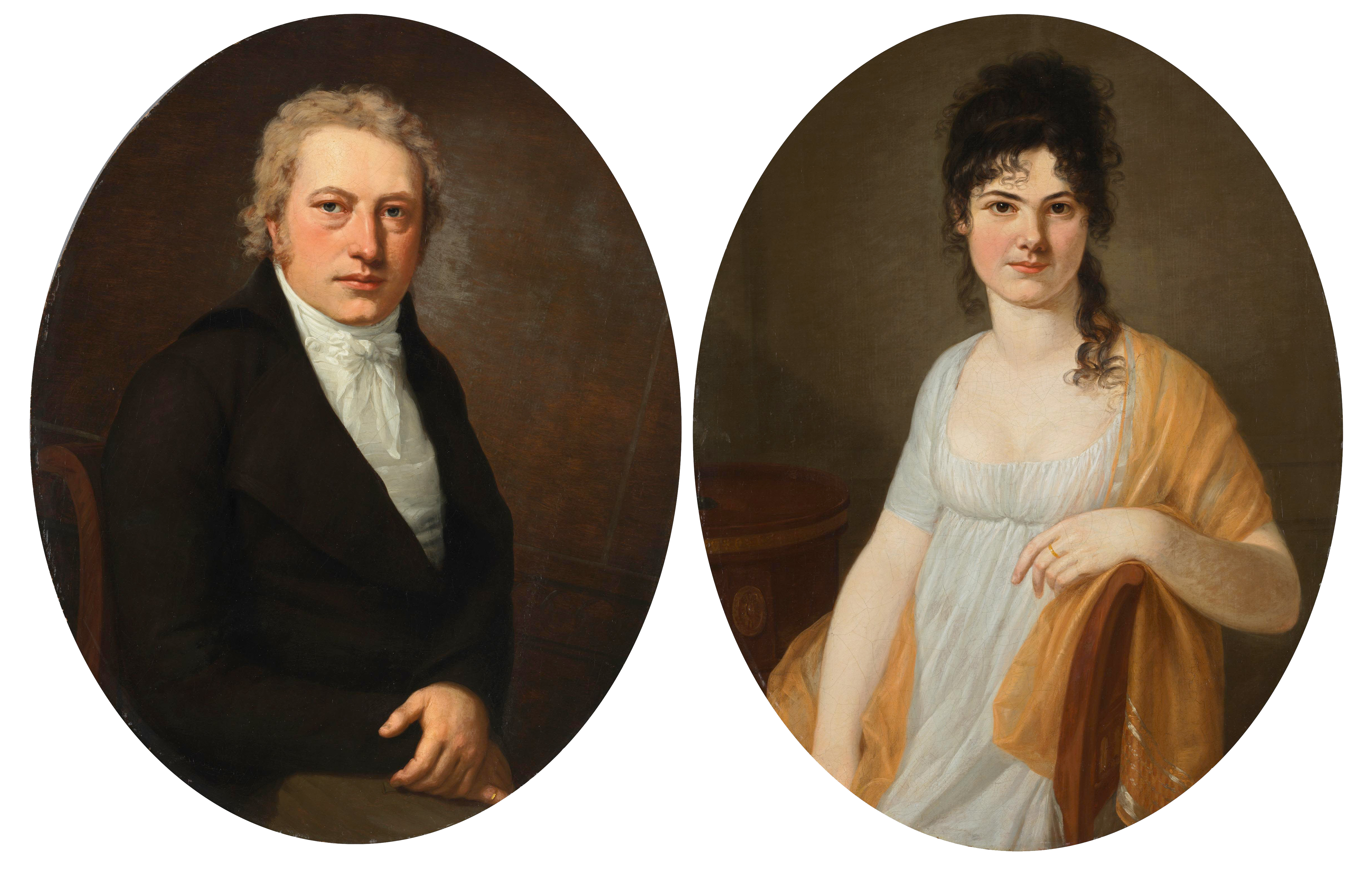
Louis Dulcken's double Marriage: From Augsburg to Munich's Musical Elite
For the piano builder Johannes Lodewijk (Louis) Dulcken, scion of the renowned Southern Netherlandish and German keyboard-building dynasty, a marriage in southern Bavaria around the turn of the century was not merely a personal milestone, but a delicate balancing act between faith, social standing, and art. Louis Dulcken, hailing from a Reformed (Protestant) tradition, found his great love in the brilliant musician Sophie Lebrun in Munich.
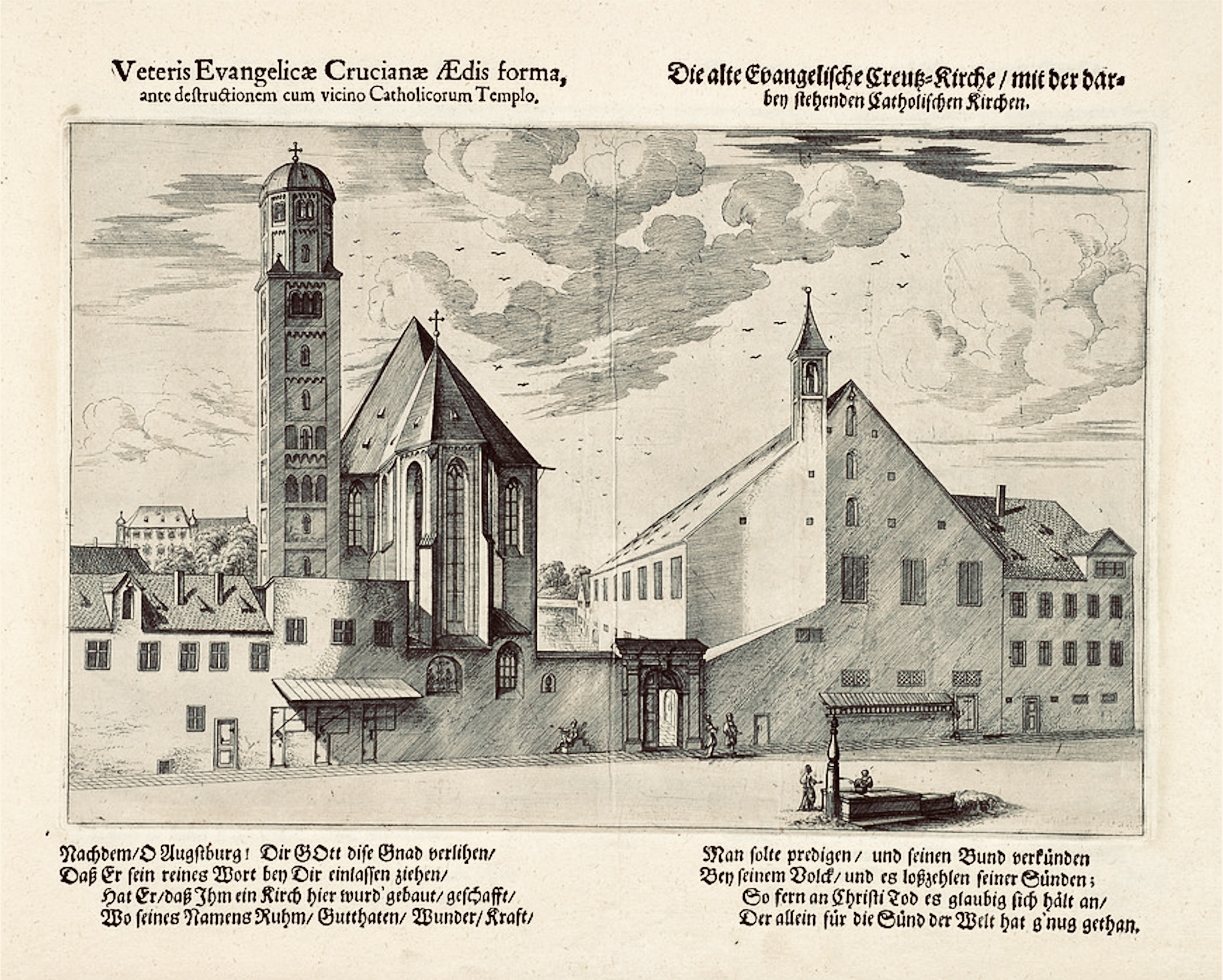
Because mixed or non-Catholic marriages were subject to strict regulations in the predominantly Catholic Electorate of Bavaria, their union took place in two remarkable steps. First, the couple traveled to the Free Imperial City of Augsburg, where Protestantism was freely practiced, to marry there in the Reformed tradition.
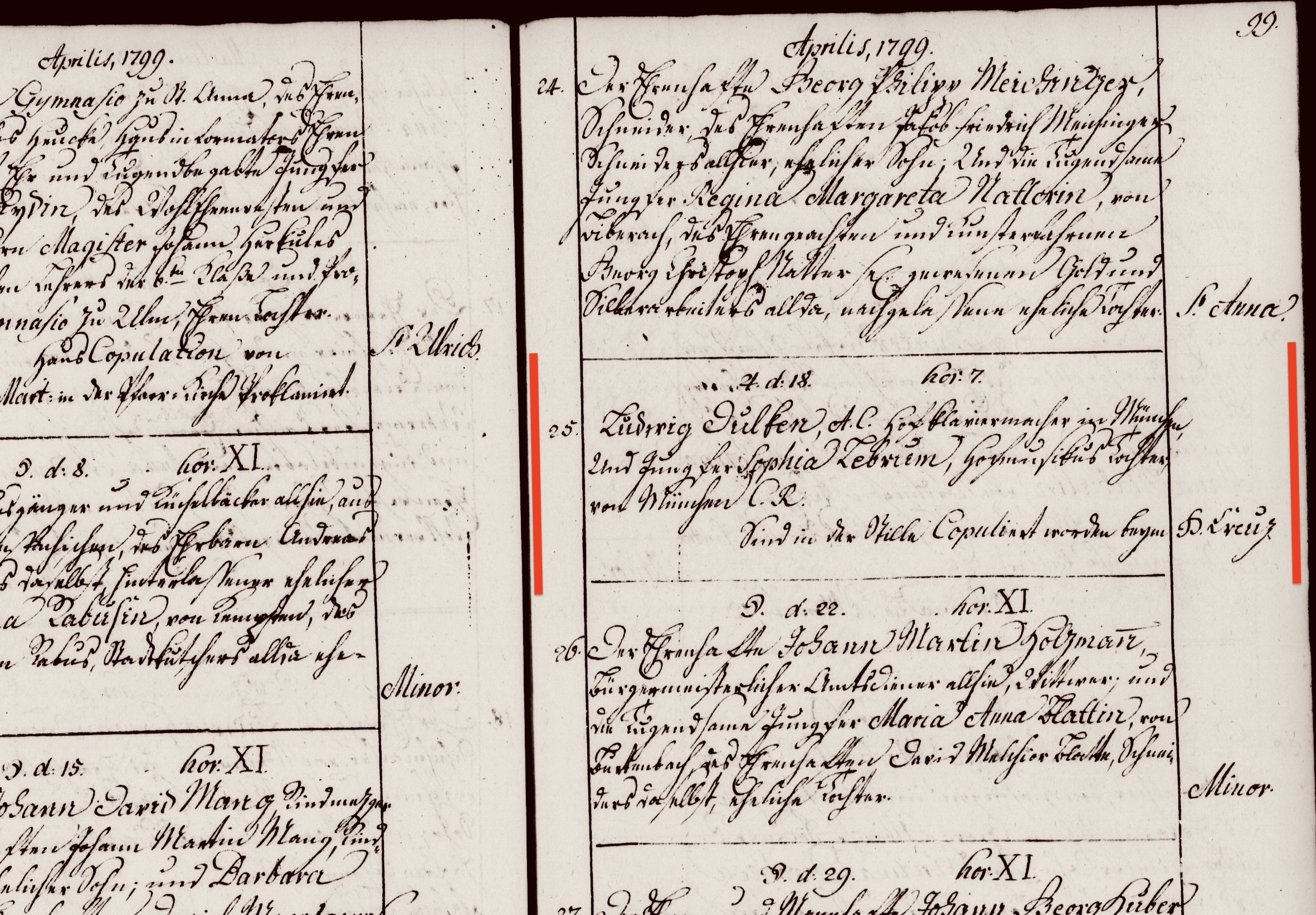
Marriage, 18 April 1799: Jan Lodewijk (Louis) Dülken and Sophia Lebrun
E.L. huwelijk Augsburg (Bayern / Landeskirchliches Archiv der Evangelisch-Lutherischen Kirche in Bayern / Dekanat Augsburg / Augsburg-Gesamtkirchengemeinde / Trauungen 1796 - 1819, pagina 99, Bild 57): "Aprilis, 1799 99. [Donnerstag] d[en] 18. hor[a] 7 25. Ludwig Dulken, A[ugsburger] C[onfession] Hofklaviermacher in München, und Jungfer Sophia Lebrun, Hofmusikus-Tochter, von München C[atholischer] R[eligion] sind in der Stille copuliert worden beijm H[eiligen] Creuz". Dus de transcriptie betreffende het eigenlijke trouwboek van de ''parochie" Heilig Kreuz betreft dus GEEN E.L. ondertrouw, maar ook E.L. huwelijk.
Vervolgens werd hun verbintenis tijdens de advent in München officieel en feestelijk bevestigd in het bijzijn van de culturele kopstukken van de stad.
Met deze dubbele huwelijkssluiting verbond Louis Dulcken zijn eigen vermaarde klavierbouwersdynastie voorgoed met een van de meest prestigieuze muzikale families van Europa. Want wie was deze Sophie Lebrun eigenlijk?
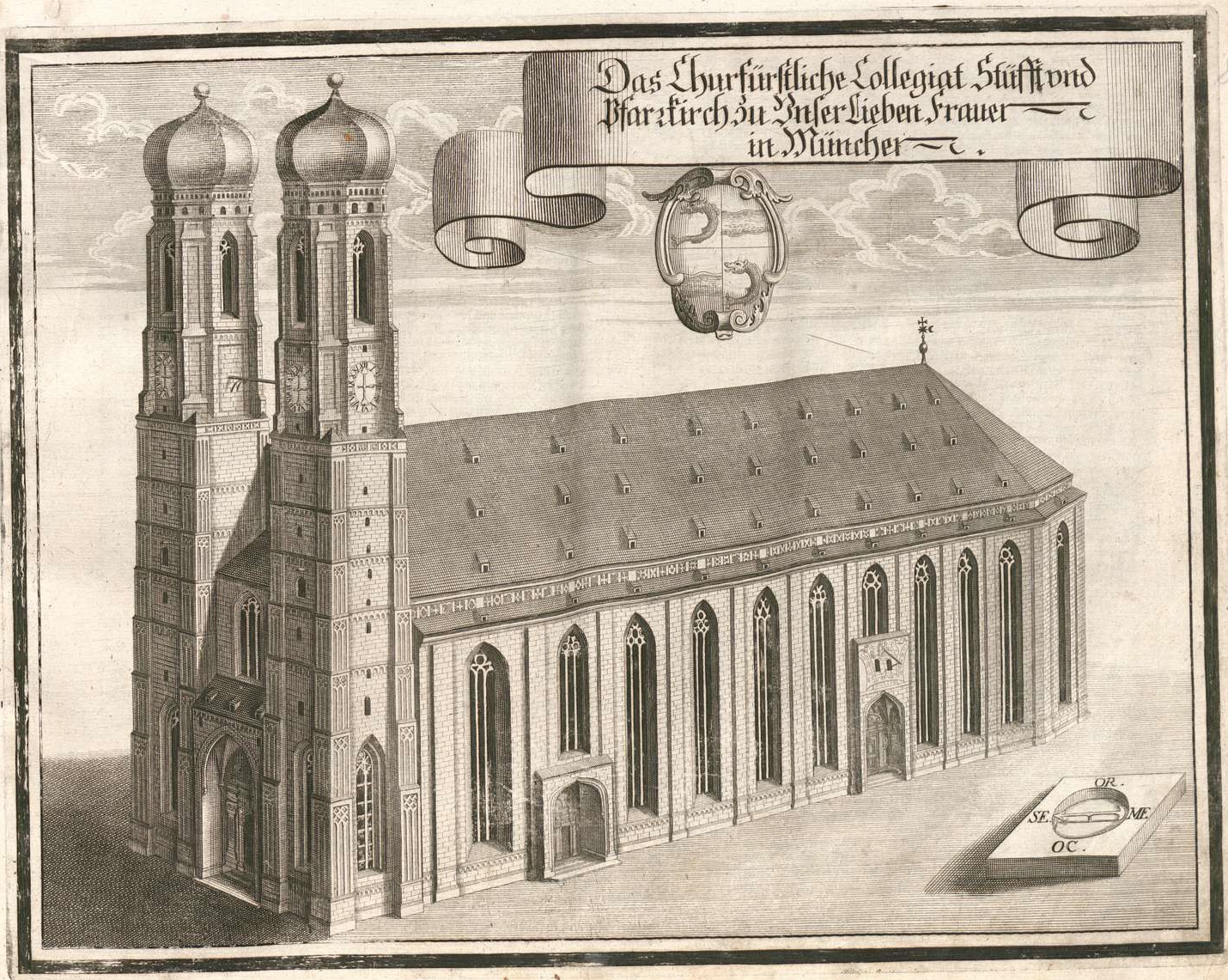
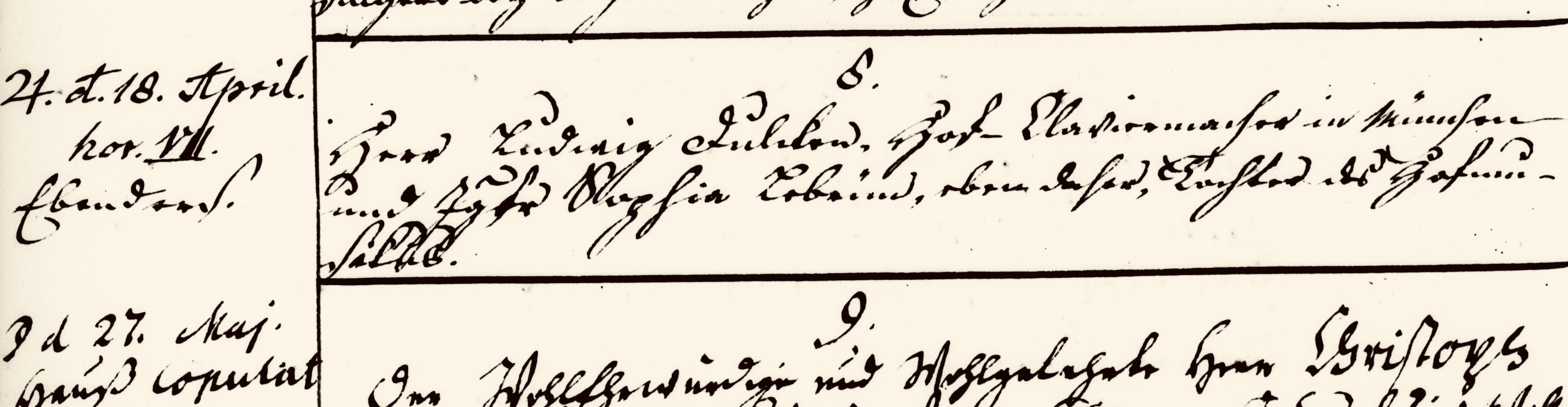
Marriage, 27 December 1799: Jan Lodewijk (Louis) Dülken and Sophia Lebrun R.K. huwelijk München (Archive des Erzbistums München und Freising, Seelsorgeeinheiten, Pfarreien und Kirchenstiftungen, CB301, München-Zu Unserer Lieben Frau 1561-1937, Pfarramtsverwaltung, M9313, Trauungen 1798-1806, Bild 35,
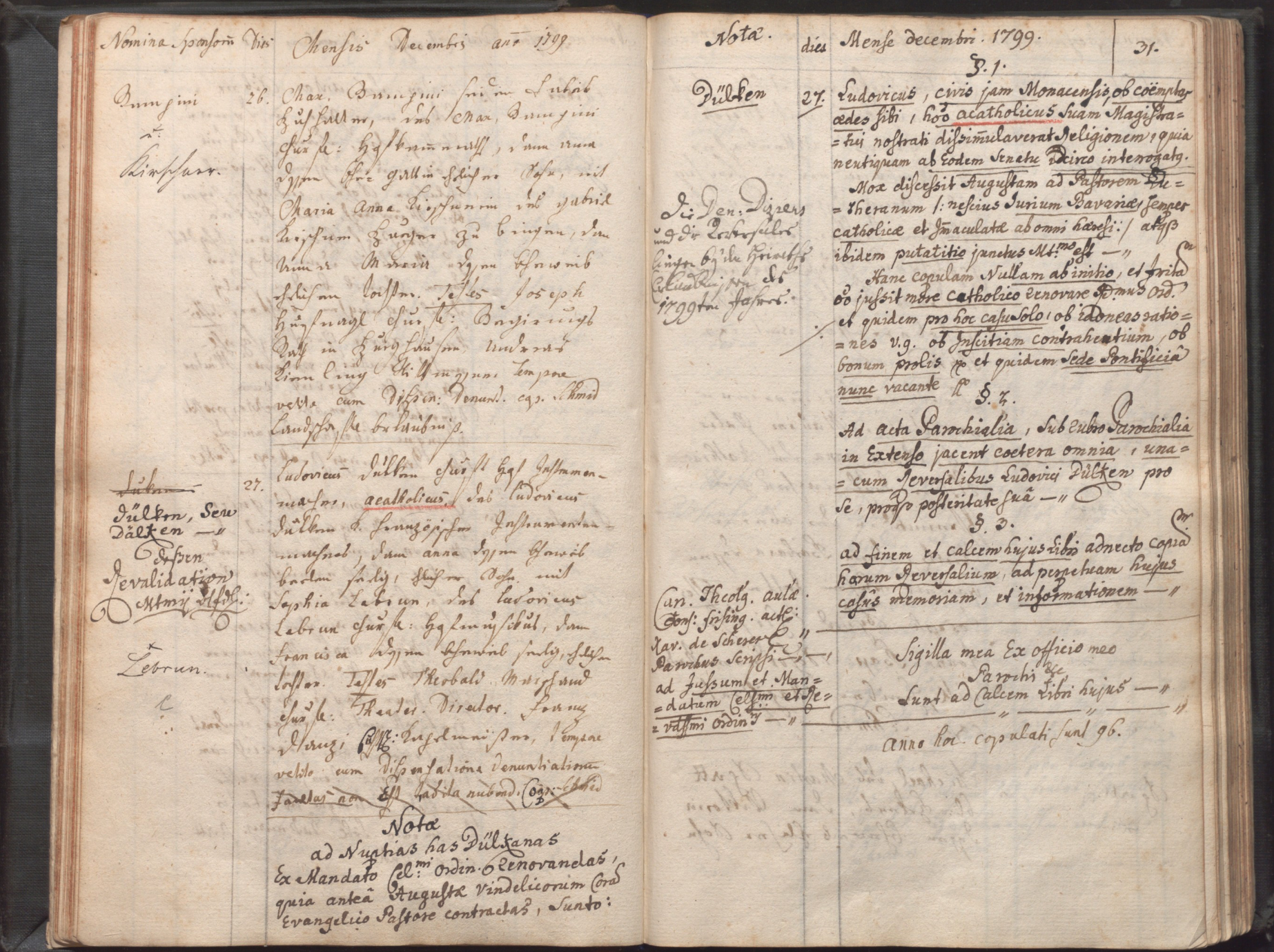
"Nomina Sponsoru[m] Dies Mensis Decembris An[n]o 1799 Dülken, seu 27. Ludovicus Dülken churf[ürstlicher] Hof-Instrumen[ten]m Dälken macher, acatholicus, des Ludovicus dessen Dülken k[öniglich] französischen Instrumenten Revalidation machers, dann Anna dessen Eheweib m[a]t[ri]m[on]ii ____ beiden seelig, ehlicher Sohn, mit Sophia Lebrun, des Ludovicus x Lebrun churf[ürstlichen] Hofmusikus, dann Lebrun Francisca dessen Eheweib seelig, ehelichen Tochter. Testes: Theobald Marschand churf[ürstlicher] Theater-Director, Franz Danzi c[h]u[r]f[ürs]t[licher] Kapelmeister, tempore vetito cum dispensatione denuntiationu[m]".
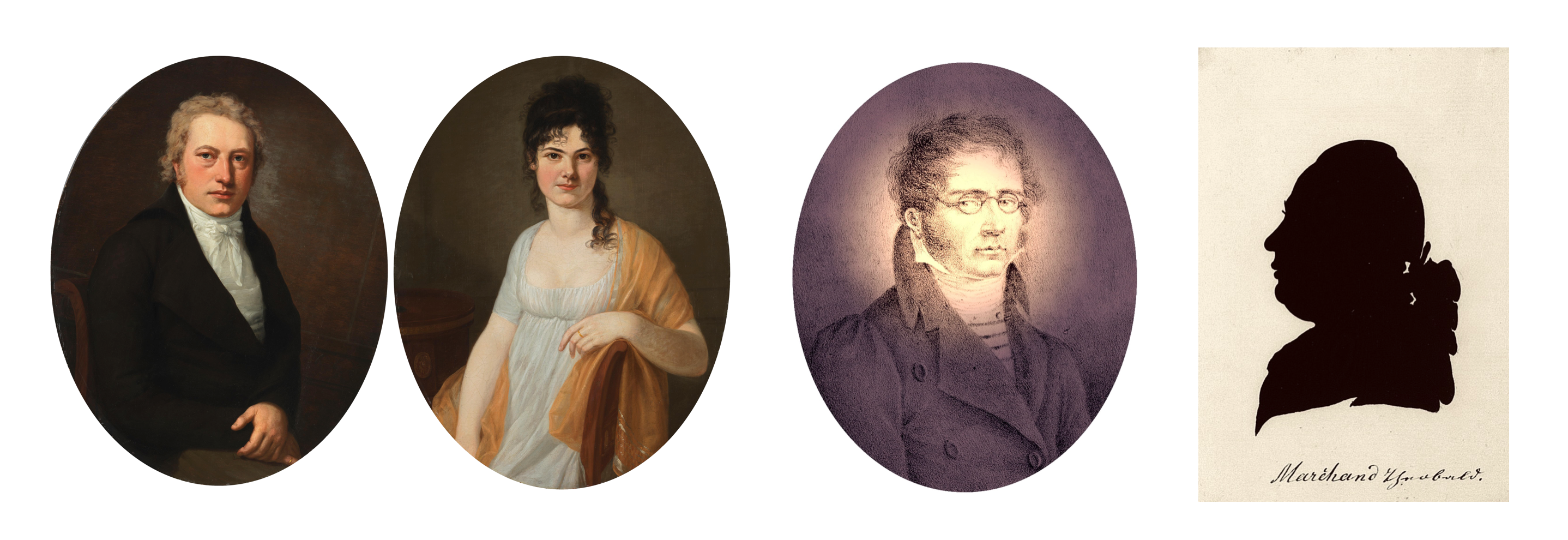
A Mozartian Pedigree: How the Musical Elite of London, Milan, Munich, and Mannheim Converged at the Wedding of Louis Dulcken and Sophie Lebrun
When Louis Dulcken and Sophie Lebrun seal their marriage in Munich, he is not merely marrying a gifted singer and pianist. He steps straight into the heart of absolute European musical elite. Anyone opening an encyclopedia will quickly read about Sophie's brilliant concert tours and compositions. But there is a much more vivid, honest, and unquestionable witness to the musical DNA flowing through Sophie's veins: the family Mozart — and even the family Bach.
In the unfiltered, often razor-sharp letters of Wolfgang Amadeus and his father Leopold Mozart, Sophie's family continually emerges as the gold standard of musical craftsmanship. Anyone examining the witness list and family ties of this Munich wedding—featuring uncle Franz Danzi and theater director Theobald Marchand among the witnesses—sees a fascinating network uniting the pinnacle of the legendary Mannheim School.
The Grandfather and Parents: From Mannheim to La Scala, London, and Vienna
Wolfgang Amadeus Mozart generally had little patience for mediocrity—especially in Salzburg, he was intensely annoyed by half-baked musicians. In Mannheim and later in Munich, however, he encountered an entirely different caliber: seasoned, top-tier professionals. At the local court shone Sophie's grandfather, Innocenz Danzi (principal cellist since 1754), whose playing was deeply admired by Mozart.
Innocenz passed this talent on to his children, including Sophie's mother, the brilliant soprano Franziska Danzi (born in 1756 and died in 1791—the exact same lifespan as Mozart himself). She married the equally famous oboist Ludwig August Lebrun, Sophie's father. Together, the Lebruns formed a musical dream team that conquered Europe.
Their international triumphs knew few equals:
The Opening of La Scala (Milan, 1778): In the summer of 1778, the newlywed couple traveled through Italy,earning Franziska the ultimate honor: on August 3, 1778, she starred as the female lead in the festive opening of the world-famous opera house Teatro alla Scala in Milan, singing brilliantly in the opera L’Europa riconosciutacomposed specially for the occasion by Antonio Salieri.
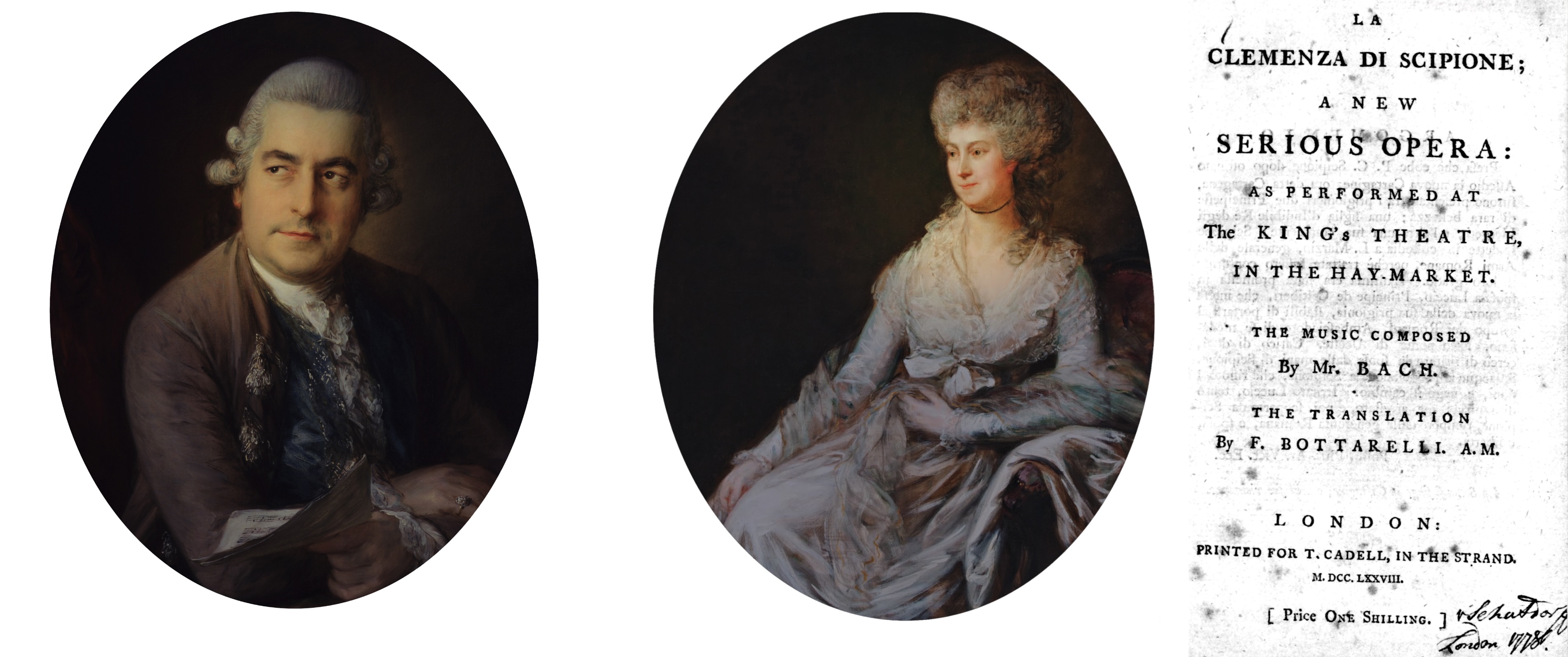
London and Johann Christian Bach (1777–1781): Her fame also reached across the Channel. None other than Johann Christian Bach (the "London Bach") brought the couple to London and had Franziska shine from the autumn of 1777 as a celebrated prima donna at the King’s Theatre. Following her London debut in Bach's Orione, Bach composed the opera La clemenza di Scipione in 1778 specifically for her. In the leading role of Arsinda, she triumphed with the aria "Infelice! in van m'affanno", in which her voice engaged in a breathtaking musical duel with her husband's oboe. It was in the midst of this triumphant London period that their daughter Sophie Lebrun was born in London in 1781.
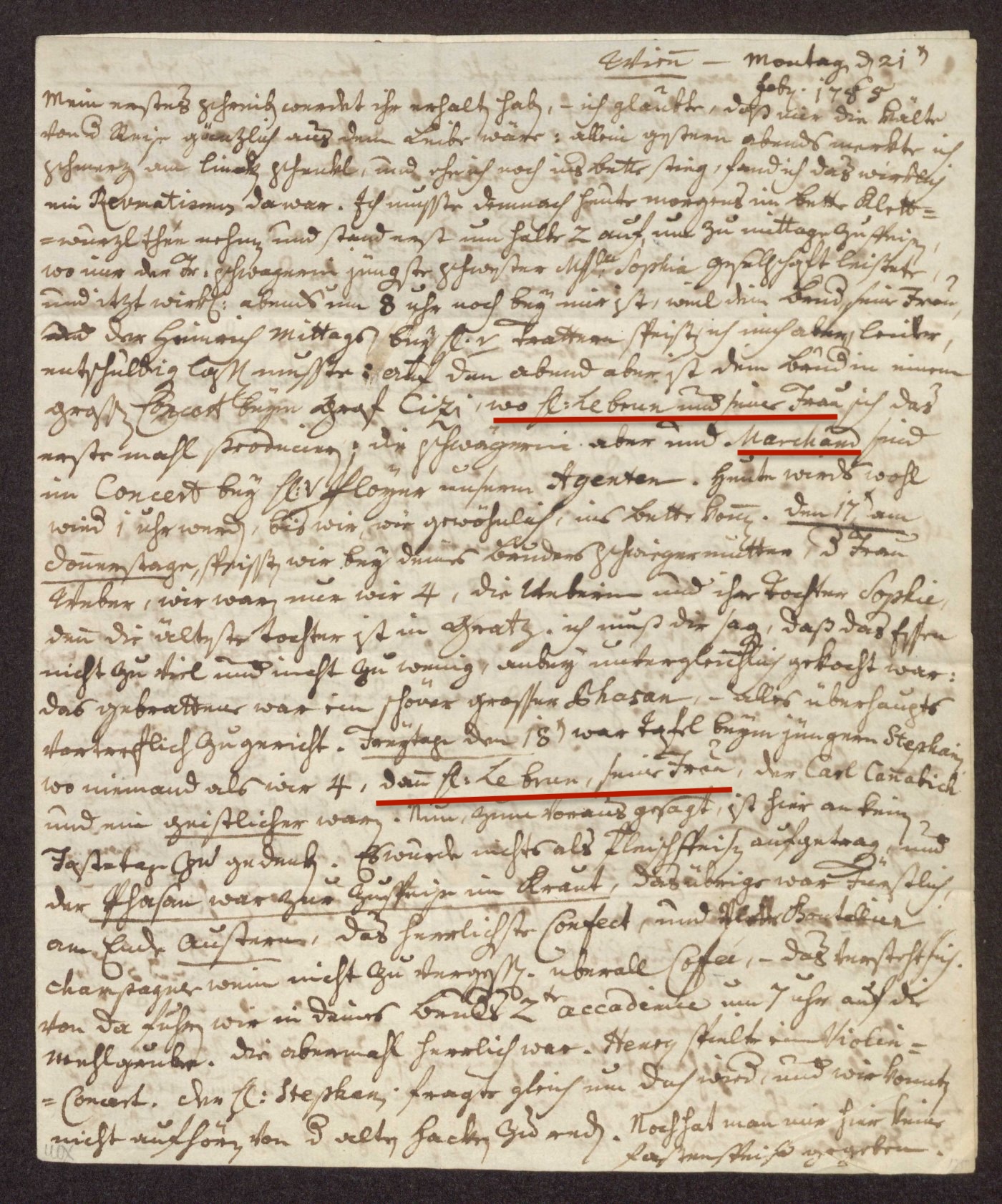
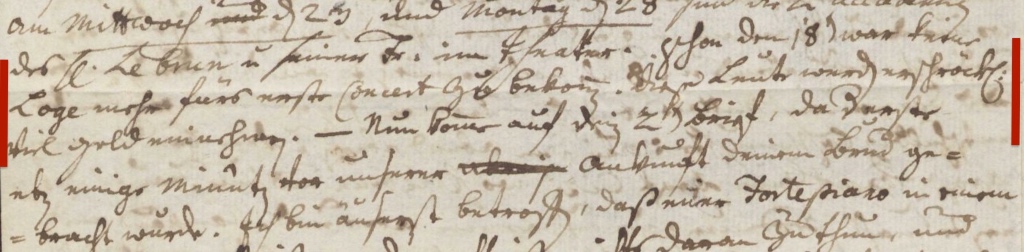
How highly the Lebruns were subsequently regarded in German-speaking lands by the Mozart family is evident from the letter written by father Leopold Mozart from Vienna on February 21, 1785. Leopold, normally so thrifty with every coin, reports with awe to his daughter Nannerl that for their concerts at the Viennese theater, no private boxes had been available for days in advance, and that they would "erschröckl: viel Geld einnehmen" (rake in a frightful amount of money).
Franz Danzi: Uncle, Foster Father, and Composer of the Wedding
Following the early deaths of his sister Franziska (1791) and her husband Lebrun (1790), uncle Franz Danzi (1763–1826) took upon himself the upbringing of the young orphans. For Sophie, born in London, he was therefore not only a musical mentor and uncle, but practically a second father.
Franz Danzi—a gifted cellist, influential conductor, composer, and ardent champion of both Mozart and Carl Maria von Weber—shared the family's joys and sorrows. Around the time of Louis Dulcken and Sophie Lebrun's wedding, Franz's life was severely tested. Shortly after the wedding, his beloved wife, Leopold Mozart's former Salzburg star pupil Maria Margarethe ("Gretl") Marchand (daughter of wedding witness and theater director Theobald Marchand),passed away, plunging Franz into a deep crisis.
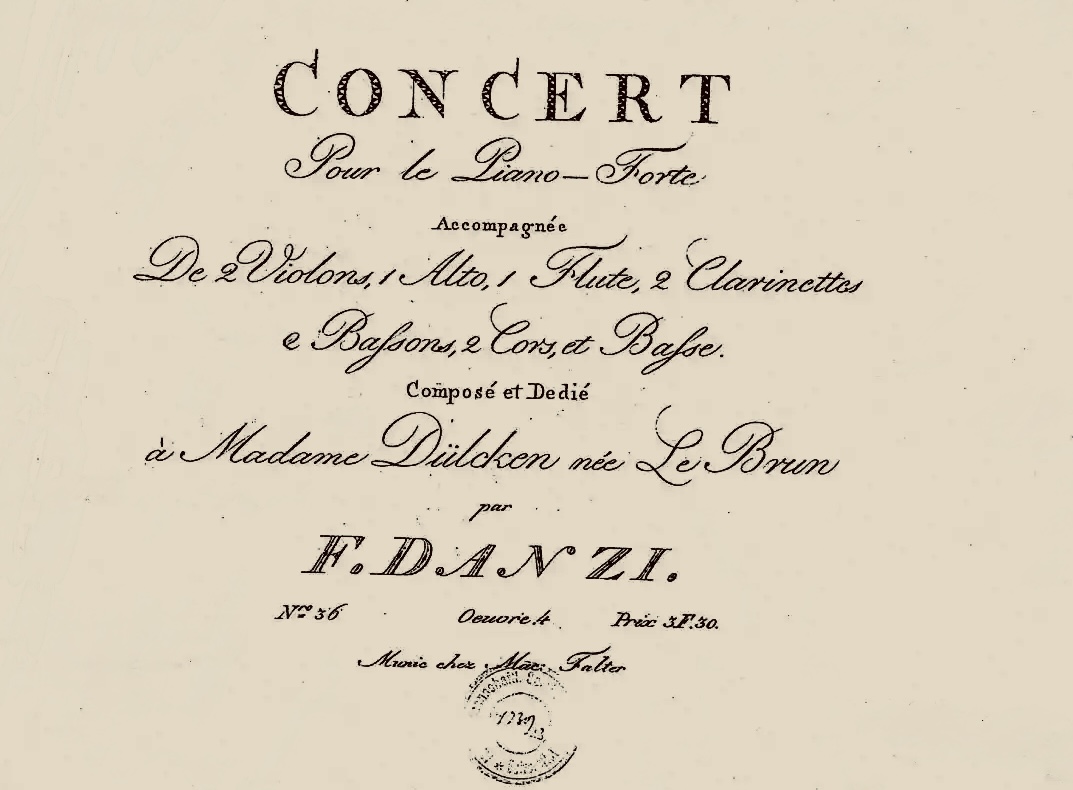
Despite this personal turbulence—and the fact that the work was likely published and performed around 1800, while the initial wedding had taken place earlier in Augsburg—Franz Danzi composed and dedicated a magnificent Piano Concerto in F major (Opus 4) to his niece: Composé et Dédié à Madame Dulcken née Le Brun par F. Danzi. Written for pianoforte with an orchestral setting of strings, flute, clarinets, bassoons, and horns, this work was the ultimate declaration of love and musical seal of a foster father for his talented foster daughter.
Een Muzikale Erfenis voor de Familie Dulcken
Wanneer Louis Dulcken en Sophie Lebrun in Augsburg en München elkaar het jawoord geven – met oom/pleegvader Franz Danzi en theaterdirecteur Marchand aan hun zijde – komen twee werelden op het hoogste niveau samen: het verfijnde, ambachtelijke instrumentenbouwersgeslacht Dulcken en de absolute top van de Europese uitvoerende musici.
Met grootvader Innocenz, vader Ludwig August, en moeder Franziska – die van Milaan tot Londen triomfeerde onder de pen van Salieri en J.C. Bach – was muzikaal meesterschap voor Sophie Lebrun haar moedertaal. Dat het muzikale genie en de verfijning via dit huwelijk werden doorgegeven aan het nageslacht van Louis Dulcken – en dat hun dochters later zelf zouden uitgroeien tot gevierde pianistes en zangeressen aan de Europese hoven – behoeft geen uitleg meer. Zoals Mozart al wist: in deze familie had je uitsluitend met echte professionals te maken.
🇳🇱
De Brief van Mozart aan zijn Vader (Maart 1781)
Origineel citaat:
"am Mittwoch den 21. und Montag den 28. hat er es erlaubt. der H. Le Brun u. seine Fr. im Theater. gestern den 18) war keine Loge mehr für’s erste Concert zu bekommen. Diese Leute werden recht viel Geld machen. — Nun komer auf den 2.tn Brief, da dingser nur einige Minuten vor unserer Ankunft Dein Brief gebracht würde. Ich bin äußerst betrübt, daß dein forte piano in einem so schlechten Zustand ist."
Vertaling:
"Op woensdag de 21e en maandag de 28e heeft hij het toegestaan. De heer Le Brun en zijn vrouw in het theater. Gisteren (de 18e) was er al geen loge meer te krijgen voor het eerste concert. Deze mensen zullen heel wat geld verdienen. — Nu kom ik op de tweede brief, aangezien slechts enkele minuten vóór onze aankomst jouw brief werd bezorgd. Ik ben uitermate bedroefd dat jouw fortepiano in zo'n slechte toestand verkeert."
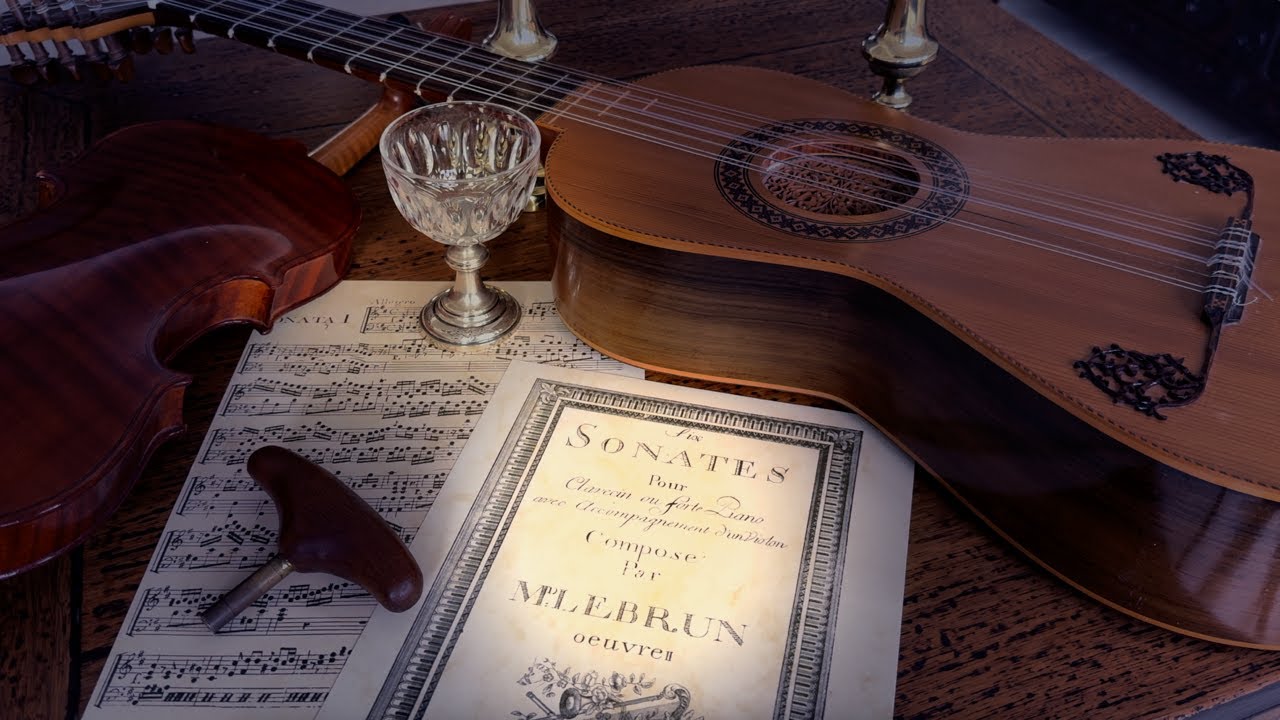
Click on the photo above to play the video
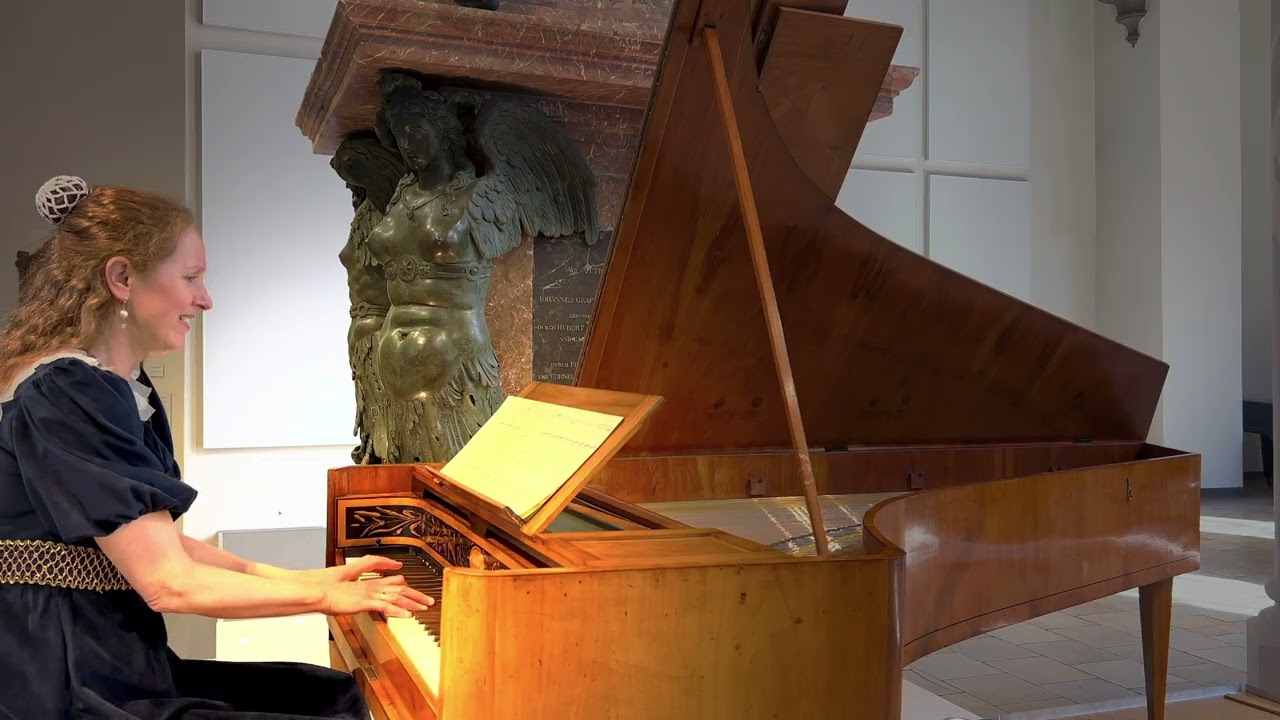
Madame Danzi (née Margaretha Marchand): "Dir nach 'oh' die ich liebe"- Louis Dulcken fortepiano
Click on the video above, featuring a song by Danzi/Marchand, to hear an original Louis Dulcken instrument from 1815.
27 mei 2025 BEIERS NATIONAAL MUSEUM - Paula Bär-Giese soprano & pianist
Madame Danzi (née Margaretha Marchand): "Dir nach 'oh' die ich liebe"- Louis Dulcken fortepiano 1815
🇬🇧
Margaretha Marchand: From Prodigy under Leopold Mozart to Celebrated Opera Star and Composer
In the eighteenth-century musical world, personal networks, court chapels, and musical families formed a tightly woven web. A remarkable example of this is the life of Maria Margaretha Marchand (1768–1800). Starting out as a young pupil in Leopold Mozart’s household, she grew into one of the most versatile musicians of her generation: a celebrated opera singer, virtuoso pianist, and gifted composer.
Raised in the Theatre
Margaretha was born in 1768 into a theatrical family (presumably in Frankfurt am Main, while her parents were on tour). Her father, Theobald Hilarius Marchand, was a prominent theatre director in Mannheim and later in Munich, while her mother, Magdalena Brochard, worked as an actress, singer, and dancer.
From a very early age, Margaretha appeared on stage in children's roles. She received her first serious vocal and musical training in Munich starting in 1778 from none other than Francesca Lebrun (née Danzi), one of Europe’s foremost sopranos and composers. This early connection would shape the rest of her life and career.
A New Musical Family in Salzburg
Following the death of his wife, Leopold Mozart regularly took talented students into his home in Salzburg to train them. Between 1781 and 1784, young Margaretha, her brother Heinrich (two years her junior), and their cousin Johanna Brochard (“Hännchen”) lived under his roof.
In April 1782, Leopold wrote enthusiastically about his new pupils. His own son Wolfgang was living in Vienna at the time, giving Leopold the opportunity to pass on his vast pedagogical experience to a new generation:
Leopold’s ambitions. He envisioned a bright future for both children. He hoped to make a great violinist and keyboard player out of twelve-year-old Heinrich, while preparing fourteen-year-old Margaretha to become a fine singer and an excellent keyboard player.
A broad upbringing. The children were treated not merely as boarders, but as full members of the household. They received a broad cultural and intellectual education and shared daily life, with all its joys and sorrows, with the Mozart family.
“Dearest Papa.” Surviving family correspondence reveals that Leopold cared deeply about his students’ ups and downs. In turn, the children became deeply attached to him; in her letters, Margaretha affectionately addressed her teacher as “dearest Papa.”
Breakthrough and Triumphs on Stage
Even after Margaretha (fondly called “Gretl” by Leopold) left his Salzburg home in 1784 to take up a post at the court in Munich, he continued to follow her career closely, regularly sending proud updates to his daughter Nannerl.
On November 19, 1784, Leopold reported a defining moment in her career. Gretl had sung splendidly and received the highest acclaim from both the Elector—who spoke with her personally afterward—and the assembled maestros. She had stepped in at the last minute as seconda donna opposite her former teacher Francesca Lebrun, after the original singer (Lisel Wendling) had declined the small part consisting of just two short ariettas. Despite the modest size of the role, Margaretha immediately made an unforgettable impression.
Following her official appointment as court singer in Munich in 1786, she became a celebrated interpreter of Wolfgang Amadeus Mozart’s major operatic roles. She excelled in demanding parts that required extraordinary vocal agility, including:
Susanna in Le Nozze di Figaro
Fiordiligi in Così fan tutte
The Queen of the Night in Die Zauberflöte
Donna Anna in Don Giovanni
Blonde in Die Entführung aus dem Serail
Marriage to Franz Danzi and European Tours
In 1790, Margaretha married the composer, cellist, and Kapellmeister Franz Danzi (1763–1826), brother of her former singing teacher Francesca Lebrun. Wolfgang Amadeus Mozart also took note of the marriage, writing to his wife Constanze on November 4, 1790: “Gretl has now married the brother of Madame le Brun, so she is now called Madame Danzi...”
Their marriage marked the beginning of a close artistic partnership:
Musical muse. Margaretha inspired her husband to compose numerous operas, concert arias, and vocal works tailored specifically to her impressive vocal range and technique.
International acclaim. Between 1791 and 1796, the couple toured Europe with impresario Domenico Guardasoni’s renowned opera company. As the troupe’s prima donna, Margaretha triumphed in leading musical centers such as Leipzig, Prague, Venice, and Florence.
Return to Munich. In 1796, they returned to Munich, where Margaretha was appointed prima donna of the court theatre and Franz became vice-Kapellmeister in 1798.
Original Compositions and an Untimely Death
At a time when women’s musical roles on stage were largely confined to singing or playing the keyboard, Margaretha stood out for her strong compositional gifts, which she had nurtured under Leopold Mozart. Although musicians and critics praised her works for their refinement and expressiveness, virtually nothing was published during her lifetime.
Her surviving works include:
Three Sonatas for Pianoforte and Violin (Opus 1), dedicated to her teacher and sister-in-law Francesca Lebrun.
Variations on the “Marche des Marseillois” (Opus 2) and several other sets of variations for piano.
Collaborative compositions, including the expressive second movement (Andante in F minor) of Franz Danzi’s Piano Sonata in F major (Op. 3).
This promising career was cut tragically short. In June 1800, Margaretha Danzi-Marchand died in Munich at the age of just 32 from a chronic lung illness. Her death devastated Franz Danzi so deeply that he withdrew from public musical life for several years. As a tribute to her memory, he arranged for much of her surviving music to be published posthumously between 1801 and 1802.
Musical Ties Across Generations: The Lebrun and Dulcken Families
Just how closely intertwined Munich’s musical circles were is further illustrated by their ties to the renowned Dulcken family of piano makers—and by the way this musical legacy was passed down across generations.
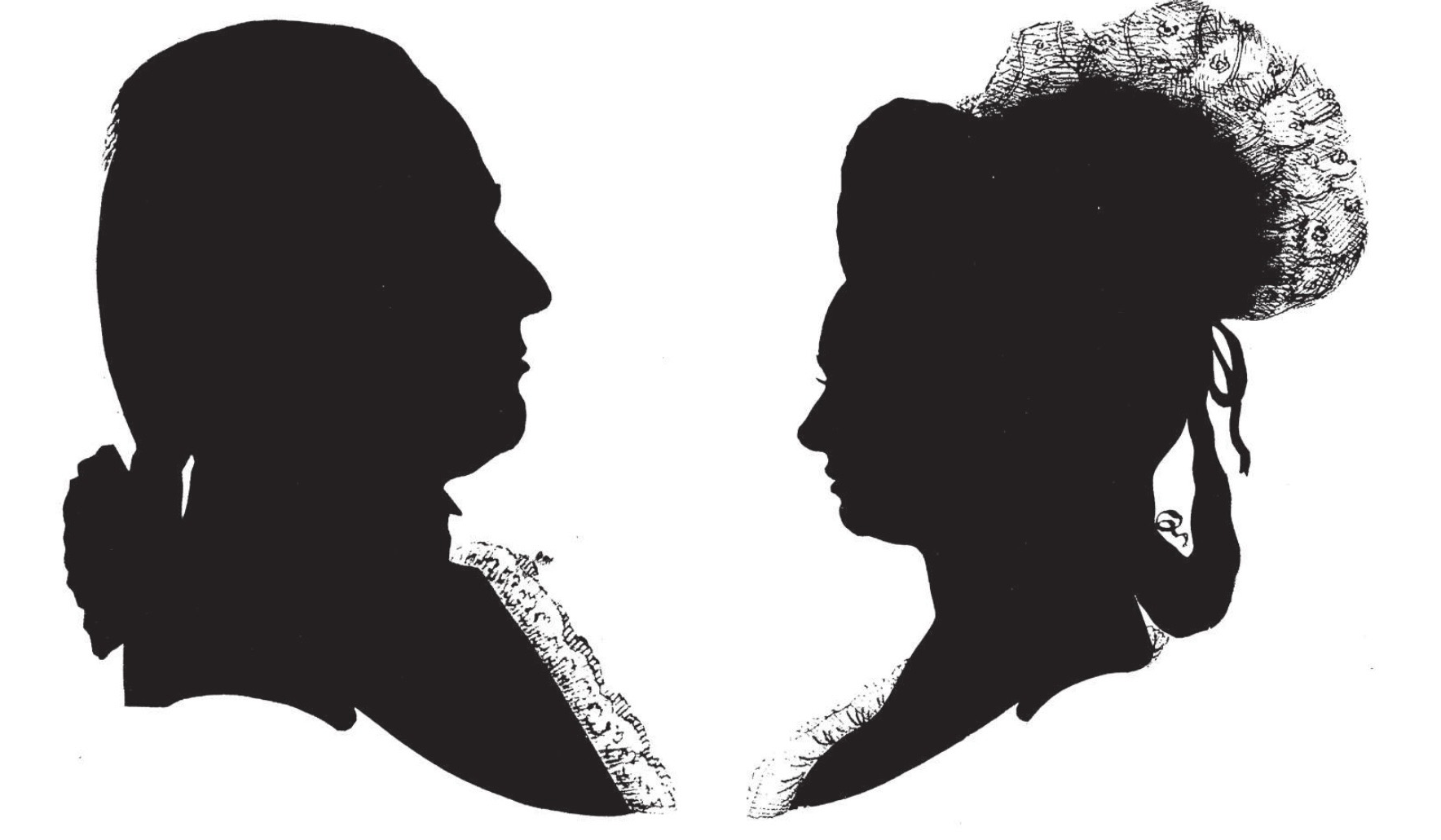
Louis Dulcken Jr. (1761–1836) learned the craft of piano building from his father in Hasselt, Antwerp, and Paris. From Paris, he moved directly to Munich in 1781 at the invitation of Elector Karl Theodor to serve as court piano maker. In April 1799, he married the German pianist and composer Sophie Lebrun (1781–1863).
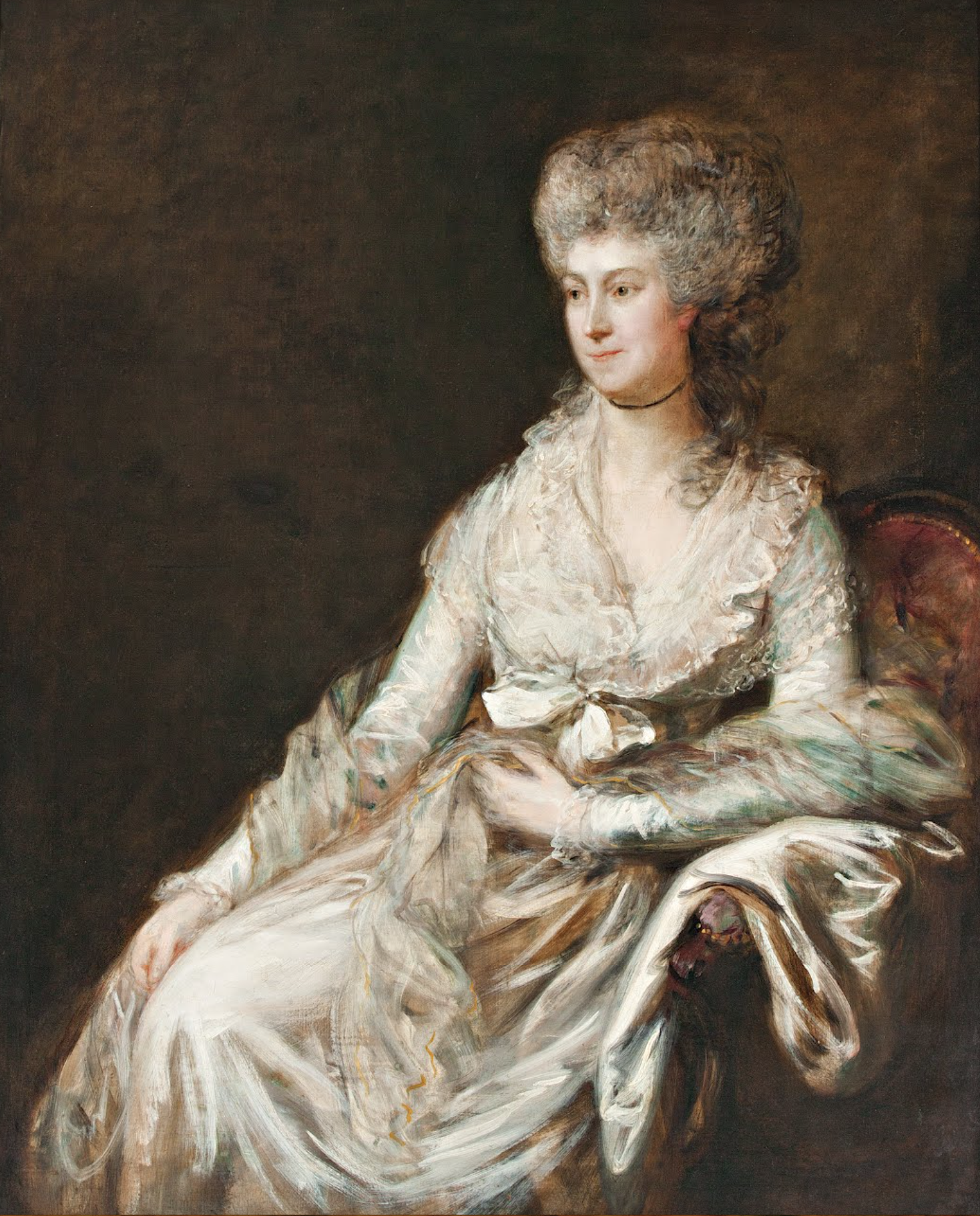
Sophie was the daughter of oboist Ludwig August Lebrun and singer Francesca Lebrun—the very woman alongside whom Margaretha had achieved her breakthrough in 1784. When Sophie was orphaned at a young age, her uncle Franz Danzi took her under his wing and oversaw her musical education. Under his guidance, Sophie developed into an outstanding concert pianist and composer. At Sophie and Louis’s wedding in 1799, Margaretha Danzi-Marchand was present not only as a celebrated opera star, but also as a beloved aunt and guest of honor.
The musical training Franz Danzi imparted to Sophie continued to resonate at European royal courts for generations to come:
First-rate pianists. Sophie Dulcken-Lebrun passed her superb piano technique and musical education directly on to her children. Her daughters Louise Dulcken (1803–1857, married name Bohrer) and Fanny Dulcken (1805–1873, married name Bohrer) both became first-rate concert pianists of international renown.
Royal pupils. Louise Dulcken-Bohrer became court pianist in Stuttgart and piano teacher to the princesses of Württemberg—among them Princess Sophie of Württemberg, later Queen Sophie of the Netherlands (consort of King William III). Her sister-in-law Louise Dulcken (née David, 1811–1850, married to Sophie’s son Theobald Dulcken) settled in London, where she became piano teacher to Britain’s Queen Victoria. Thus, the musical lineage begun by Leopold Mozart, Francesca Lebrun, Margaretha Marchand, and Franz Danzi lived on at the foremost royal courts of the nineteenth century.
Click on the photo above to play the video
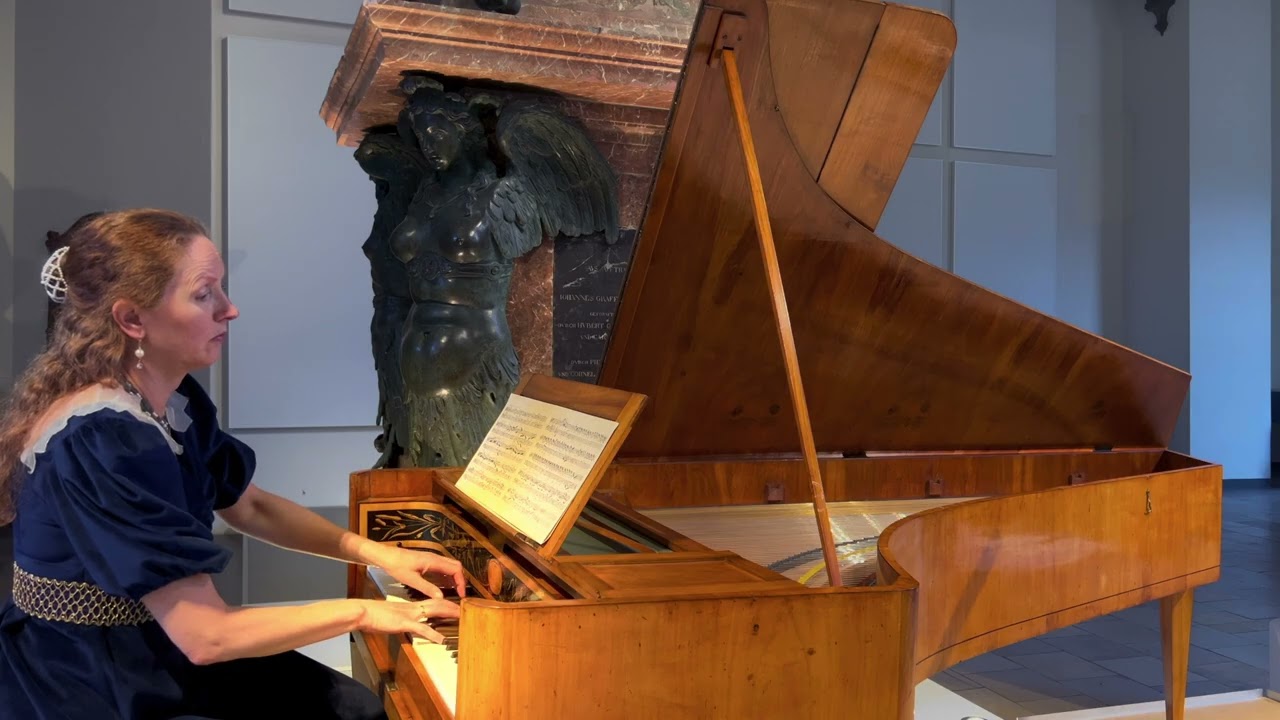
Madame Danzi (née Margareta Marchand ); Variations - Louis Dulcken fortepiano