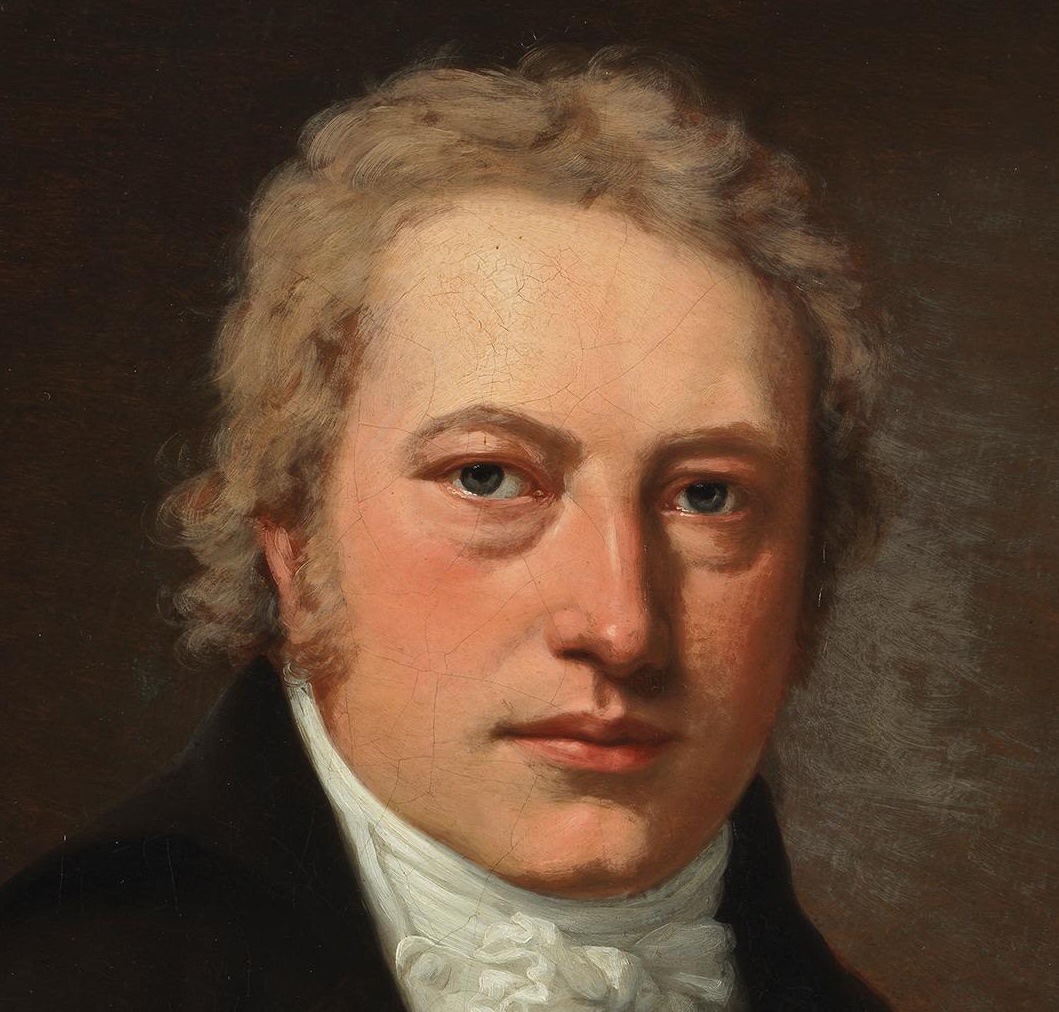
 Foundation Musick's Monument
LOUIS DULCKEN - München 1779-1836

Sophie Dulcken ( Paula Bär-Giese pianist - self-accompanied soprano) sings and plays
‘Ich denke dein’ & ‘Variations Comp. par Mad. Danzi’ & "Dir nach 'oh' die ich liebe"
on a Louis Dülcken 1815
Johann Ludwig Dülcken fortepiano 1815
LOUIS DULCKEN - München 1779-1836
Munich
Johannes Lodewijk was educated by his father in Hasselt and Antwerp. When his father moved to Antwerp in 1774, he went with him. His mother remained in Hasselt with the other children until 1776. He spent the first 13 years of his life in the small town of Hasselt; now he was moving to the big city of Antwerp.

Brief 16 meij 1774 Johannes Lodewijk Dulcken
He probably went straight to work in his father's workshop in Antwerp, where his father was constantly improving his new invention. The improved harpsichord was given the name pianoforte. It is not known exactly how long they worked together in Antwerp, but it was probably only two years. Sometime between 1777 and 1780, his father moved to Paris, where he set up another workshop.
The Dulckens, father and son, were probably very successful. So successful, in fact, that they were noticed by Karl Theodor von der Pfalz, the Elector of Bavaria. Karl Theodor was an important man at the time and ruled over a large area of Germany. He also owned the Land of Ravenstein and the Marquisate of Bergen op Zoom and was Duke of Gulik and Berg. He therefore had quite a few connections in the Netherlands. Karl Theodor was a great music lover and also played an instrument (the flute) himself. In 1779, he asked Johannes Lodewijk Jr. to accompany him to Munich. He was only 18 years old at the time. So young and already recognised as a genius harpsichord maker.
Much is known about his life and work in Munich. Several articles have been written about it. Here are some of the main points.
In Munich in 1779, Louis was employed as an assistant to the royal piano maker Johann Peter Milchmeyer, who worked at the court of Elector Karl Theodor. In his workshop, Johann Peter was responsible for the careful maintenance, improvement and renovation of all the grand pianos belonging to the palace. In June 1782, Dulcken took over Milchmeyer's position and became the city piano maker at the age of 21. He was a true craftsman. He made special instruments for the court and sold one pianoforte after another, not only in Munich and Bavaria, but also far beyond. In Munich, he was addressed in various ways: Johann Ludwig, Jean Louis, but often simply Louis.
On 25 June 1831, Dulcken resigned from his position as royal builder of keyboard instruments; he died five years later. In his will, Dulcken named as his heirs his wife Sophie Lebrun (London, 20 June 1781-d Munich, 23 July 1863), his sons Theobald and Heinrich, his married daughters Louise and Franziska Bohrer, and his then unmarried daughters Violande, Johanna and Caroline Dulcken. Theobald as manager and Heinrich as builder apparently fulfilled their father's obligations after his death, but soon closed the shop. Both sons eventually moved to London, where Theobald became a wool merchant and Heinrich an organist. Louise and Franziska were married to the brothers Max and Anton Bohrer; Louise became court pianist in Stuttgart. Violande became a concert singer in Munich.
Milchmeyer, Peter Johann
(Milchmeyer/Milchmayer/Milchmaier)
Son of a clockmaker, he was born at Frankfurt am Main in 1750. His treatise, Uber die wahre Art das Pianoforte zu spielen was published in 1797 at Dresden, where he may have been living at the time. In 1805, he became a piano teacher at Strasbourg, and in this capacity attained a considerable reputation. He died there on 15 March 1813, at the age of 63 years. In c1780, he invented a special ‘mechanischen flügel’, probably a combined harpsichord-piano, described by Cramer (1783) as:
[…] einen neuen mechanischen Flügel erfunden, der nicht viel grösser als ein gewöhnlicher Flügel ist, und doch 250 neue Veränderungen enthält. Er hat 3 Claviere. Das untere lässt sich herausschrauben, wo alsdenn 2 Personen spielen tönnen. Das Steigen und Fallen der Stärte der Töne kann auf disem Instrumente sehr gut hervorgebracht werden.


Kurpfälzisches Museum Heidelberg

Electress Elisabeth Auguste
Elector couple (left and right) and the keyboard of Louis Dulcken II
Marriage
In 1799, Louis Dulcken married Sophie Lebrun and thus became part of a very musical family. His wife Sophie was the daughter of the Baden virtuoso oboist and composer Ludwig August Lebrun and the Baden soprano and composer Franziska Danzi.
Sophia was an exceptionally talented pianist and also composed her own music. She performed in Paris, Switzerland and Italy.
Louis Dulcken and his wife Sophie had seven children, two sons and five daughters, almost all of whom became well-known musicians. Thanks to his marriage to Sophie Lebrun, Louis Dulcken's house was “for a long time the most interesting meeting place for the well-educated music world in Munich at the time”. Musicians and composers came to visit.
Dulcken also prospered financially. He earned a great deal of money with his unique pianofortes. Royal houses throughout Europe bought his instruments. Empress Josephine of France bought two of his instruments during her visit to Munich in 1805/06 and shortly afterwards ordered a third, which was so well received in Paris that it was exhibited there for a long time. In 1816, a grand piano was delivered to the Austrian Empress Carolina Augusta, a daughter of the Bavarian King Maximilian I Joseph. Another instrument was sent to Saint Petersburg.

Louis & Sophie Dulcken


Marriage 18 April 1799 Jan Lodewijk (Louis) Dülken x Sophia Lebrun

E.L. huwelijk Augsburg (Bayern / Landeskirchliches Archiv der Evangelisch-Lutherischen Kirche in Bayern / Dekanat Augsburg / Augsburg-Gesamtkirchengemeinde / Trauungen 1796 - 1819, pagina 99, Bild 57):
"Aprilis, 1799 99.
[Donnerstag] d[en] 18. hor[a] 7
25. Ludwig Dulken, A[ugsburger] C[onfession] Hofklaviermacher in München,
und Jungfer Sophia Lebrun, Hofmusikus-Tochter,
von München C[atholischer] R[eligion]
sind in der Stille copuliert worden beijm H[eiligen] Creuz".
Dus de transcriptie betreffende het eigenlijke trouwboek van de ''parochie" Heilig Kreuz betreft dus GEEN E.L. ondertrouw, maar ook E.L. huwelijk.

"Gesamtkirchen"-register 
E.L. huwelijk Augsburg (Bayern / Landeskirchliches Archiv der Evangelisch-Lutherischen Kirche in Bayern / Dekanat Augsburg / Augsburg-Heilig Kreuz / Trauungen 1793 - 1814, 1841 - 1918, pagina 14, Bild 11):
"An[n]o 1799. 8.
[Donnerstag] d[en] 18 April. Herr Ludwig Dulcken, Hof-Claviermacher in München,
h[ora] VII und J[ung]f[e]r Sophia Lebrun, eben daher, Tochter des Hofmu-
Ebenders[elbe] sikus”.

Huwelijk 27 December 1799 Jan Lodewijk (Louis)Dülken x Sophia Lebrun
R.K. huwelijk München (Archive des Erzbistums München und Freising, Seelsorgeeinheiten, Pfarreien und Kirchenstiftungen, CB301, München-Zu Unserer Lieben Frau 1561-1937, Pfarramtsverwaltung, M9313, Trauungen 1798-1806, Bild 35,

"Nomina Sponsoru[m] Dies Mensis Decembris An[n]o 1799
Dülken, seu 27. Ludovicus Dülken churf[ürstlicher] Hof-Instrumen[ten]m
Dälken macher, acatholicus, des Ludovicus
dessen Dülken k[öniglich] französischen Instrumenten
Revalidation machers, dann Anna dessen Eheweib
m[a]t[ri]m[on]ii ____ beiden seelig, ehlicher Sohn, mit
Sophia Lebrun, des Ludovicus
x Lebrun churf[ürstlichen] Hofmusikus, dann
Lebrun Francisca dessen Eheweib seelig, ehelichen
Tochter. Testes: Theobald Marschand
churf[ürstlicher] Theater-Director, Franz
Danzi c[h]u[r]f[ürs]t[licher] Kapelmeister, tempore
vetito cum dispensatione denuntiationu[m]".


Transcriptie
[30verso?]
Notae
ad nuptias has Dülkanas
ex mandato celsissimi ordinis renovandas
quia antea Augusta Vindelicorum coram
Evangelico Pastore contractas, sunto.
[31recto?]
§ 1
Ludovicus, civis jam Monacensis, ob coëmptas
aedes sibi, homo*1 acatholicus suam magistra=
tui nostrati dissimmulaverat religionem, quia
neutiquam ab eodem senatu idcirco interogatus.
Mox discessit Augustam ad Pastorem Lu=
theranum (nescius Iurium Bavariae, semper
catholicae et immaculatae ab omni haeresi) atque
ibidem putatitio junctus matrimonio est.
Hanc copulam nullam ab initio, et irritam
omnino jussit more catholico renovare Dominus ordinis?*2
et quidem pro hoc casu solo, ob idoneas ratio=
nes v.g. (=verbi gratia) ob inscitiam contrahentium, ob
bonum prolis pp? et quidem sede pontificia
nunc vacante pp?
§ 2
Ad acta Parochialia, sub conubio Parochialia
in extenso jacent coetera omnia, una=
cum reversalibus Ludovici Dülken pro
se, proque posteritate sua.
§ 3
ad finem et calcem huius libri adnecto copiam
horum reversalium, ad perpetuam huius
casus memoriam, et informationem.
Sigilla mea ex officio meo
parochi etc.
sunt ad calcem libri huius
anno hoc copulati sunt 96.
In de marge [31r]
Can. Theol'g aul'ae
cons: frising. actae: ? = Freising?
Rav. de Scheser…?
Parochus scripsi
ad Iussum et Man=
datum celsissimi et Re=
verendissimi?*3 Ordinis
I, …, priest (Parochus), have written this by order and decree of the exalted and venerable (monastic) order.
Translation
Comments
on this marriage in Dülken
which had to be repeated/renewed by order of the exalted (monastic) order
because it had previously been concluded in Augsburg in the presence of
a Protestant preacher, …?*4
27 December 1799
§ 1
Louis, already a resident of Munich,*5 had, when he went to buy a house, as a non-Catholic, concealed his faith from our official, because the administration had not asked him about it.
Shortly afterwards, he went to a Lutheran preacher in Augsburg (unaware of the laws in Bavaria, where people have always been Catholic and untouched by any form of heresy) and there he thought he was married.*6
The Ordainer has decreed that this union, which was null and void from the outset, should in this exceptional case be repeated/renewed in the Catholic manner, for appropriate reasons, e.g. due to the ignorance of those involved, for the welfare of the children (and because there is currently no Pope).*7
§ 2
With regard to the Acta Parochialia (=Parish Records), all other Parochialia, together with Louis Dülken's reply on behalf of himself and his children, can be found in their entirety (in extenso iacent) under the heading marriage (sub conubio).
§ 3
Finally, at the end of this book, I add these many responses, as a lasting reminder of this matter and for educational purposes.
My seals, in accordance with my office as priest etc. (parochus), can be found at the back of this book.
This year, 96 [people] were married.
*1-ho’o = homo?
*2-Dominus ordinis? It refers to the highest position within a particular religious group. I will translate it literally as “order master”. The religious order is mentioned more often.
*3-reverendissimi’ is the first thing that comes to mind, but I'm not sure if that's what it says.
*4-sunto?
*5-Monacum, -ch(i)um = München, St., Bayern (Graesse, Orbis Latinus).
*6-Augusta [Vindelicorum] = Augsburg (Pinkster, Woordenboek Latijn-Nederlands).
*7-Augusta [Vindelicorum] = Augsburg (Pinkster, Woordenboek Latijn-Nederlands).
*8’-sedisvacatie’ From 29 August 1799 to 14 March 1800, the Pope was imprisoned by Napoleon and died in captivity.
Transcription - Dr Verena Demoed
Sophia Lebrun, legitimate daughter of Ludwig Lebrun, electoral court musician, and his wife Francisca, of blessed memory.
Witnesses: Theobald Marschand, electoral theatre director; Franz Danzi, electoral chapel master.
“Tempore vetito cum dispensatione denuntiationum” = during the closed (Advent) period, with dispensation from the marriage announcements.
Revalidatio matrimonii = ecclesiastical confirmation of an existing but canonically irregular or invalid marriage, or a marriage between parties of different religions (acatholicus!).
Tempore vetito This almost certainly refers to Advent or Lent, during which marriage was normally not permitted without dispensation.
The presence of high court musicians as witnesses is fitting for both families (Dülken instrument makers, Lebrun musicians)
As a thirteen-year-old boy, Louis Dülcken arrived in Antwerp with his father and became involved in a conflict between his grandfather Johannes Daniel and his father Johannes Lodewijk with Reverend Diepelius of the Olijfbergkerk. Louis may have been disappointed in the church, but he made no compromises: a-catholicus

Brief 16 meij 1774 Johannes Lodewijk Dulcken
CHILDREN from marriage 27 December 1799 Jan Lodewijk (Louis) Dülken x Sophia Lebrun
1800 - Theobald Ludovicus, son of Jan Lodewijk (Louis) and Sophia
1801 - Philippus Henricus, son of Jan Lodewijk (Louis) and Sophia
1803 - Louise, daughter of Jan Lodewijk (Louis) and Sophia
Female piano prodigies:(with their ages at the time of their first public performance)
Louise Dulcken, married to Bohrer (1803–1857), aged 11
Leopoldine Blahetka (1809–1885), aged 8
Fanny Sallamon (1809–after 1839), aged 10
Antonie Oster (1811–1828), aged 10
Louise David, married to Dulcken (1811–1850), aged 10
Marie Moke, married to Pleyel (1811–1875), aged 8
Delphine Schauroth (1813–1887, aged 9
Josephine Seipelt (1816–1841), aged 9
Clara Wieck, married to Schumann (1819–1896), aged 10
Freia Hoffmann, Instrument und Körper, Frankfurt am Main, Leipzig 1991, chapter ‘Wunderkinder’, pp. 309–335; Ingrid Fuchs, ‘,Bewundrungswerthes Kind! deß Fertigkeit man preißt …’
Louise Dulcken and her sister Fanny received piano lessons from their mother. Their first public performance took place in Munich in 1814. On 20 july 1824 she married cellist Max Bohrer (1785-1867). Her sister Fanny married his brother Anton on 20 july 1824 .
In 1826, their son Carl Theodor was born. In 1827, both couples moved to Paris, where they gave concerts together. In August 1828, the Münchener Allgemeine Musik-Zeitung wrote about a concert in Paris: 'Mad. Max. Bohrer, who had not yet been heard in Paris, played a trio by Beethoven and variations on her own composition on the song: der Schweizerbub' (Münchener aMZ 1828, Sp. 720). During the joint concerts, at which works by Beethoven, Mozart and Haydn were played, Louise Bohrer also performed solo pieces, for example works by Henri Herz. Driven out by the July Revolution in 1830, the Bohrers left Paris and moved first to London and then to Stuttgart. From around 1831, Louise Bohrer was court pianist and teacher to the princesses in Stuttgart.

Princess Sophie Friederike Mathilde of Württemberg & Princess Marie Friederike Charlotte of Württemberg
Sophie Friederike Mathilde Princess of Württemberg (born 17 June 1818 in Stuttgart; died 3 June 1877 in Huis ten Bosch) was Queen of the Netherlands from 1849 to 1877 as the first wife of King William III of the Netherlands.
Prinzessin Sophie Friederike Mathilde von Württemberg (1818–1877) was the first wife of King William III of the Netherlands and the Queen consort of the Netherlands and Grand Duchess consort of Luxembourg from 1849 until her death in 1877.
Born in Stuttgart on June 17, 1818, she was the daughter of King William I of Württemberg and Grand Duchess Catherine Pavlovna of Russia. This made her a first cousin to her future husband, King William III, as her mother was the sister of his mother, Anna Pavlovna of Russia.
Sophie married William, then the Prince of Orange, on June 18, 1839. The marriage was challenging, marked by personality clashes and differing views, but she was widely known as an intellectual, a collector, and a devoted mother. She was also a prominent figure in Dutch society, known for her strong will and engagement in various social causes.
See the births of Wilhelm Maria Friederich & Sophie Marie Johanne
Together with her husband and his brother Anton Bohrer, Louise Bohrer gave concerts in Stuttgart in 1833 and 1834. Their son Wilhelm Maria Friedrich was born in September 1835, followed by their daughter Sophie Marie Johanne in 1837. In 1842/43, Max Bohrer undertook a concert tour of America. It is not known whether Louise Bohrer accompanied her husband.


1805 - Franzisca Magdalena , daughter of Jan Lodewijk (Louis) and Sophia
Like her sister Louise, Francisca (Fanny) was taught by her mother. In 1824, she married the violinist Joseph Anton Bohrer (1783–1863) and moved with him, her sister and her sister's husband Max to Paris in 1827. No reliable statements can be made about her concert activities, although the Allgemeine musikalische Zeitung frequently mentions concerts by “Mad. Bohrer”, although it is not possible to clearly identify these as Fanny Bohrer. According to Schilling, she was “probably quite equal to her sister as a practical pianist,” so it can be assumed that, like her sister, she performed with her husband and played in a trio or possibly also in a quartet with Max and Louise Bohrer. She is the mother of Sophie Bohrer.
1807 - Violanda Dulcken, daughter of Jan Lodewijk (Louis) and Sophia
1808 - Juliana Johanna , daughter of Jan Lodewijk (Louis) and Sophia
1813 - Alexander, son of Jan Lodewijk (Louis) and Sophia
1817 - Carolina Charlotte, daughter of Jan Lodewijk (Louis) and Sophia
With thanks to Sándor Krause en Ivo de Bruin
His work
Throughout his long career, Dulcken has developed by constantly trying out new improvements. His work shows that he has been influenced by various movements.
He learned from his father and grandfather how to optimise the construction of instruments. His method of securing the soundboard is typical of something he learned at home. The method of gluing the walls of the sound box to the bottom, whereby the walls are glued first before he begins the further construction of the fortepiano, is also something he brought with him from Hasselt/Antwerp. The influence of his father and grandfather can be seen in his choice of thickness for the various parts.
He was also influenced by the Augsburg piano maker Andreas Stein and other South German instrument makers.
Music connoisseurs say that Louis Dulcken was considered the most successful piano maker in Munich during his lifetime. He is praised for the quality characteristics of his instruments, for example. They have “a pure sonorous tone”, maintain “a permanent tuning” and can imitate the bassoon, harp, harmonica, etc. by means of a cleverly designed mechanism. They are characterised by “an elegant and tasteful construction”, which makes his instruments highly respected and welcome. In short, Dulcken is a genius in his way of building. He knows how to produce sounds from his instruments that enchant listeners.
His pianos win awards. In both 1819 and 1820, he receives a medal for his excellent fortepianos at a major exhibition in Munich.
Father Johannes Lodewijk Sr. was able to witness his son's success.
Louis Dulcken signed his later instruments, which were built after 1820:
Louis Dulcken et fils of Louis Dulcken et fils in Münich, of Louis Dulcken und Sohn in München.
On 25 June 1831, Dulcken resigned from his position as royal builder of keyboard instruments; he died five years later. In his will, Dulcken named as his heirs his wife Sophie Lebrun (London, 20 June 1781-d Munich, 23 July 1863), his sons Theobald and Heinrich, his married daughters Louise and Franziska Bohrer, and his then unmarried daughters Violande, Johanna and Caroline Dulcken. Theobald as manager and Heinrich as builder apparently fulfilled their father's obligations after his death, but soon closed the shop. Both sons eventually moved to London, where Theobald became a wool merchant and Heinrich an organist. Louise and Franziska were married to the brothers Max and Anton Bohrer; Louise became court pianist in Stuttgart. Violande became a concert singer in Munich.

Ludwig Dülcken,
Hofklaviermacher.
Krankheit: Organische Fehler des Herzens.
Alter: 76 Jahre.
"Dulken, (Johann Ludwig), wurde zu Amsterdam den 5. August 1761 geboren, lernte in seiner Vaterstadt, und dann in Paris von seinem Vater Klaviere, Fortepiano und dergleichen Instrumente bauen, und wurde vom Churfürsten Karl Theodor als mechanischer Klaviermacher an seinem Hofe zu München 1781 angestellt, in welcher Eigenschaft er sich noch befindet, und daselbst den 18. April 1799 die berühmte Klavierspielerinn Sophie Le Brün heirathete. Dieser Künstler erwarb sich durch seine vortreffliche Fortepiano, die einen reinen, sonoren Ton haben, eine andauernde Stimmung halten, und durch einen geschickten angebrachten Mechanismus Fagote, Harfe, Harmonika etc. nachahmen, die vom Friederici in Gera erfundene Bebung vortrefflich enhalten, u. s. w. auch sich durch eleganten und geschmackvollen Bau auszeichnen, große Celebrität, seine Instrumente sind sehr gesucht und willkommen, und finden zahlreichen Abgang nicht nur in ganz Deutschland, sondern auch in Frankreich, in der Schweiz, Italien, Rußland u. s. w." Baierisches Musik-Lexikon, 1811, p. 70
Dulken, (Johann Ludwig), was born in Amsterdam on 5 August 1761, learned to build fortepianos and similar instruments from his father in his hometown and then in Paris, fortepiano and similar instruments, and was employed by Prince Karl Theodor as a mechanical piano maker at his court in Munich in 1781, a position he still holds, and where he married the famous pianist Sophie Le Brün on 18 April 1799. This artist made a name for himself with his excellent fortepianos, which have a pure, sonorous tone, maintain a lasting tuning, and, thanks to a skilfully applied mechanism, imitate bassoons, harp, harmonica, etc., excellently incorporate the tremolo invented by Friederici in Gera, etc., and are also distinguished by their elegant and tasteful construction, he has also gained great celebrity. His instruments are highly sought after and welcome, and are sold not only throughout Germany, but also in France, Switzerland, Italy, Russia, etc."


Soloists and orchestra members of the Orchestra of Elector Karl Theodor - Franziska Le Brün , Ludwig August Le Brün, Innocenz Danzi, Franz Danzi .mechanical piano maker Johann Ludwig Dülken

• Kost Thoerl in seiner eigenen Behausung С/V Nr. 39, München
• Vor dem Kostthore (vanaf 1803), München
• Kreuzviertel (vanaf 1819), 227, Prannerstrasse, Kreuzviertel, Maxvorstadt
• Prannersgasse ( vanaf 1826), 1, München
• Promenadestrasse (vanaf 1835 tot 1856), München


'Pianoforte-Fabrikant' since 1781
"Mechanischer Klavezinmacher : Hr. Johann Ludwig Dulken." Churfürstlich-Pfalzbaierischer Hof- und Staatskalender: auf das Jahr 1800, p. 29 - Churfürstlich-Pfalzbaierischer Hof- und Staatskalender: auf das Jahr 1802, p. 20
DULCKEN project München
Louis Dulcken built instruments for Charles Philip Theodore and Maximilian I Joseph, as well as for Empress Joséphine Bonaparte. Shortly after the Battle of Austerlitz in 1805, Emperor Napoleon appointed Eugène de Beauharnais as the husband of Princess Augusta Amalia of Bavaria, the daughter of the newly crowned King Maximilian I Joseph.


Piano Sonata Opus 3 by Franz Danzi. The second movement, Variations, was composed by Franz Danzi's wife, Margarethe Marchand.

Margarethe Danzi, née Marchand
Little is known about the composer, pianist and singer Margarethe Danzi. However, her social and historical background provide a great deal of information about her life. She was born Margarethe Marchand in 1768 in Frankfurt am Main, the daughter of the well-known singer, actor and theatre director Theobald Hilarius Marchand and the actress Magdalena Brochard. From an early age, Margarethe was a popular actress and beloved by the public; she played children's roles in the theatre and performed as a singer and pianist. She received singing lessons in Munich from Franziska Lebrun, the sister of Franz Danzi, the man she would later marry.
She spent a significant part of her musical education in Salzburg with Leopold Mozart, in whose house she lived between 1782 and 1784, together with her brother, the violinist Heinrich Marchand. Although we know relatively little about Margarethe, her connection with Leopold Mozart gives us important insights into the quality of her musical development. As a teacher, Leopold Mozart played an essential role in the musical education and development of his son, Wolfgang Amadeus, and wrote the Violinschule, which is still a standard work in the violin teaching repertoire today. Margarethe (who was also called Gretl or Gredl) and her brother Heinrich appear regularly in the diaries and letters of the Mozart family. It is moving to realise that we can get to know Margarethe through the eyes of the Mozart family and that, through Margarethe, we can catch a glimpse of the intimate family life of the Mozarts.
In 1790, Margarethe married Franz Danzi, a conductor and composer. Together they travelled throughout Europe. Margarethe was the prima donna of Domenico Guardasoni's theatre company, of which the couple were members. After 1796, Margarethe was also prima donna at the court theatre in Munich. She died in Munich of a lung disease on 11 June 1800.

Theobald Marchand (1741-1800)
Theobald Marchand was a pioneer in staging French light operas in German translations. After working for several years in Sebastini's Troupe, Marchand became the leader of this travelling company, which enjoyed success in major cities such as Mannheim, Mainz and Frankfurt. His productions of plays and operettas became widely popular and eventually overshadowed the prevailing preference for French theatre. Churfürst Karl Theodor of Mannheim was one of the first German electors who dared to turn his back on French theatre, and in this spirit of innovation he hired Marchand and his company in 1776. The entire group, which later moved with him to Munich, consisted of many prominent actors and singers, including Marchand's future wife, Magdalena Brochard. As late as 1811, Theobald Marchand's portrayal of the gardener in Mozart's Figaro was praised in the Baierische Musik-Lexikon. Marchand's many performances with his company introduced Goethe to French opera. He praised Marchand in his autobiography Dichtung und Wahrheit (part IV, published in 1833).
Theobald Marchand is mentioned as early as 1777 in Mozart's family correspondence. The Marchand family was also acquainted with the Weber family, including their daughter Aloysia, one of Wolfgang's great loves, and her sister Constanze, who later became his wife. Both families moved from Mannheim to Munich. In 1780, Wolfgang and Theobald met again during preparations for Idomeneo, which premiered in Munich in 1781. An even closer bond developed when Leopold and Nannerl, Wolfgang's sister, took Marchand's son Heinrich to Salzburg. The boy stayed with the Mozart family from 1781 to 1784.
In February 1782, after visiting Munich, Heinrich's sister Margarethe also came to stay. From the moment the Marchand children came to live with the Mozart family, a close friendship developed between Leopold, now a widower, and the children's father, Theobald. Both men were members of the same Masonic lodge, and after his daughter and pupils had left the house, Leopold paid several visits to Theobald Marchand. This contact kept Leopold connected to the outside world during his lonely final years. The last surviving letter from Theobald to Leopold, dated 29 May 1787, is full of concern about Leopold's declining health and even contains suggestions for medicines with instructions for use. Unfortunately, Leopold had already passed away on 28 May.


Keizerin Joséphine de Beauharnais

Louis & Sophie Dulcken


Karel Filips Theodoor
Charles Philip Theodore (Brussels, 11 December 1724 – Nymphenburg Palace, 16 February 1799), a descendant of the House of Wittelsbach, was Count Palatine of Sulzbach (1733) and became Elector Palatine, Duke of Palatinate-Neuburg, Gulik and Berg, Marquis of Bergen op Zoom, Lord of Wijnendale and Lord of Ravenstein on 31 December 1742. In 1777, he also became Elector of Bavaria.
Charles Theodore initially resided in Mannheim, the capital of the Palatinate. Between 1756 and 1773, he had a new summer residence built in Rococo style: Benrath Palace. When he also became Elector of Bavaria in 1777, he moved his main residence to Munich. In the summer, he resided in Schwetzingen Palace, which had been built by his uncle Charles Philip.

Maximiliaan I Jozef
Maximiliaan I Jozef
Max Joseph, son of Frederick Michael of Palatinate-Birkenfeld, came from a branch of the House of Wittelsbach and, as the younger son, was not originally heir to the throne. His mother was Maria Francisca of Palatinate-Sulzbach. He grew up in France, where he served in the army as a colonel and later as a major general. At the outbreak of the French Revolution (1789), Maximilian exchanged his service in the French army for a position in the Austrian armed forces and took part in the first campaigns against revolutionary France.
In 1795, he succeeded his brother Charles II Augustus, who had just as unexpectedly become Duke of Palatinate-Zweibrücken. After the death of Charles Theodore from the then extinct Sulzbach line, he also became Elector of Bavaria. His opportunistic policy towards Napoleon earned him territorial expansion and, upon joining the Confederation of the Rhine, the title of king. From 1799 onwards, he left domestic administration to his equally pro-French minister Maximilian von Montgelas.
After Napoleon's disastrous campaign in Russia, Max Joseph sided with Austria in 1813 and joined the German Confederation in 1815. This alliance with the enemies of the French emperor enabled him to retain his royal title at the Congress of Vienna. In 1818, he introduced a constitution. After his death in 1825, he was succeeded by his son Louis I..

Eugène de Beauharnais & Augusta Amalia van Beieren
Shortly after the Battle of Austerlitz, Emperor Napoleon Bonaparte designated Eugène as the husband of Princess Augusta Amalia of Bavaria, daughter of the newly crowned King Maximilian I Joseph. In 1807, he also became Napoleon's official heir to the throne in Italy with the title of Prince of Venice.

- Hortense de Beauharnais liederen - Hortense is the sister of Eugene de Beauharnais.


 -‘Conseils à mon frère’ lied opgedragen aan Eugène de Beauharnais - Grazioso
- Partant pour la Syrie - Romance het latere volkslied van Frankrijk - Mouvement de marche
- Les jeunes rêves d’amour - Romance
-‘Conseils à mon frère’ lied opgedragen aan Eugène de Beauharnais - Grazioso
- Partant pour la Syrie - Romance het latere volkslied van Frankrijk - Mouvement de marche
- Les jeunes rêves d’amour - Romance
Douze romances : mises en musique et dédiées au Prince Eugène / par sa soeur [Hortense, Königin der Niederlande. Mit 12 Lithogr. von Charles Louis Constans]- BLB


Louis & Sophie Dulcken


Signatur:
„Louis Dulcken // Facteur de Piano de S. A. S. Elect. palat. Duc de Baviére // à Munic. // 1805“

Hammerflügel Louis Dulcken - München 1815
Greifenberger Institut für Musikinstrumentenkunde 


Sophie Dulcken was a highly acclaimed pianist, and Lipowsky praises her with the following words:
”Brün, (Sophie Le), (...) lernte die Anfangsgründe der Musik in München bei Knechtl, das Klavierspiel bei Streicher, und den Generalbaß bei Schlett, (…). Sie ist in jeder Rücksicht eine wahre Künstlerinn auf dem Klavier, und spielt dieses Instrument mit geistvollem Ausdrucke, wahrer Empfindung, und einer außerordentlichen Fertigkeit. Als sie Reisen nach Paris, der Schweiz und
Italien machte, bezauberte ihr vortreffliches Spiel jeden Zuhörer, und Kenner und Künstler gestanden ihr den ersten Rang der Kunst zu. Nebst diesem singt sie sehr artig, hat einen tiefen Blick in das wesentliche der Musik, verbindet mit ihren großen praktischen musikalischen Kenntnissen auch theoretische in gleichem Grade, und versteht gründlich die Komposition. Für das Klavier hat sie mehrere Konzerte, Sonaten u. dgl. in Musik gesetzt; Schade daß dieselben nicht durch Stich oder Druck allgemein bekannt geworden sind.”
Brün (Sophie Le) (...) learned the basics of music in Munich with Knechtl, piano with Streicher, and basso continuo with Schlett (...). She is in every respect a true artist on the piano, playing this instrument with spirited expression, genuine feeling, and extraordinary skill. When she travelled to Paris, Switzerland and
Italy, her excellent playing enchanted every listener, and connoisseurs and artists alike acknowledged her to be among the foremost in her art. In addition to this, she sings very well, has a deep insight into the essence of music, combines her extensive practical musical knowledge with an equal degree of theoretical knowledge, and has a thorough understanding of composition. She has set several concertos, sonatas and the like to music for the piano; it is a pity that these have not become widely known through engraving or printing.”

Louis Spohr-Carl Maria von Webern-Sophie Dulcken
This lively social life in the Dulcken household was certainly of great benefit to the piano maker's business, and “one can only guess what she [Sophie Dulcken] brought to the marriage as a treasure through her artistic background and her piano skills”. In any case, Dulcken's workshop experienced tremendous economic growth in the years that followed. At the time of his marriage, his assets totalled 12,000 guilders, according to the marriage contract. In the same year, his princely salary was increased to 600 guilders, enabling him to buy a house in Prannerstraße, later renamed Promenadenstraße, for 25,000 guilders in 1804.
In the years that followed, Dulcken managed to organise his sales so successfully that by 1815 he had “earned a total of two hundred thousand guilders (...) in Bavaria”. He had sold instruments outside Bavaria for this amount. One of Dulcken's sons also seems to have worked in the workshop from time to time. Some of the remaining Dulcken instruments mention him in their signature. However, the collaboration does not seem to have been permanent. In 1820, the eldest son Theobald moved to Hamburg and in 1828 he may have emigrated to London with his younger brother Heinrich. In April of the same year, Louis Dulcken relinquished his licence as a municipal piano maker. He died in Munich on 26 December 1836; his wife Sophie survived him by almost 30 years. She died in July 1863.
Dulcken's instruments were popular in the highest social circles. As court piano maker, he naturally supplied the court in Munich. An image of Queen Caroline of Bavaria's throne room shows a Dulcken fortepiano.
Het Beierse staatsarchief bezit ook een vergunningsaanvraag van een voormalige leerling van Dulcken, waaruit blijkt dat er een aantal Dulcken-instrumenten in de residentie München en in de Nymphenburg stonden.
Other ruling houses in Europe also purchased instruments from Dulcken, such as Empress Josephine of France. During her visit to Munich in 1805/06, she bought two of his instruments and ‘shortly afterwards ordered a third, with which she was so satisfied in Paris that it was publicly exhibited there for some time’. In the same year, an instrument was built for the House of Thurn and Taxis in Regensburg.


Throne Room Queen Caroline with Dulcken fortepiano 
Dulcken was ‘considered the most successful piano maker in Munich during his lifetime’.
Lipowsky, for example, praised the quality characteristics of Dulcken's instruments. They had ‘a pure sonorous tone’, they kept ‘a constant tuning’ and could ‘imitate the bassoon, harp, harmonica, etc. by means of a skilfully installed mechanism’. They were also characterised by an ‘elegant and tasteful construction’, which made his instruments highly respected and welcome. In 1815, the ‘Wöchentliche Anzeiger für Kunst- und Gewerbefleiß’ emphasised the following special feature of Dulcken's production method in connection with the popularity of Dulcken's pianofortes. It states:
”In Betracht des schon großen Absatzes und Rufes seiner Instrumente, hat man ihn zu verschiedenen Malen angegangen, sein Geschäft zu erweitern, und es Fabrikartig zu betreiben; allein er wollte sich nicht dazu verstehen, indem er der Meinung ist, daß wenn gute und dauerhafte Instrumente geliefert werden sollen, das Innere derselben, die Hauptsache, nur durch E i n e Hand gehen müsse; dahingegen in mehreren Klavierfabriken ein jeder Arbeiter ein sogenannter Fertigmacher ist, wobey freylich die Geschwindigkeit der Herstellung und der Gewinn größer ist, aber die Instrumente auch oft ungleich und unvollkommen ausfallen.”
†
Overlijden en R.K. begraven München (Archive des Erzbistums München und Freising, Seelsorgeeinheiten, Pfarreien und Kirchenstiftungen, CB301, München-Zu Unserer Lieben Frau 1561-1937, Pfarramtsverwaltung, M99334, Sterbefälle Erwachsene 1843-1885, folio 310, Bild 316,
"Seputli Dies Mensis Julii 1863. Fol[io] 310.
sep:
Dülken 25 Sophia Dülken, geb[oren] Le=Brun Hofklaviermachers=
Wittwe, von hier starb _._._. 82 J[ahr] a[lt] am 23[[ten] Juli
morgens 3 Uhr am Carcinom des Mastdarmes (D[octo]r J. Buschen)
in der Promenadestrasse N[umme]r 1/1 P[o]l[izei] Sch: 3114
beerdiget n[ach]mittags 4 Uhr vom _._. Domkapitular Weber".
Opmerking: Mastdarm = endeldarm.