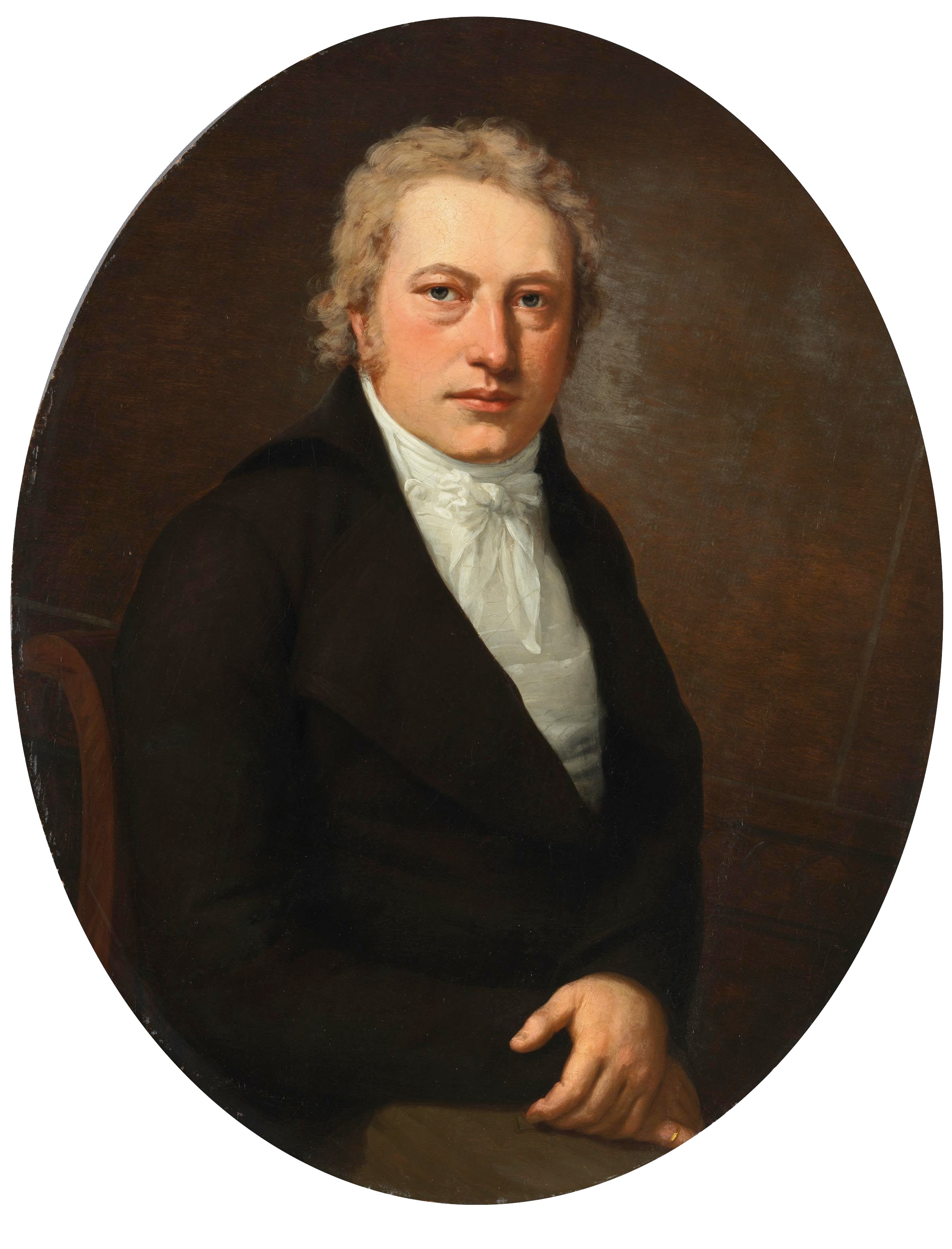
Jan Lodewijk (Louis Jr) Dülcken
(Amsterdam 9 augustus 1761 – † München 1836)
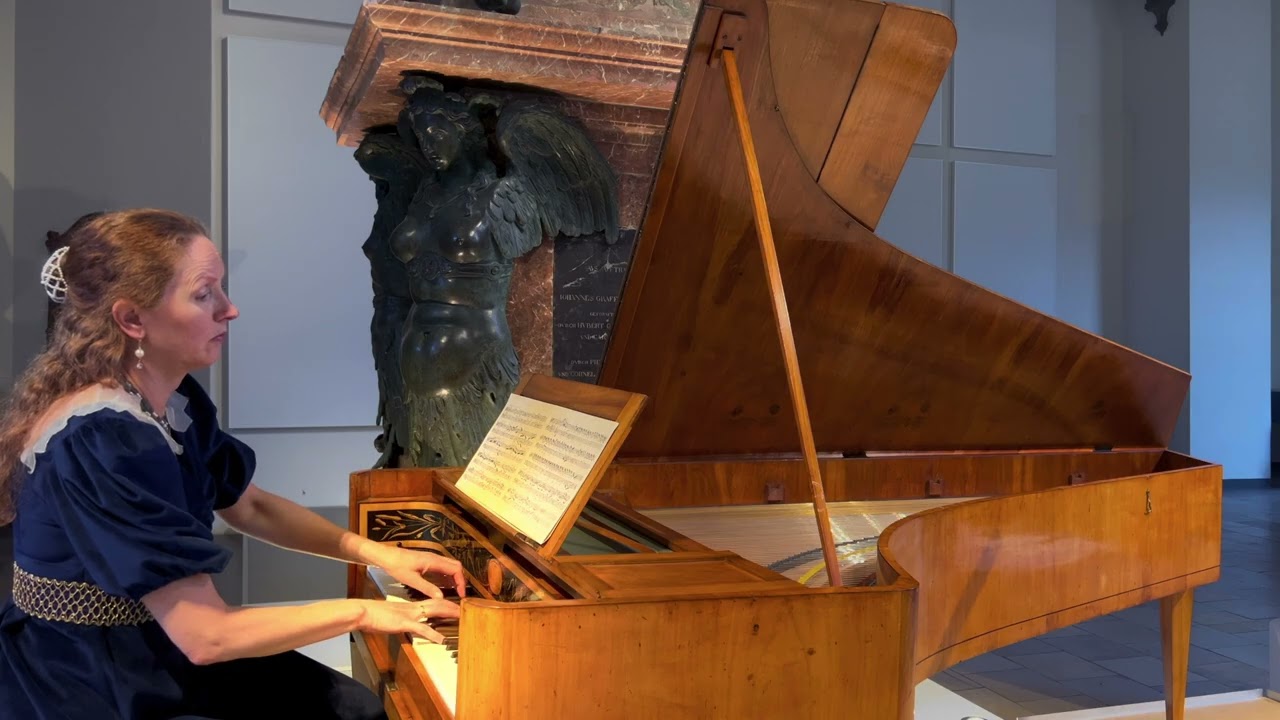
Click on the photo above to start the film.
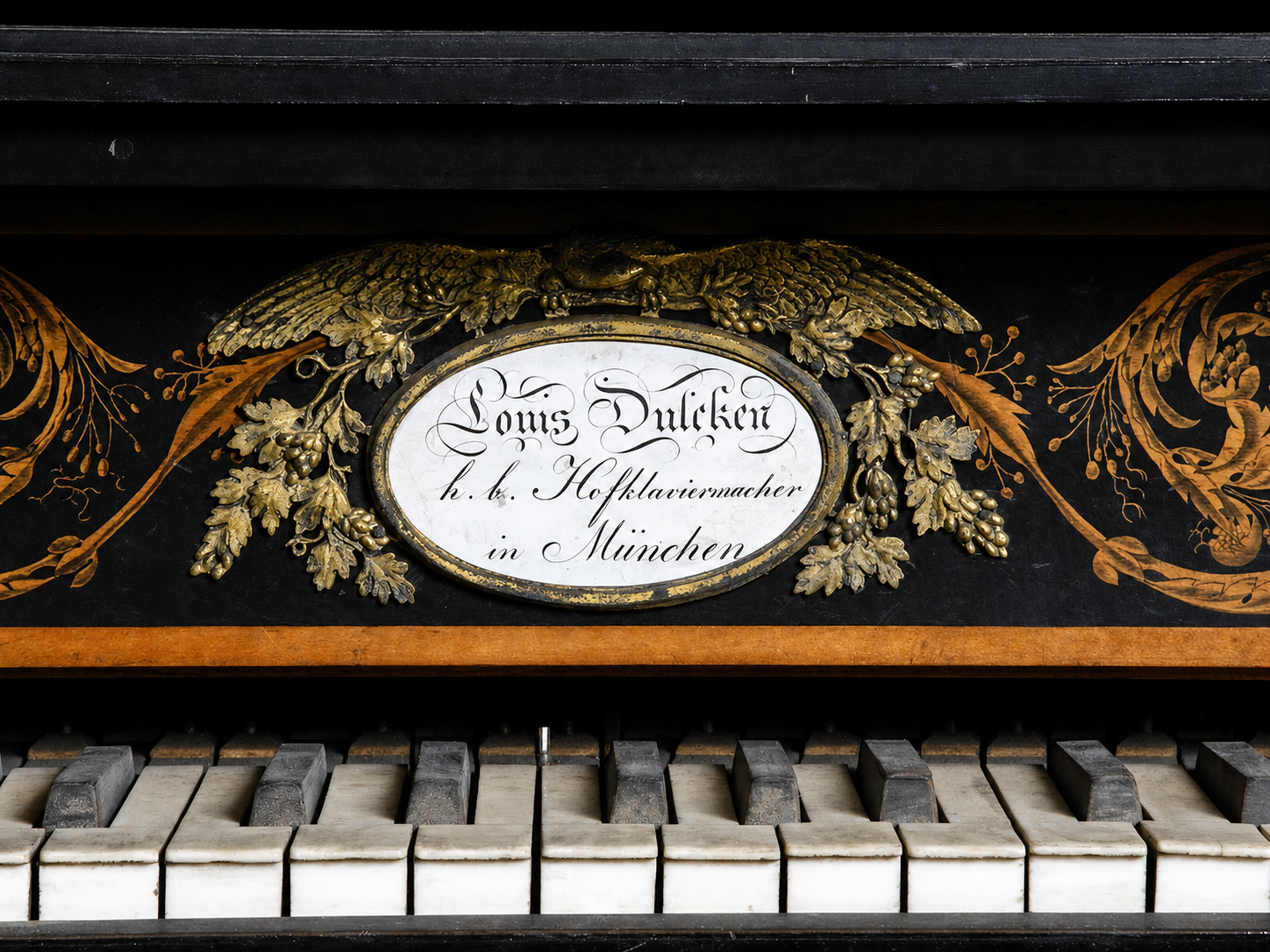
GRAND PIANO LOUIS DULCKEN MUNICH 1815
Bayerisches Nationalmuseum München
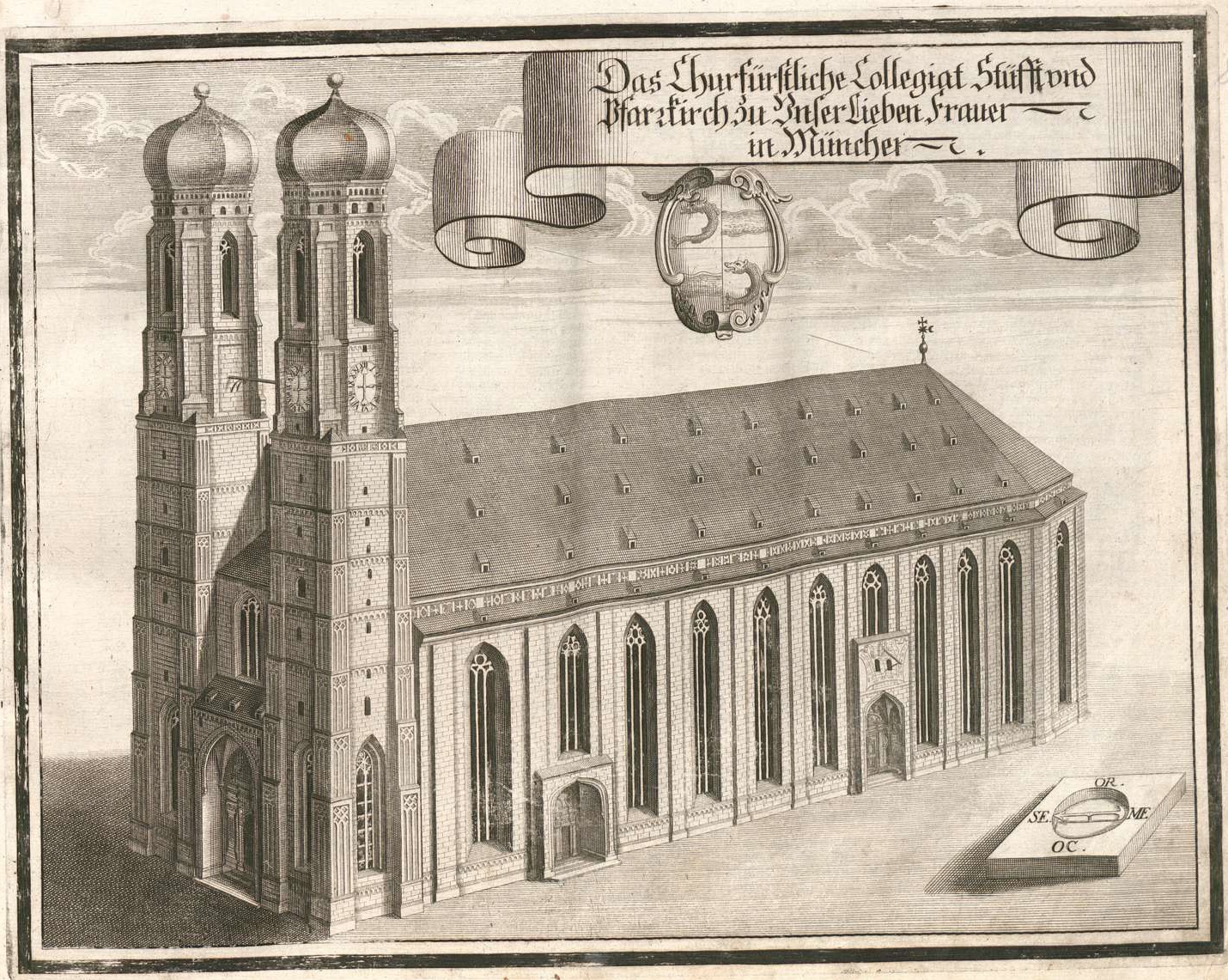
Munich
Johannes Lodewijk received his training from his father in Hasselt and in Antwerp. When his father moved to Antwerp in 1774, he accompanied him. His mother remained in Hasselt with the other children until 1776. He had spent the first 13 years of his life in the small town of Hasselt; now, he was heading to the large city of Antwerp.
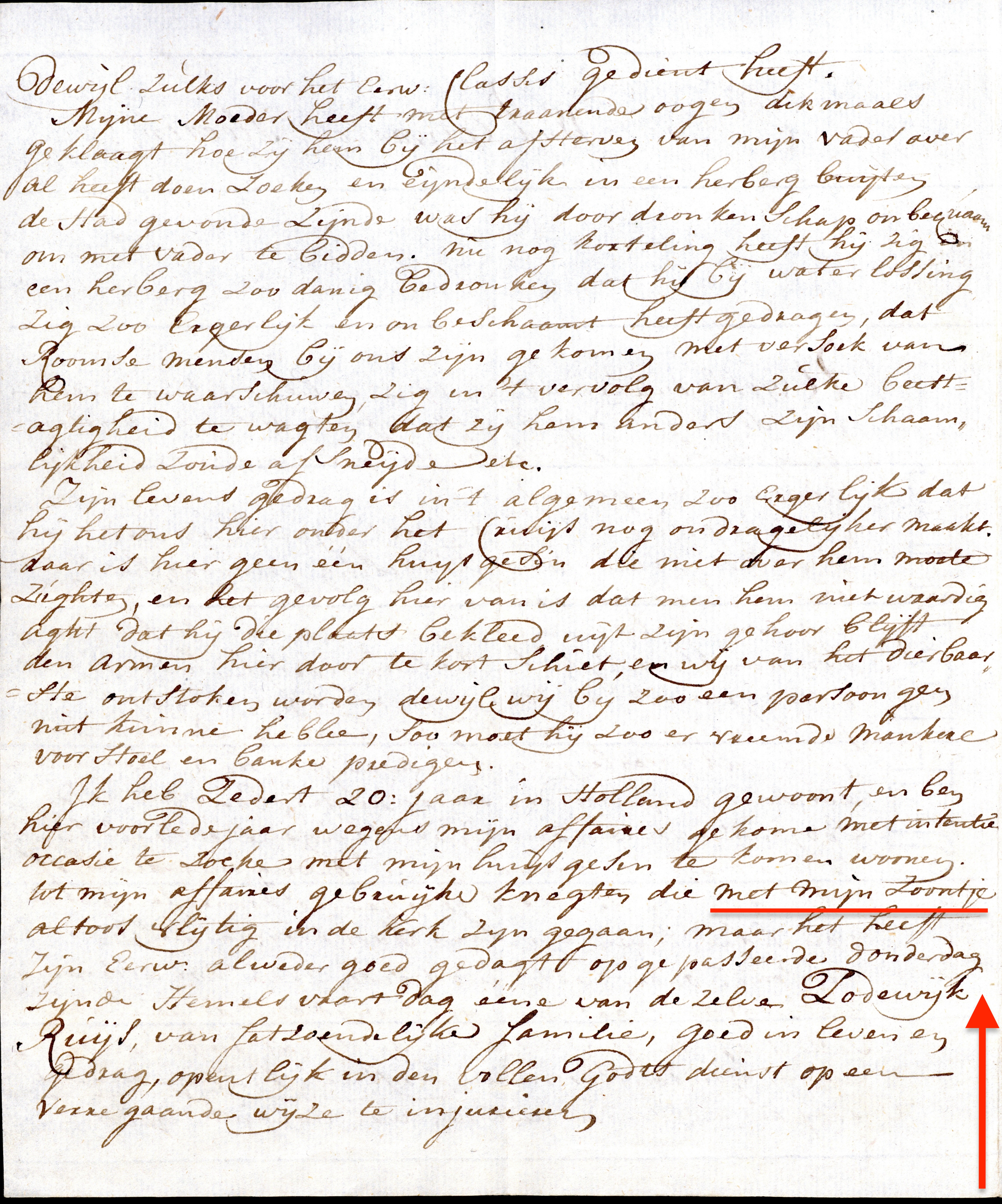
Brief 16 meij 1774 Johannes Lodewijk Dulcken
It is likely that, upon arriving in Antwerp, he immediately began working in his father’s workshop, where his father was continuously refining his new invention. This updated harpsichord was given the name "pianoforte." It is not known exactly how long they worked together in Antwerp—likely only two years. Sometime between 1777 and 1780, his father moved to Paris, where he established a new workshop. The Dulckens—father and son—were evidently very successful; so successful, in fact, that they caught the attention of Karl Theodor, Elector of the Palatinate and Elector of Bavaria. Karl Theodor was a prominent figure of the era, governing a vast territory in Germany. He also held the Land of Ravenstein and the Marquisate of Bergen op Zoom, and served as the Duke of Jülich and Berg—meaning he had significant connections within the Netherlands. A great music enthusiast, Karl Theodor played an instrument himself (the flute). In 1779, he invited Johannes Lodewijk Jr. to join him in Munich. At the time, the young man was only 18 years old—already recognized as a brilliant builder of harpsichords. Much is known about his life and work in Munich, and various articles have been written on the subject. What follows, therefore, is a brief overview of the key points. In Munich in 1779, Louis came into service as an assistant to the royal piano building of Johann Peter Milchmeyer, who worked at the farm of Karl Theodor. In June 1782, Dulcken took over from Milchmeyer in the 21-year-old piano maker. Hij is a real ambassador. Hij maakt voor het hof bijzondere instruments en coopt de ene pianoforte na de others, niet alleen in München en Beieren, maar also ver daarbuiten. In Munich the word was spoken in various manners: Johann Ludwig, Jean Louis also had a grandson with Louis.
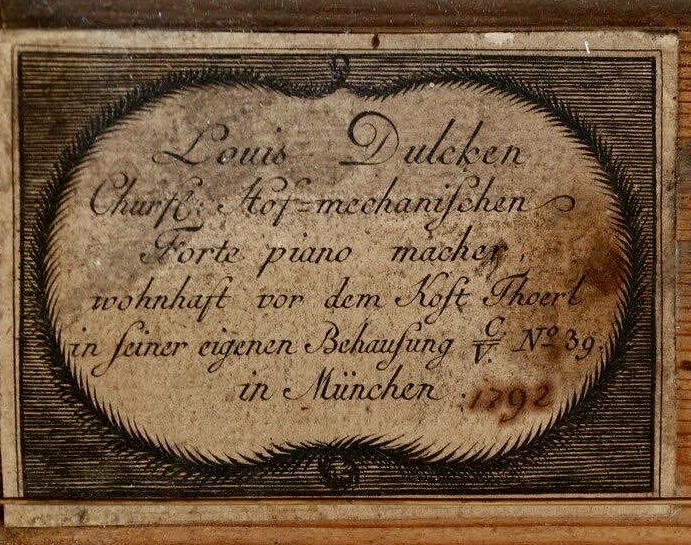
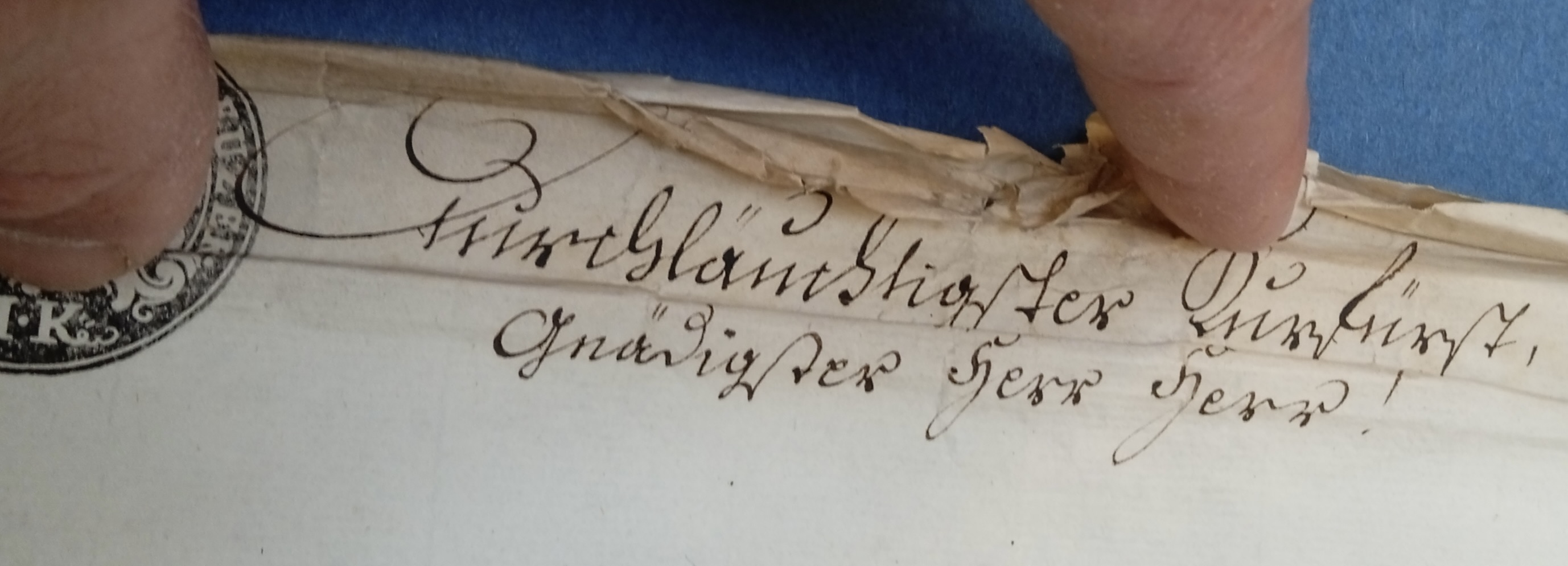
Thanks to Dr. Sybe Wartena - Bavarian State Archives (Munich)
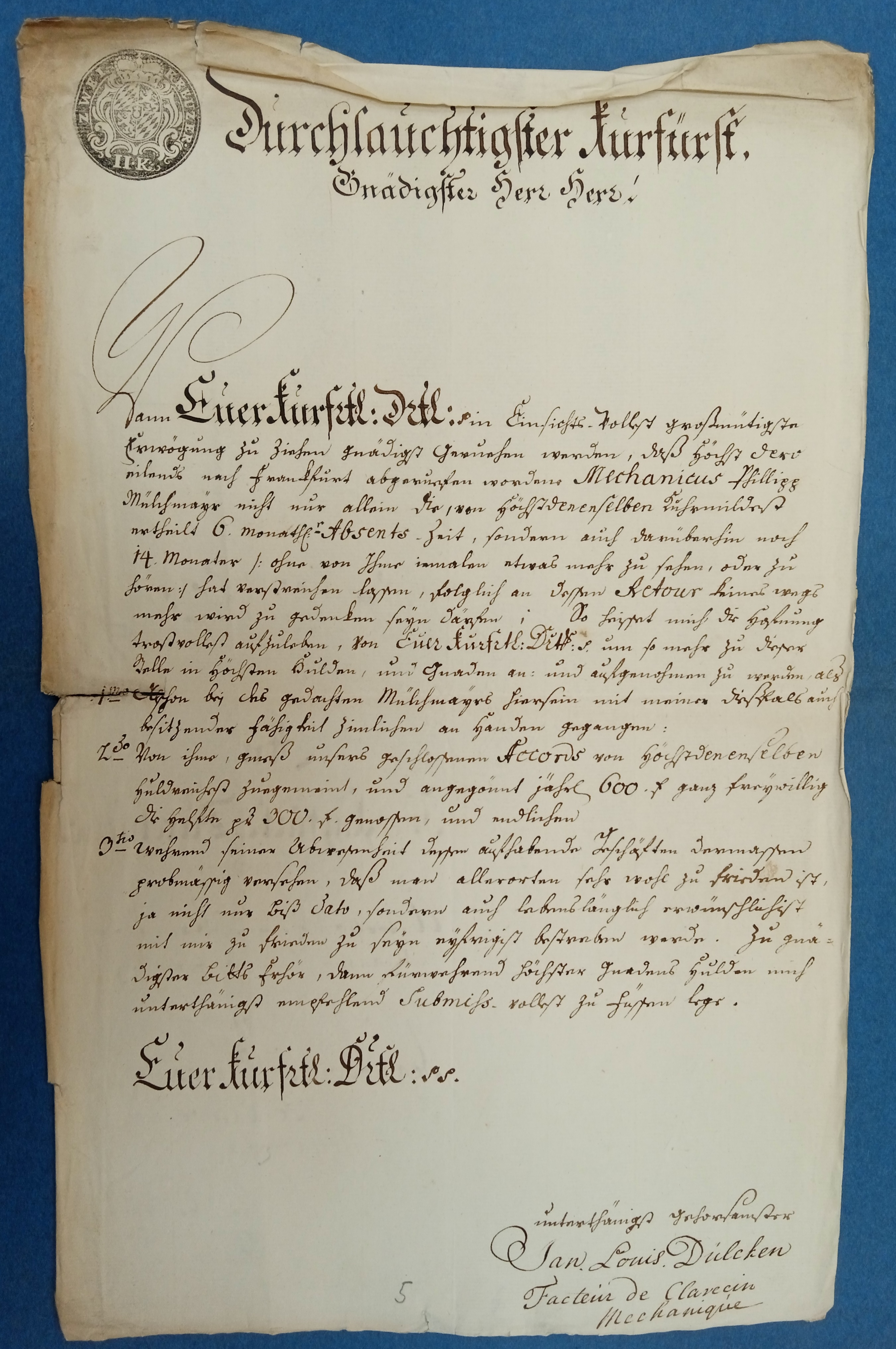
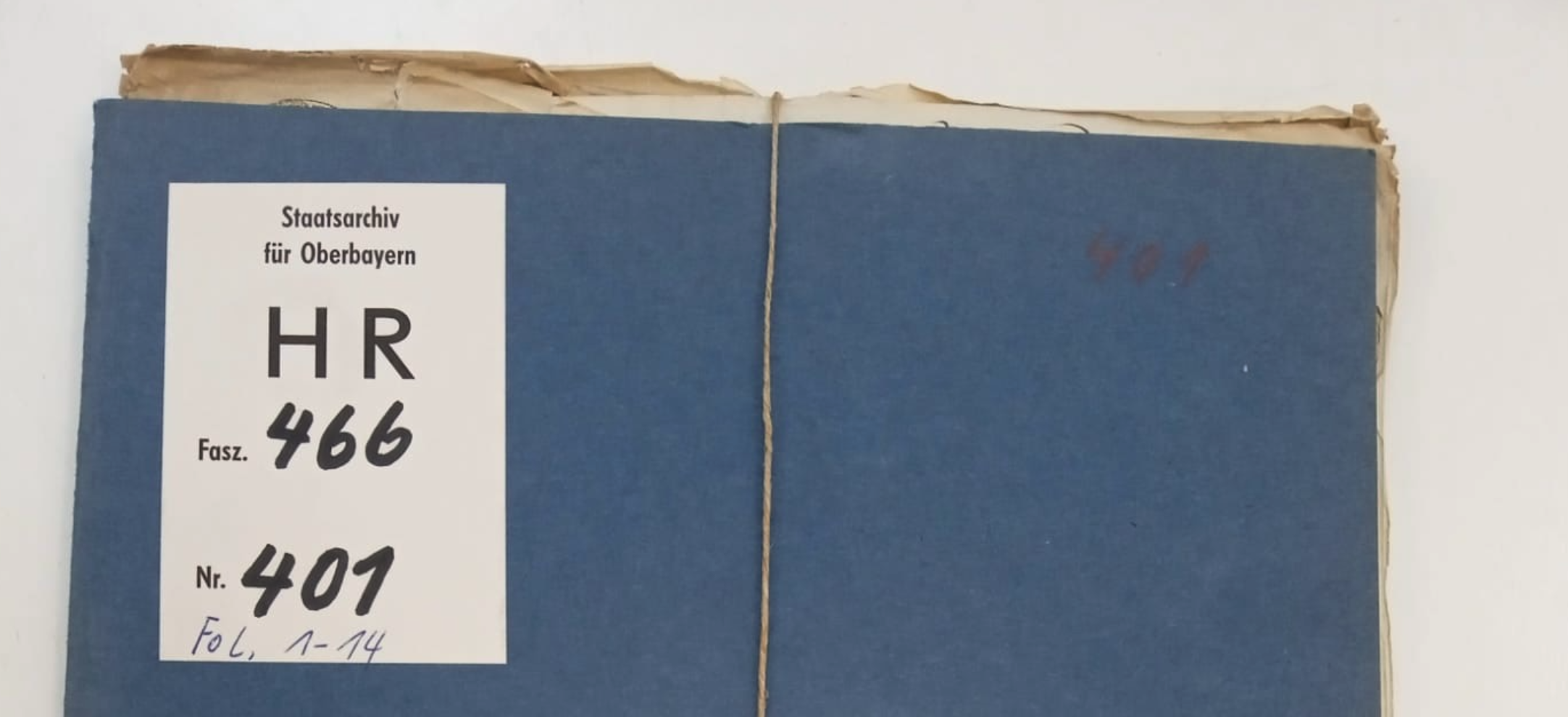
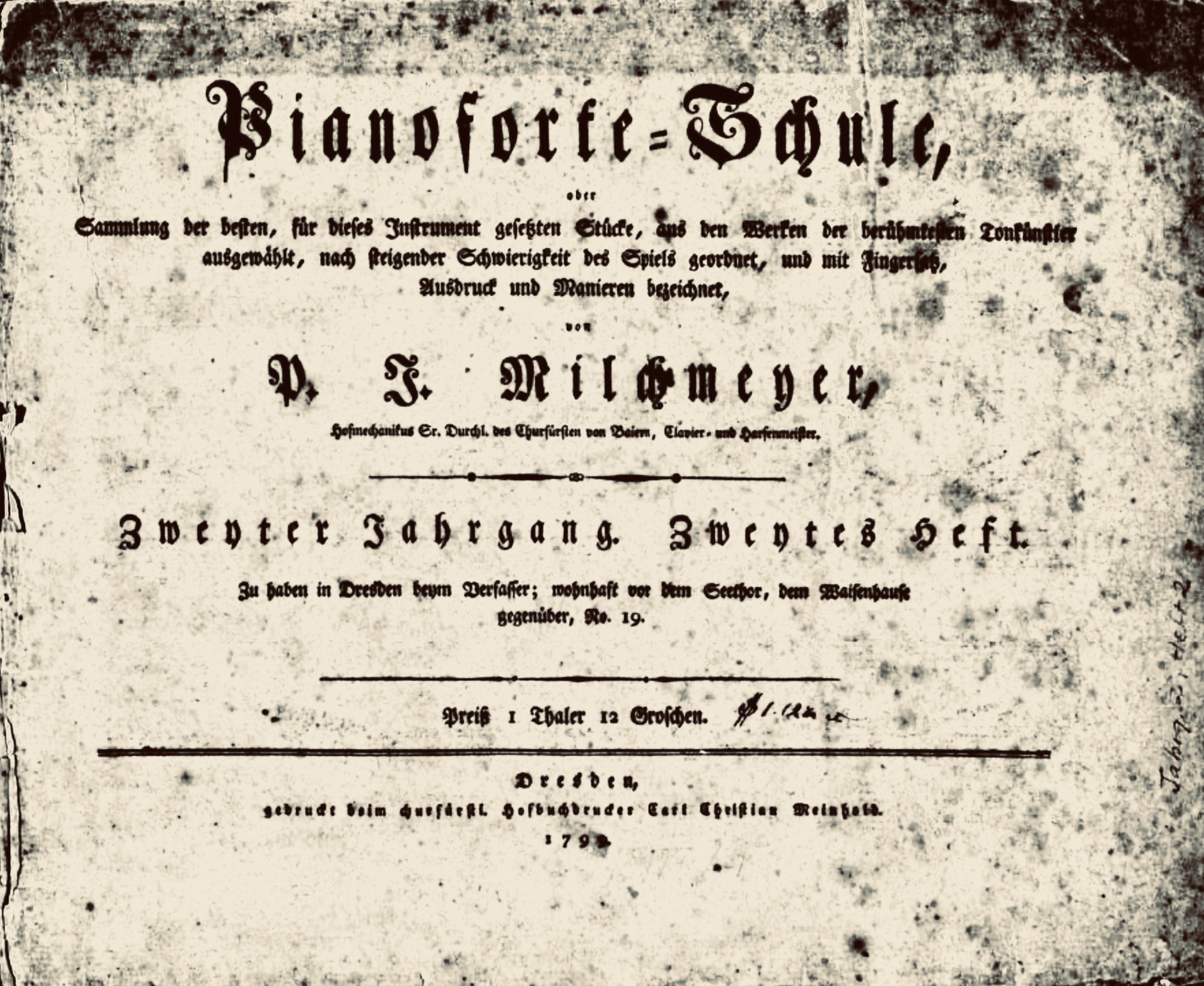
A timeline of the instrument maker Jan Louis Dulcken, who fought a constant battle for financial recognition at the court in Munich over a period of ten years. (1780/1781 - 1791)
On June 25, 1831, Dulcken resigned from his position as royal keyboard instrument maker; he passed away five years later. In his will, Dulcken named as his heirs his wife, Sophie Lebrun (London, June 20, 1781 – Munich, July 23, 1863); his sons, Theobald and Heinrich; his married daughters, Louise and Franziska Bohrer; and his daughters who were unmarried at the time, Violande, Johanna, and Caroline Dulcken. Theobald, acting as manager, and Heinrich, as a builder, apparently fulfilled their father’s obligations following his death, but they soon closed the business. Both sons eventually moved to London, where Theobald became a wool merchant and Heinrich an organist. Louise and Franziska were married to the brothers Max and Anton Bohrer; Louise became a court pianist in Stuttgart. Violande became a concert singer in Munich. Milchmeyer, Peter Johann (Milchmeyer/Milchmayer/Milchmaier) Son of a clockmaker, he was born at Frankfurt am Main in 1750. His treatise, Uber die wahre Art das Pianoforte zu spielen was published in 1797 at Dresden, where he may have been living at the time. In 1805, he became a piano teacher at Strasbourg, and in this capacity attained a considerable reputation. He died there on 15 March 1813, at the age of 63 years. In c1780, he invented a special ‘mechanischen flügel’, probably a combined harpsichord-piano, described by Cramer (1783) as: […] einen neuen mechanischen Flügel erfunden, der nicht viel grösser als ein gewöhnlicher Flügel ist, und doch 250 neue Veränderungen enthält. Er hat 3 Claviere. Das untere lässt sich herausschrauben, wo alsdenn 2 Personen spielen tönnen. Das Steigen und Fallen der Stärte der Töne kann auf disem Instrumente sehr gut hervorgebracht werden.
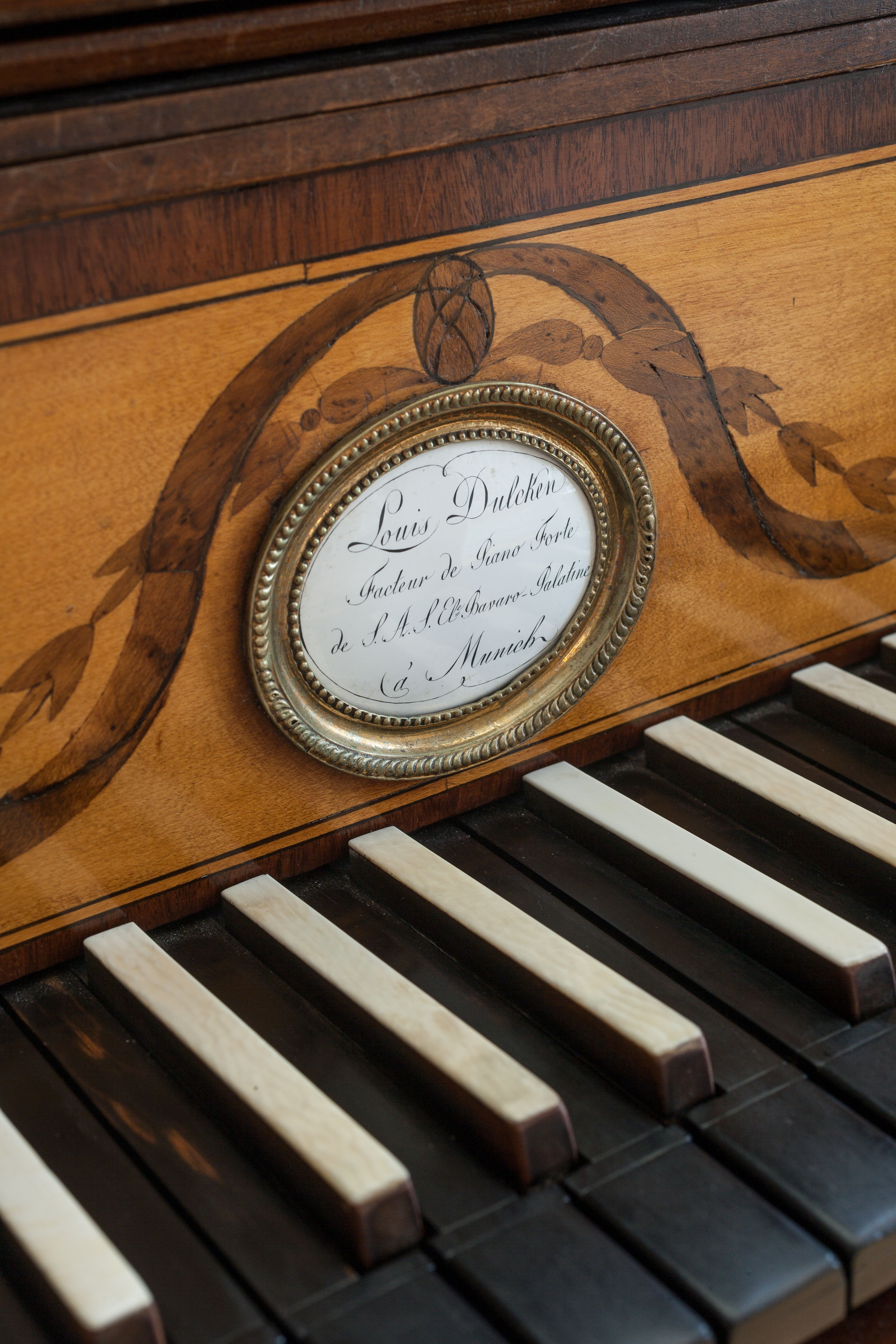
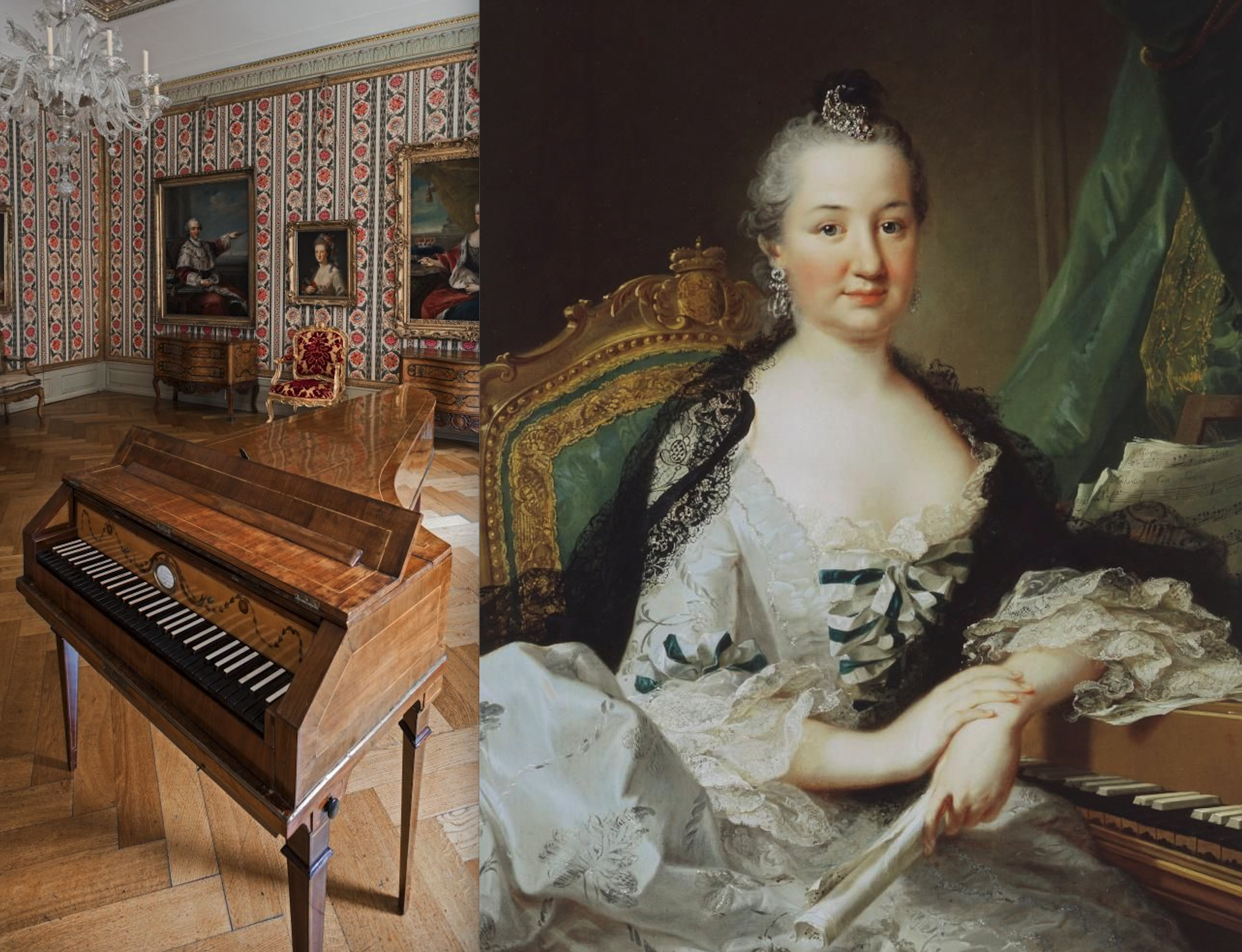
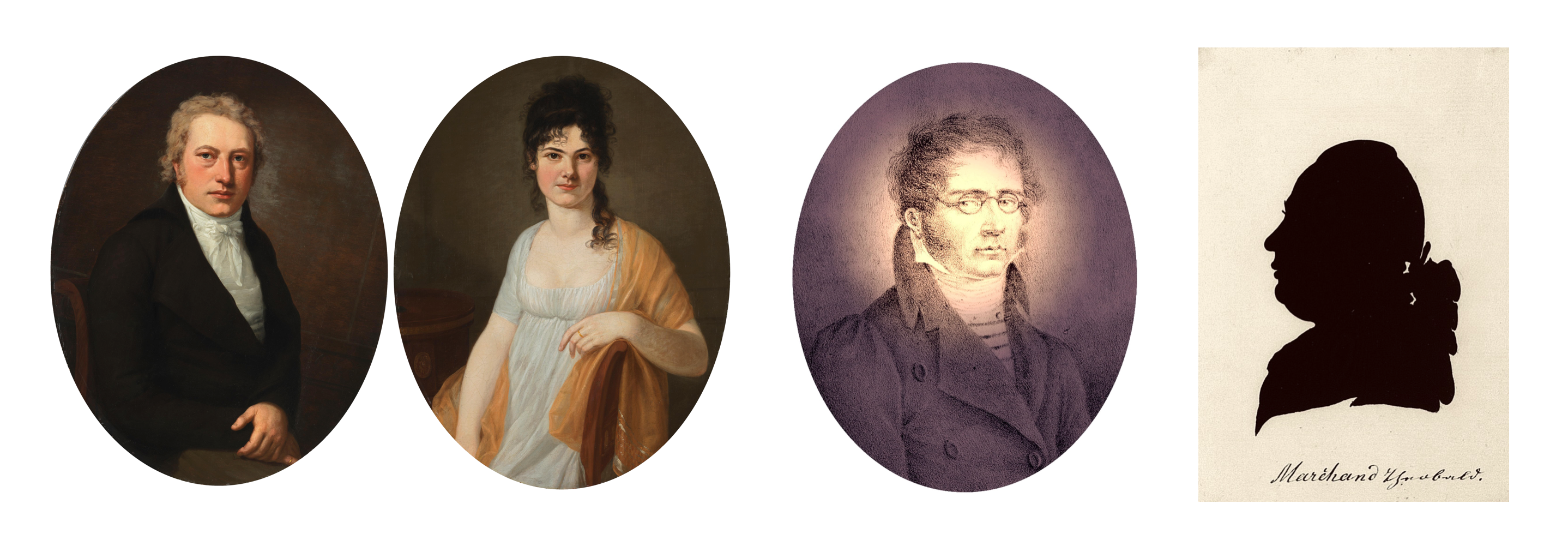
Kurfüstin Elisabeth Auguste
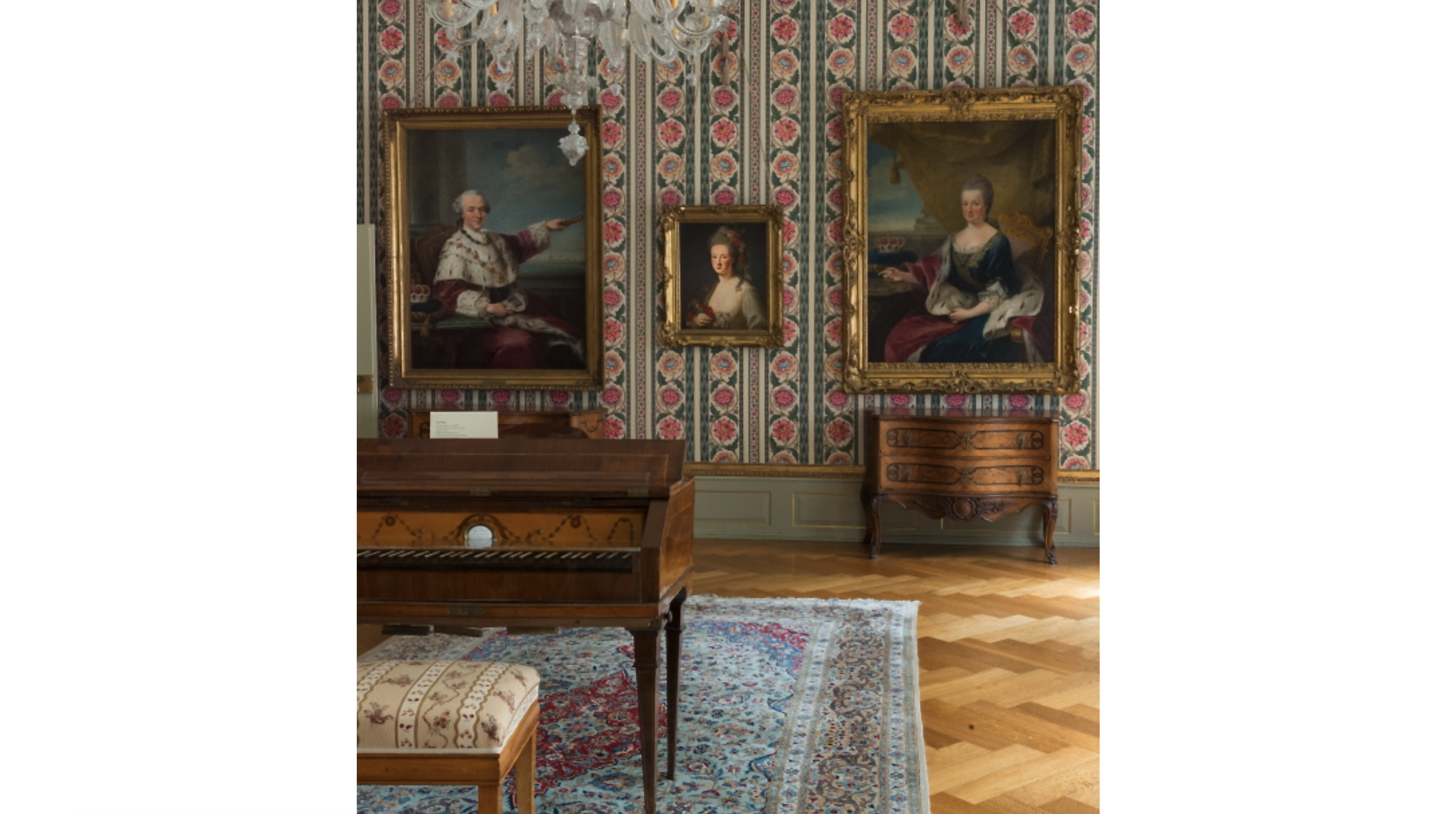
Keurvorstenpaar (links en rechts) en het klavier van Louis Dulcken II
Marriage In 1799, Louis Dulcken married Sophie Lebrun , thereby becoming part of a highly musical family. His wife, Sophie, was the daughter of the virtuoso oboist and composer Ludwig August Lebrun—from Baden—and the soprano and composer Franziska Danzi, also from Baden. Sophie was an exceptionally talented pianist and composed her own musical works; she performed in Paris, Switzerland, and Italy. Louis Dulcken and his wife Sophie had seven children—two sons and five daughters—nearly all of whom went on to have careers as renowned musicians. Through his marriage to Sophie Lebrun, the Dulcken household served for a long time as "the most interesting meeting place for the well-educated musical circles of the day in Munich," frequently hosting various musicians and composers. Dulcken also enjoyed financial success, earning a substantial income from his unique pianofortes. Royal houses across Europe purchased his instruments. During a visit to Munich in 1805–06, Empress Josephine of France acquired two of his instruments and soon ordered a third; the latter was so well-received in Paris that it remained on display there for a long time. In 1816, a grand piano was delivered to the Austrian Empress Carolina Augusta, a daughter of the Bavarian King Maximilian I Joseph. Another instrument was also sent to Saint Petersburg.
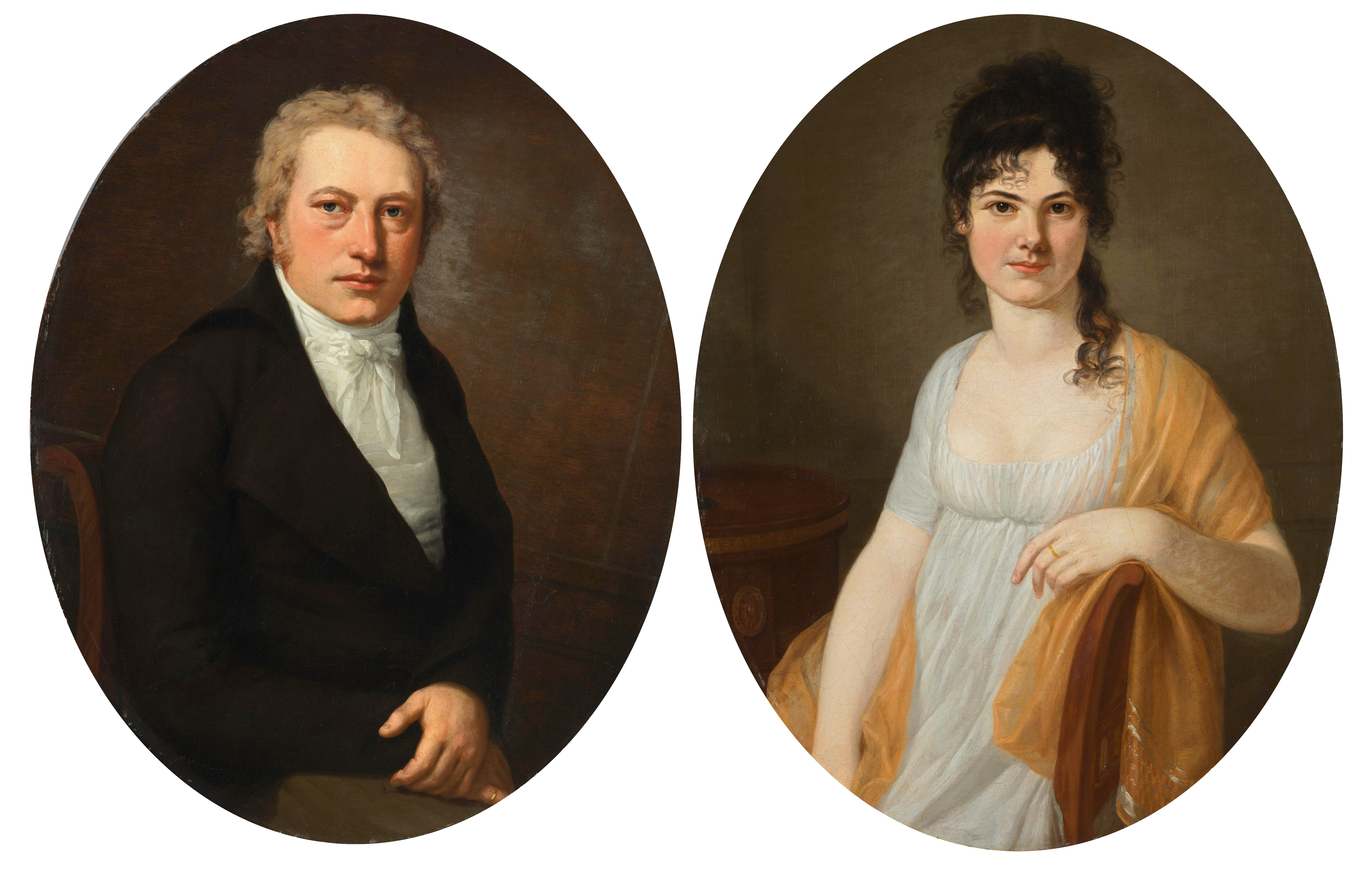
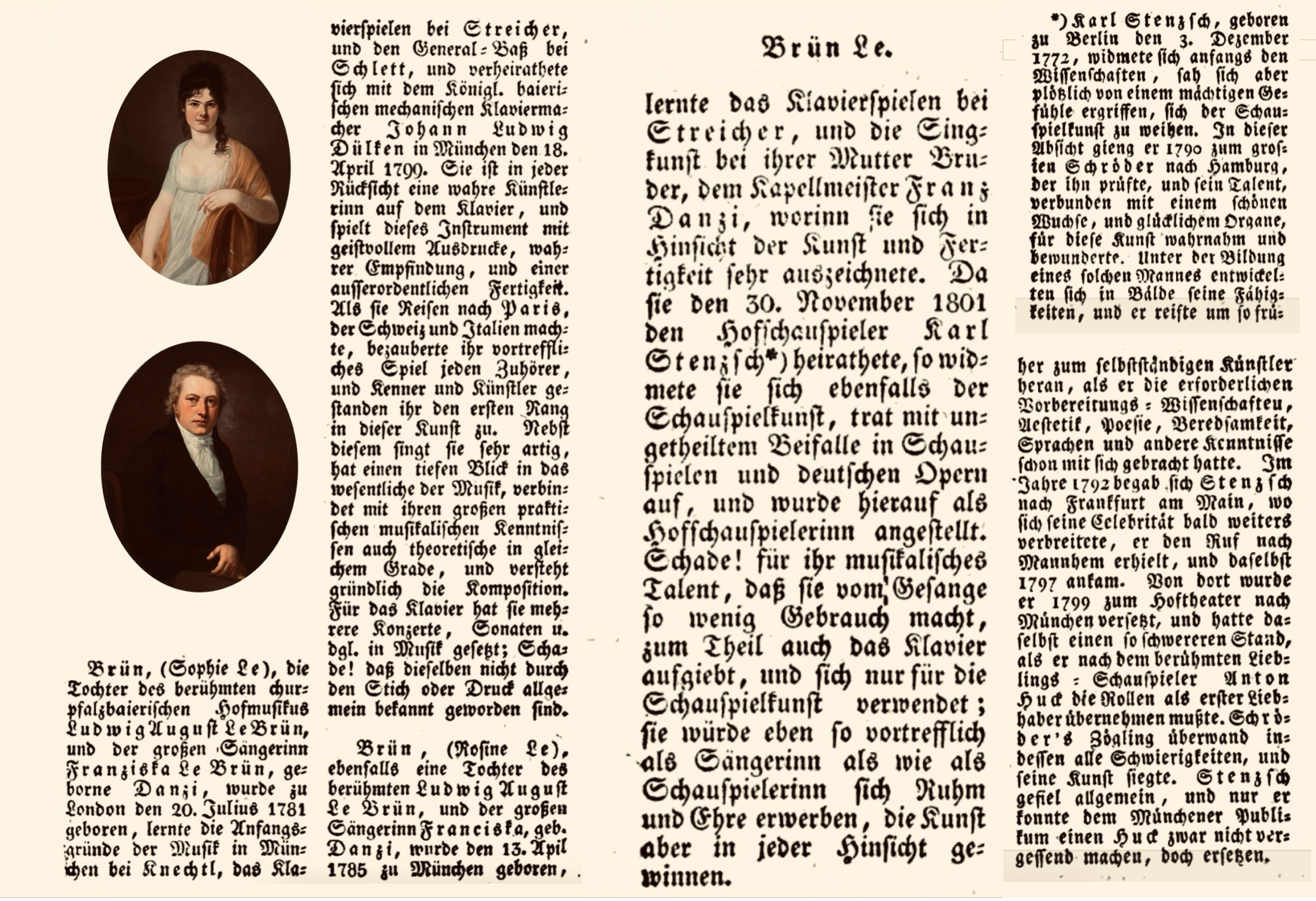
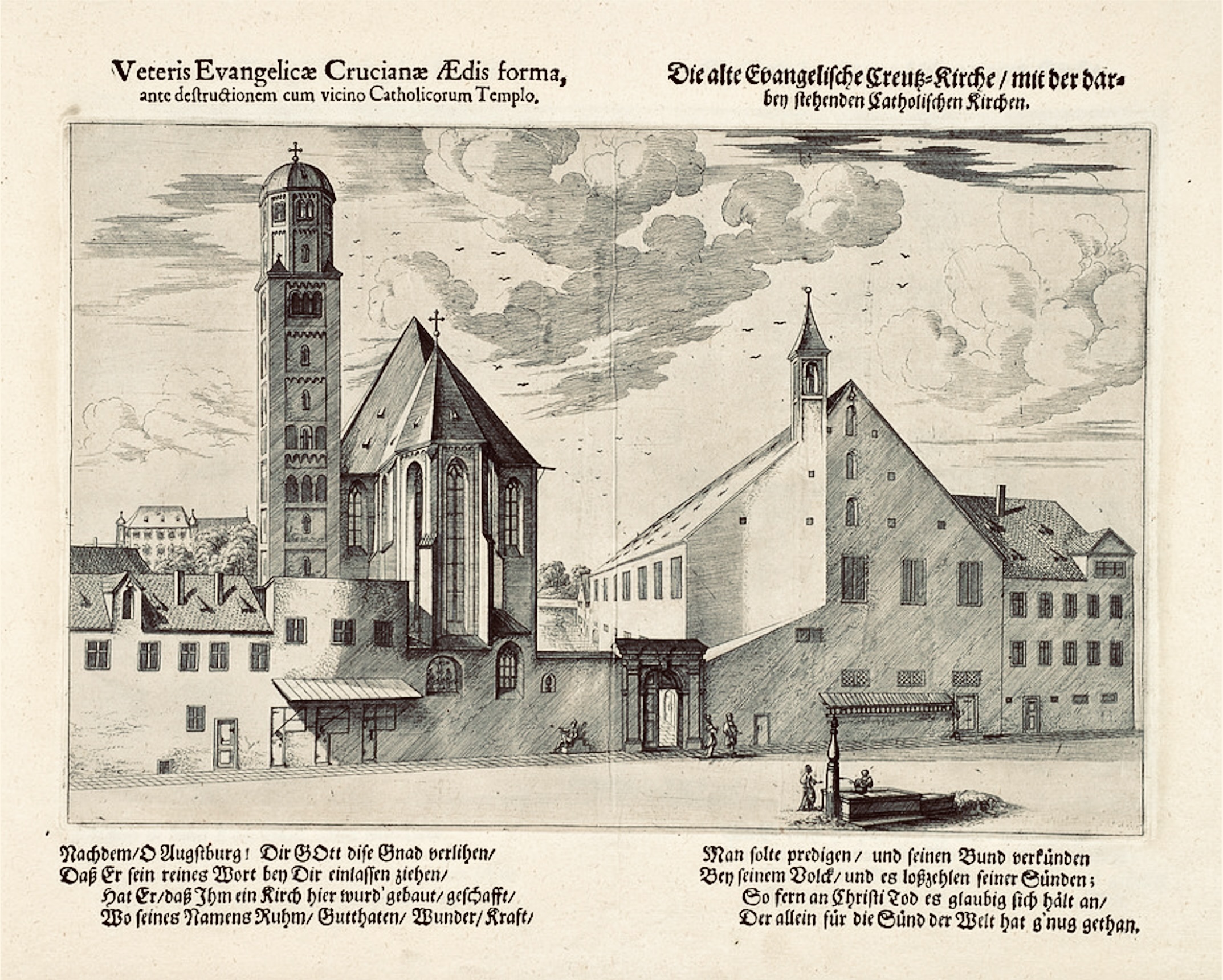
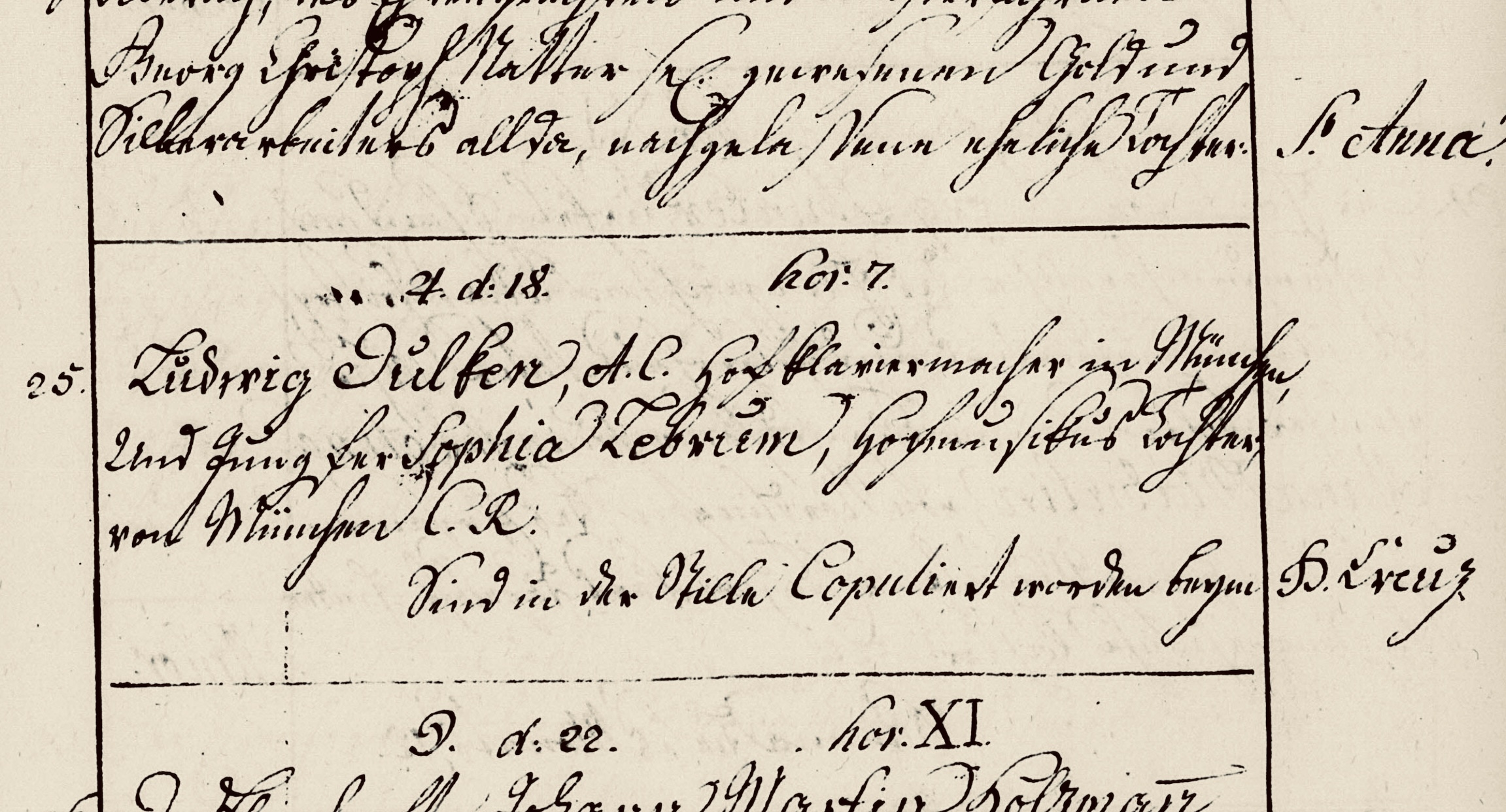
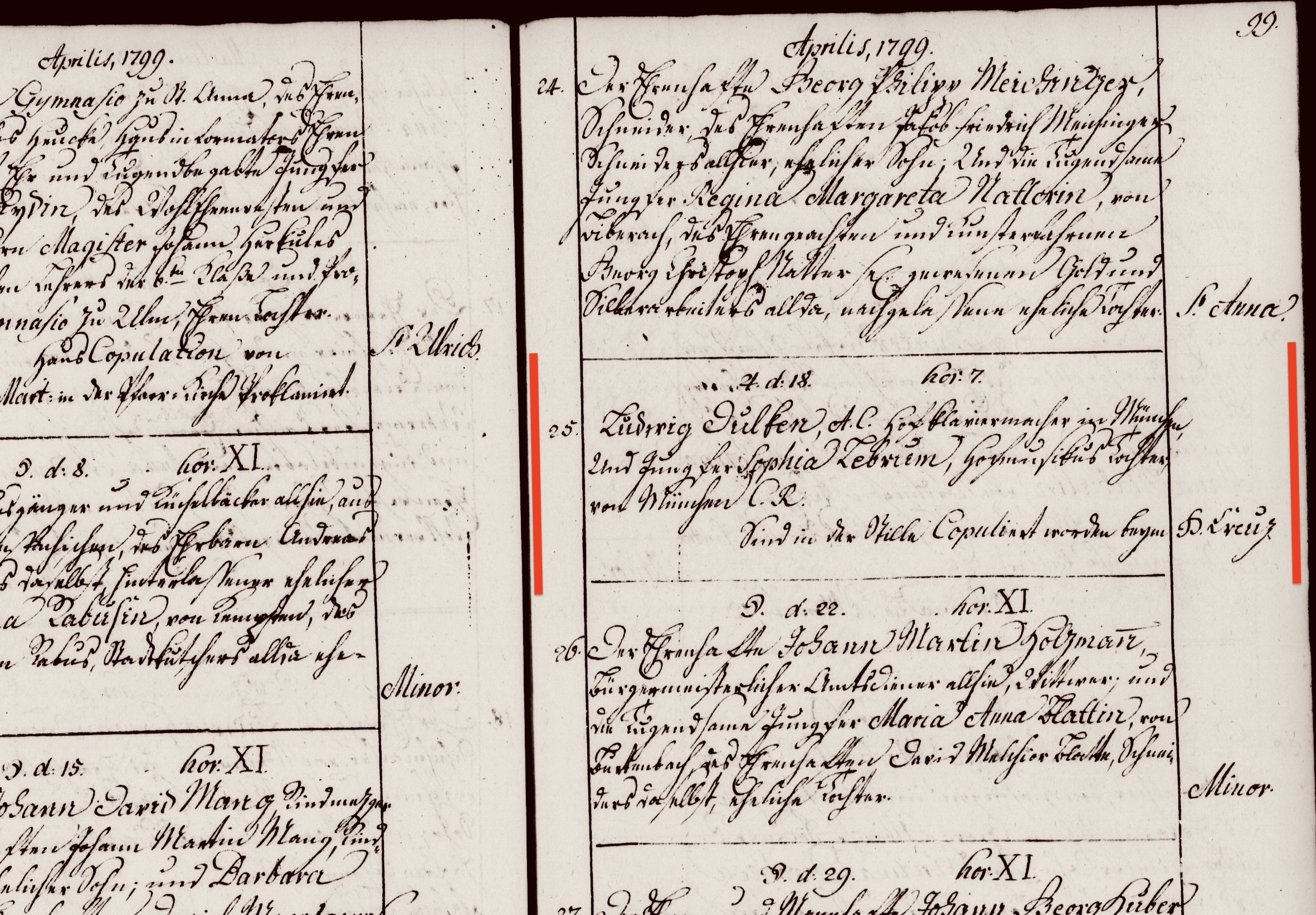
Huwelijk 18 April 1799 Jan Lodewijk (Louis)Dülken x Sophia Lebrun
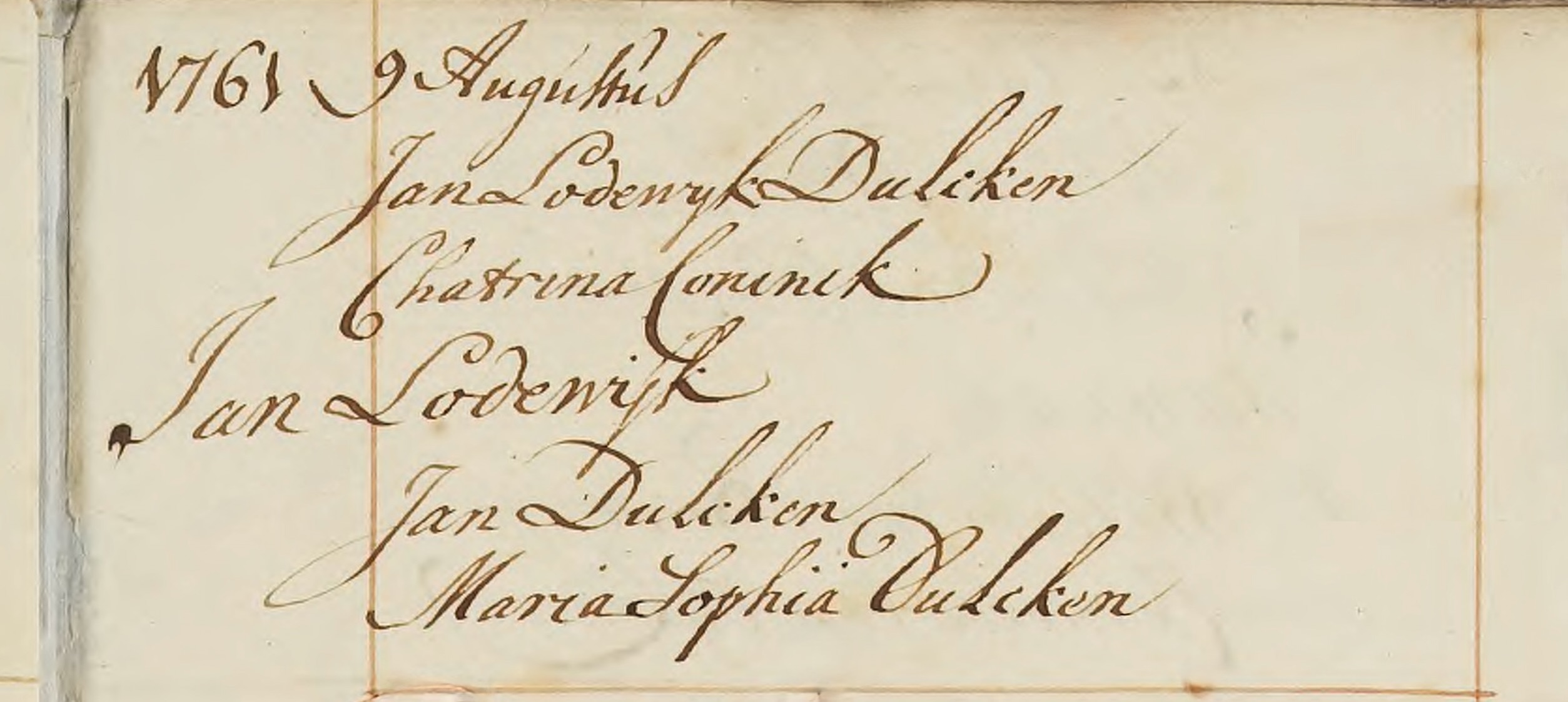
E.L. huwelijk Augsburg (Bayern / Landeskirchliches Archiv der Evangelisch-Lutherischen Kirche in Bayern / Dekanat Augsburg / Augsburg-Gesamtkirchengemeinde / Trauungen 1796 - 1819, pagina 99, Bild 57): "Aprilis, 1799 99. [Donnerstag] d[en] 18. hor[a] 7 25. Ludwig Dulken, A[ugsburger] C[onfession] Hofklaviermacher in München, und Jungfer Sophia Lebrun, Hofmusikus-Tochter, von München C[atholischer] R[eligion] sind in der Stille copuliert worden beijm H[eiligen] Creuz". Dus de transcriptie betreffende het eigenlijke trouwboek van de ''parochie" Heilig Kreuz betreft dus GEEN E.L. ondertrouw, maar ook E.L. huwelijk.
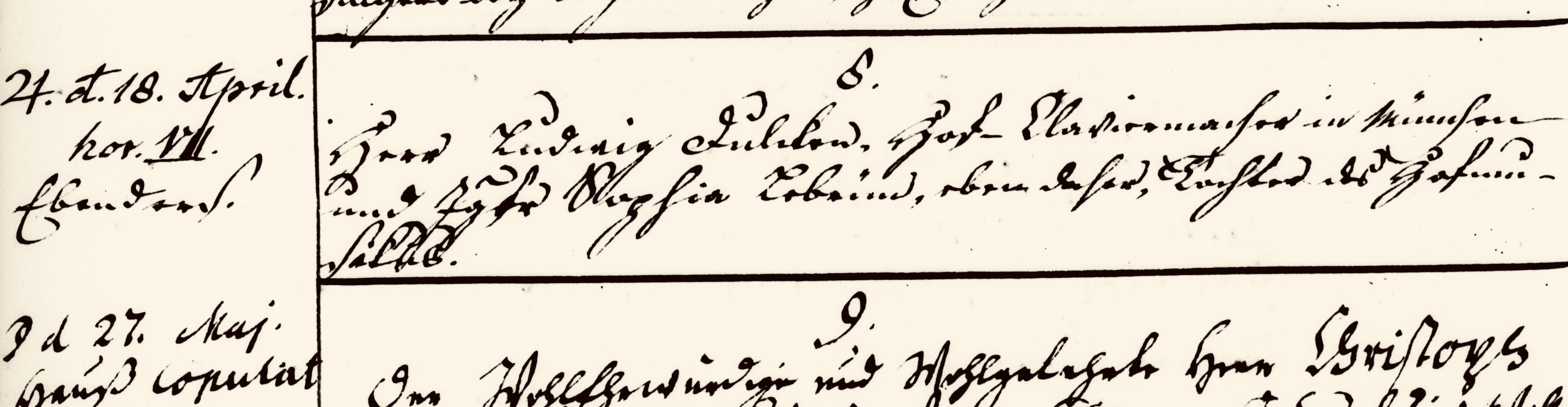
E.L. huwelijk Augsburg (Bayern / Landeskirchliches Archiv der Evangelisch-Lutherischen Kirche in Bayern / Dekanat Augsburg / Augsburg-Heilig Kreuz / Trauungen 1793 - 1814, 1841 - 1918, pagina 14, Bild 11):
"An[n]o 1799. 8.
[Donnerstag] d[en] 18 April. Herr Ludwig Dulcken, Hof-Claviermacher in München,
h[ora] VII und J[ung]f[e]r Sophia Lebrun, eben daher, Tochter des Hofmu-
Ebenders[elbe] sikus”.
Huwelijk 27 December 1799 Jan Lodewijk (Louis)Dülken x Sophia Lebrun
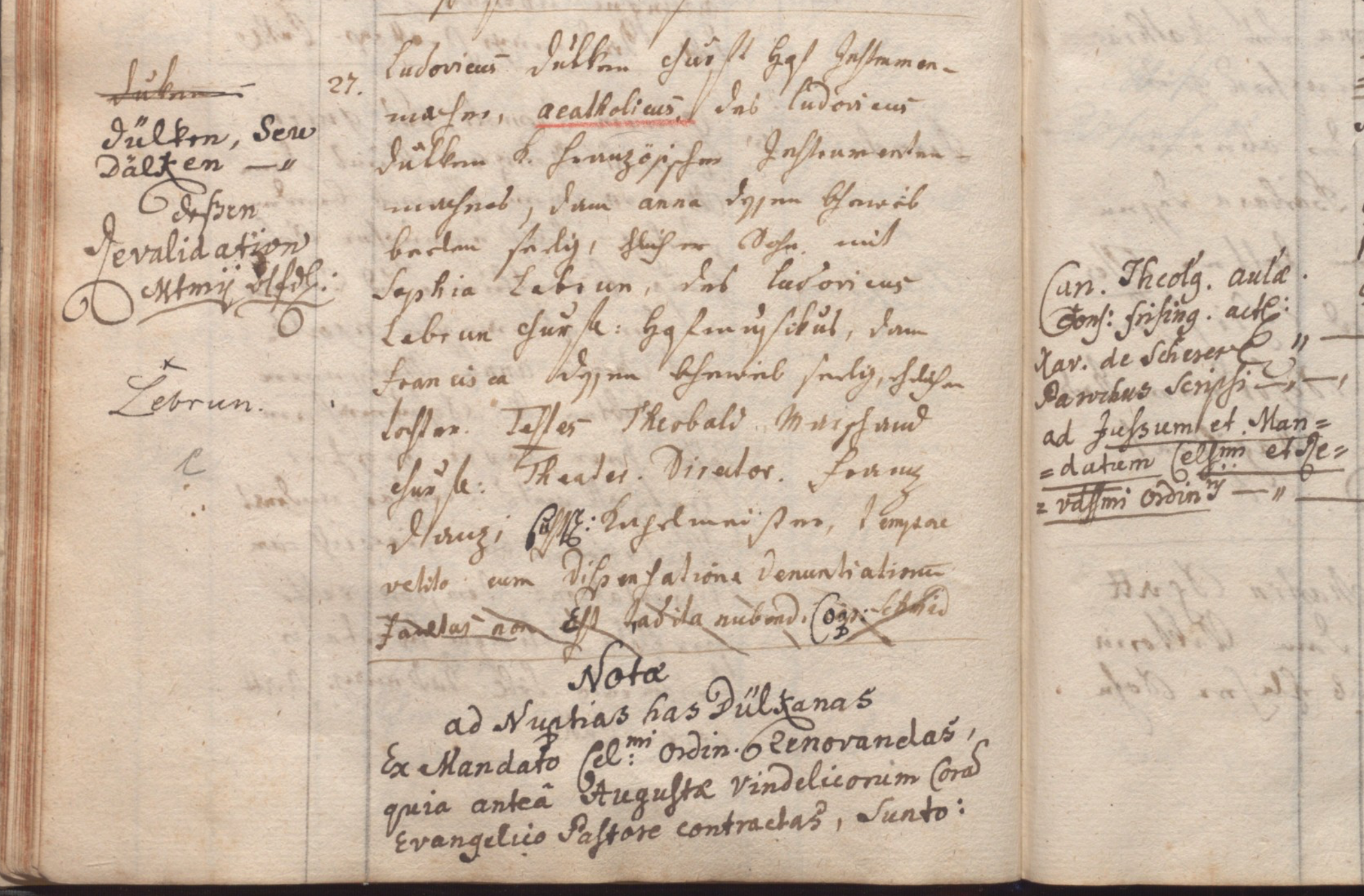
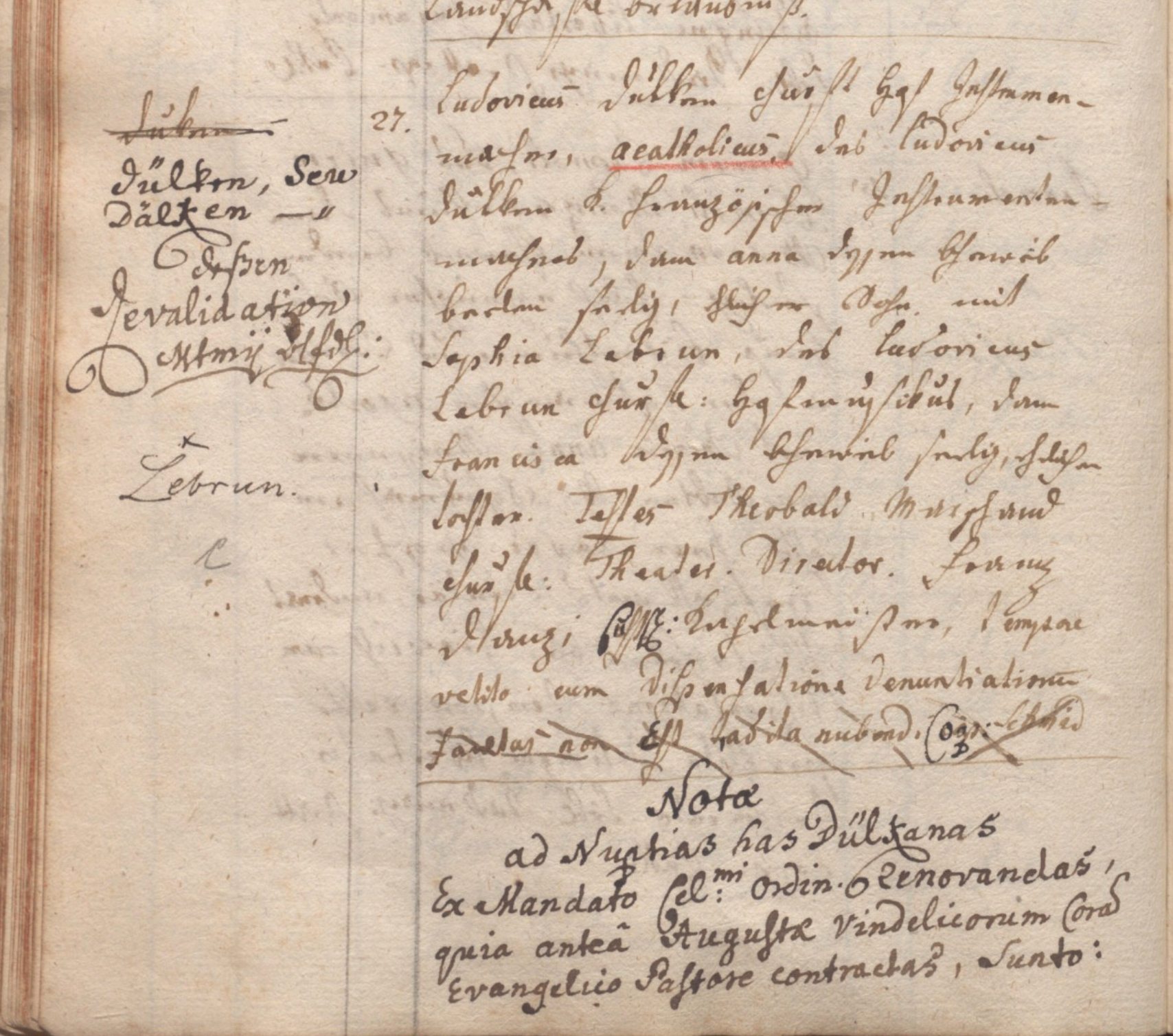
R.K. huwelijk München (Archive des Erzbistums München und Freising, Seelsorgeeinheiten, Pfarreien und Kirchenstiftungen, CB301, München-Zu Unserer Lieben Frau 1561-1937, Pfarramtsverwaltung, M9313, Trauungen 1798-1806, Bild 35,
"Nomina Sponsoru[m] Dies Mensis Decembris An[n]o 1799
Dülken, seu 27. Ludovicus Dülken churf[ürstlicher] Hof-Instrumen[ten]m
Dälken macher, acatholicus, des Ludovicus
dessen Dülken k[öniglich] französischen Instrumenten
Revalidation machers, dann Anna dessen Eheweib
m[a]t[ri]m[on]ii ____ beiden seelig, ehlicher Sohn, mit
Sophia Lebrun, des Ludovicus
x Lebrun churf[ürstlichen] Hofmusikus, dann
Lebrun Francisca dessen Eheweib seelig, ehelichen
Tochter. Testes: Theobald Marschand
churf[ürstlicher] Theater-Director, Franz
Danzi c[h]u[r]f[ürs]t[licher] Kapelmeister, tempore
vetito cum dispensatione denuntiationu[m]".
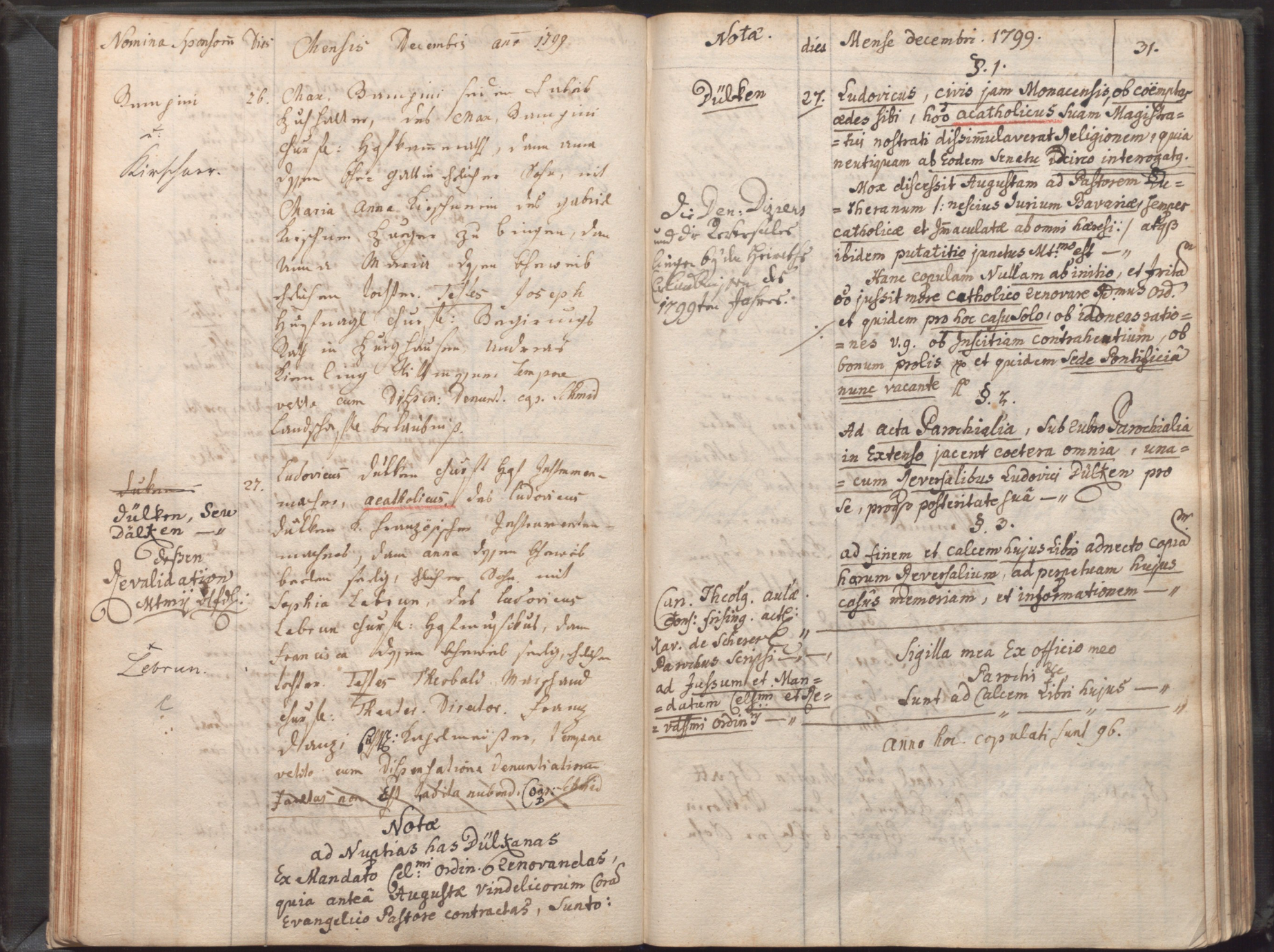
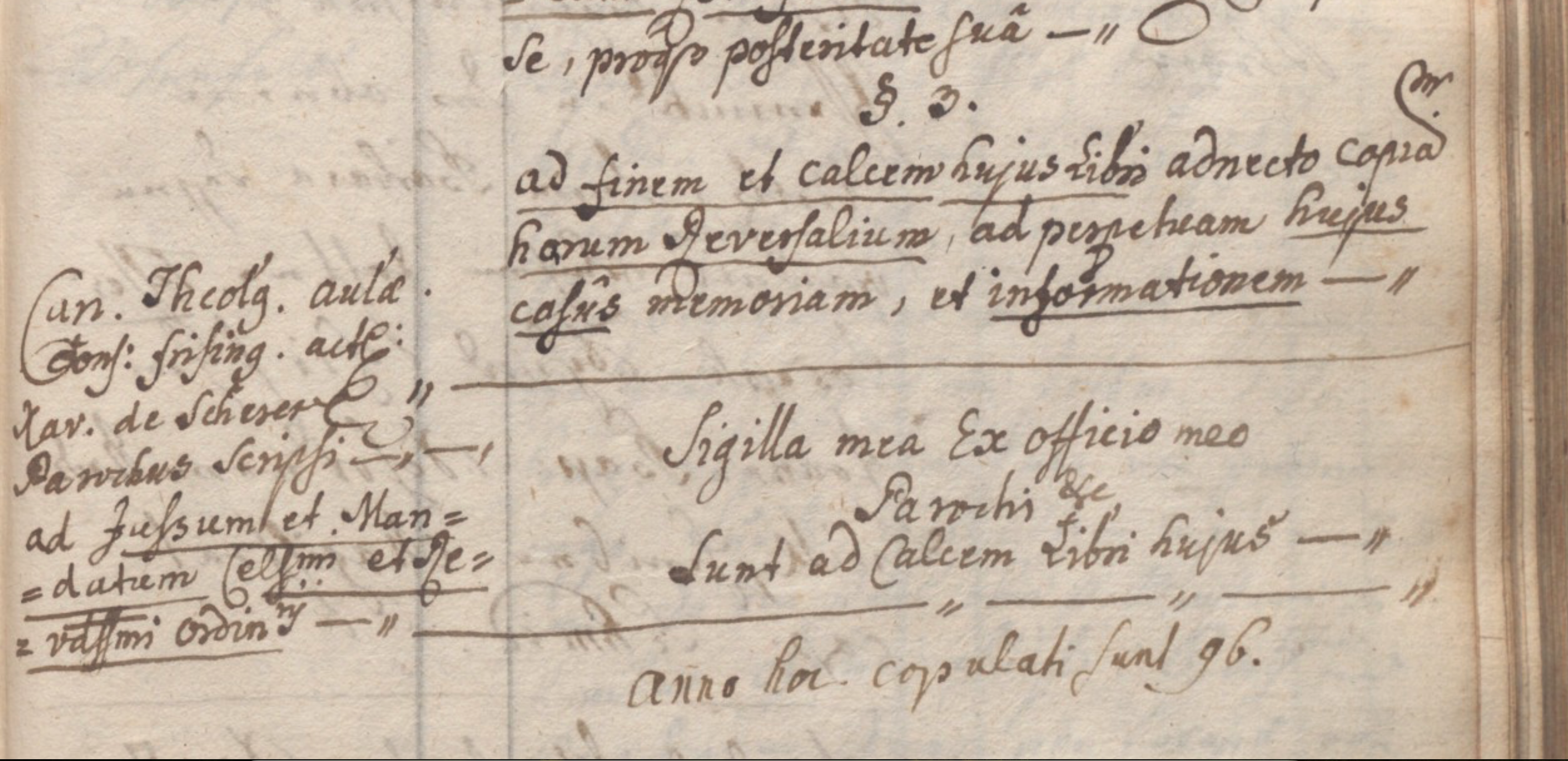
Transcriptie
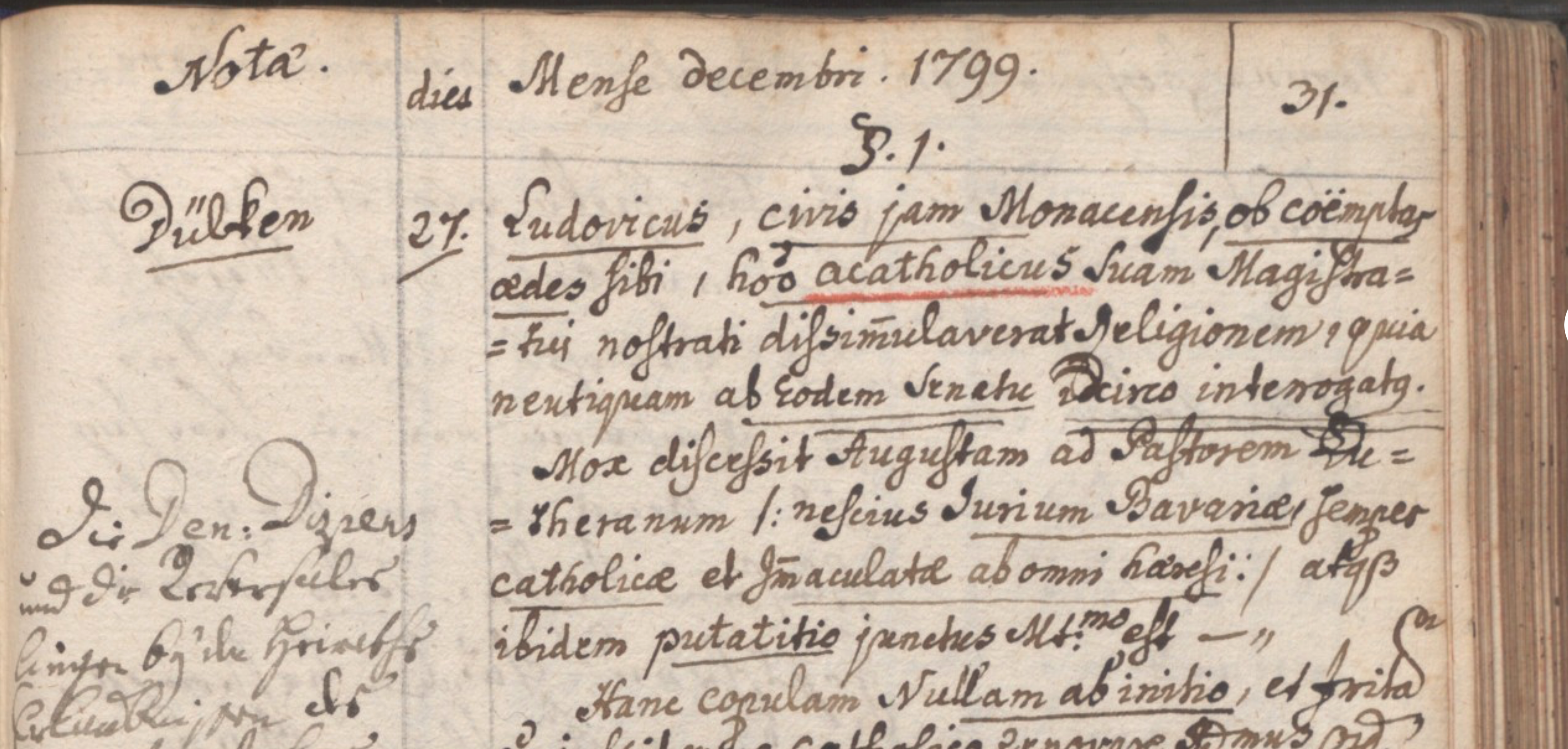
[30verso?]
Notae
ad nuptias has Dülkanas
ex mandato celsissimi ordinis renovandas
quia antea Augusta Vindelicorum coram
Evangelico Pastore contractas, sunto.
[31recto?]
§ 1
Ludovicus, civis jam Monacensis, ob coëmptas
aedes sibi, homo*1 acatholicus suam magistra=
tui nostrati dissimmulaverat religionem, quia
neutiquam ab eodem senatu idcirco interogatus.
Mox discessit Augustam ad Pastorem Lu=
theranum (nescius Iurium Bavariae, semper
catholicae et immaculatae ab omni haeresi) atque
ibidem putatitio junctus matrimonio est.
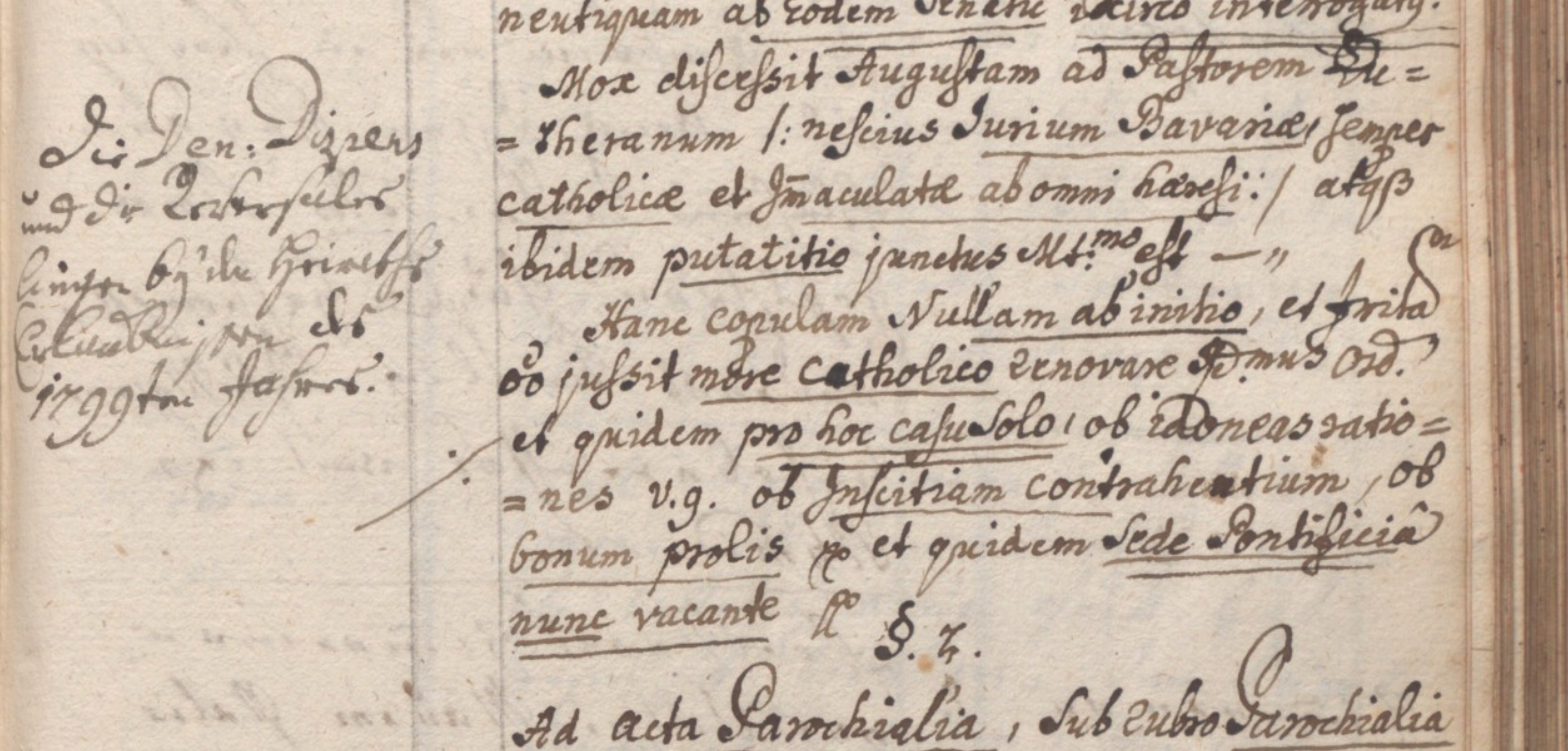
Hanc copulam nullam ab initio, et irritam
omnino jussit more catholico renovare Dominus ordinis?*2
et quidem pro hoc casu solo, ob idoneas ratio=
nes v.g. (=verbi gratia) ob inscitiam contrahentium, ob
bonum prolis pp? et quidem sede pontificia
nunc vacante pp?
§ 2
Ad acta Parochialia, sub conubio Parochialia
in extenso jacent coetera omnia, una=
cum reversalibus Ludovici Dülken pro
se, proque posteritate sua.
§ 3
ad finem et calcem huius libri adnecto copiam
horum reversalium, ad perpetuam huius
casus memoriam, et informationem.
Sigilla mea ex officio meo
parochi etc.
sunt ad calcem libri huius
anno hoc copulati sunt 96.
In de marge [31r]
Can. Theol'g aul'ae
cons: frising. actae: ? = Freising?
Rav. de Scheser…? Parochus scripsi
ad Iussum et Man=
datum celsissimi et Re=
verendissimi?*3 Ordinis
Ik, … , pastoor (Parochus), heb dit geschreven op bevel en verordening van de verheven en eerbiedwaardige (klooster)orde.
Vertaling
Opmerkingen bij dit huwelijk van Dülken dat op bevel van de verheven (klooster)orde herhaald / vernieuwd moest worden omdat het eerder in Augsburg ten overstaan van een Evangelische prediker gesloten was, …?*4
27 december 1799 § 1
Louis, reeds een inwoner van München,*5 had, toen hij een huis ging kopen, als niet-katholiek, zijn geloof voor onze ambtenaar verborgen gehouden, omdat het bestuur hem hier ook niet naar gevraagd had.
Kort daarop vertrok hij naar een Lutherse prediker in Augsburg (onwetend van de wetten in Beieren, waar men altijd katholiek is geweest en onaangeroerd door enige vorm van ketterij) en daar dacht hij getrouwd te zijn.*6
De ordemeester? heeft verordend dat deze verbintenis, die vanaf het begin nietig en geheel en al ongeldig was, in dit uitzonderlijke geval, op de katholieke manier herhaald / vernieuwd moest worden, vanwege geschikte redenen, bijv. vanwege de onwetendheid van de betrokkenen, vanwege het welzijn van de kinderen (en omdat er momenteel geen paus is).*7
§ 2 Aangaande de Acta Parochialia (=Handelingen van de parochie), alle overige Parochialia zijn, samen met de repliek van Louis Dülken ten bate van hem en zijn kinderen, in hun volledigheid te vinden (in extenso iacent) onder het kopje huwelijk (sub conubio).
§ 3 Tenslotte en ten einde van dit boek voeg ik deze vele replieken toe, ter eeuwige herinnering aan deze zaak, en ter lering.
Mijn zegels overeenkomstig mijn ambt als pastoor etc. (parochus) zijn achterin dit boek te vinden.
Dit jaar zijn er 96 [mensen] getrouwd.
*1-ho’o = homo?
*2-Dominus ordinis? Het gaat om de hoogste functie binnen een bepaalde religieuze groep. Ik vertaal het maar letterlijk met ‘ordemeester’. De religieuze orde komt vaker ter sprake.
*3-reverendissimi’ is het eerste waar ik aan denk, maar of dat er staat weet ik niet zeker.
*4-sunto?
*5-Monacum, -ch(i)um = München, St., Bayern (Graesse, Orbis Latinus).
*6-Augusta [Vindelicorum] = Augsburg (Pinkster, Woordenboek Latijn-Nederlands).
*7-Augusta [Vindelicorum] = Augsburg (Pinkster, Woordenboek Latijn-Nederlands).
*8’-sedisvacatie’ van 29 augustus 1799-14 maart 1800, paus gevangengezet door Napoleon en in gevangenschap gestorven.
Transcriptie - Dr Verena Demoed
Sophia Lebrun, wettige dochter van Ludwig Lebrun, keurvorstelijk hofmusicus, en diens echtgenote Francisca, zaliger gedachtenis.
Getuigen: Theobald Marschand, keurvorstelijk theaterdirecteur; Franz Danzic, keurvorstelijk kapelmeester.
“Tempore vetito cum dispensatione denuntiationum” = in de gesloten (Advents)tijd, met dispensatie van de huwelijksafkondigingen.
Revalidatio matrimonii = kerkelijke bevestiging van een reeds bestaand, maar canoniek onregelmatig of ongeldig gesloten huwelijk, of een huwelijk tussen partijen van ongelijke religie (acatholicus!).
Tempore vetito verwijst hier vrijwel zeker naar de Advents- of vastentijd, waarin normaal niet getrouwd mocht worden zonder dispensatie.
De aanwezigheid van hoge hofmusici als getuigen past bij beide families (Dülken-instrumentmakers, Lebrun-muzikanten).
Sophia Lebrun, legitimate daughter of Ludwig Lebrun, electoral court musician, and his wife Francisca, of blessed memory.
Witnesses: Theobald Marschand, electoral theatre director; Franz Danzi, electoral chapel master.
‘Tempore vetito cum dispensatione denuntiationum’ = during the closed (Advent) period, with dispensation from the banns of marriage.
• Revalidatio matrimonii = ecclesiastical confirmation of an existing but canonically irregular or invalid marriage, or a marriage between parties of different religions (acatholicus!).
• Tempore vetito here almost certainly refers to the Advent or Lent period, during which marriage was normally not permitted without dispensation.
• The presence of high court musicians as witnesses is fitting for both families (Dülken instrument makers, Lebrun musicians).
Sophia Lebrun, rechtmäßige Tochter von Ludwig Lebrun, kurfürstlicher Hofmusiker, und dessen Ehefrau Francisca, seligen Angedenkens.
Zeugen: Theobald Marschand, kurfürstlicher Theaterdirektor; Franz Danzi, kurfürstlicher Kapellmeister.
„Tempore vetito cum dispensatione denuntiationum” = in der geschlossenen (Advents-)Zeit, mit Befreiung von den Eheankündigungen.
• Revalidatio matrimonii = kirchliche Bestätigung einer bereits bestehenden, aber kanonisch unregelmäßigen oder ungültig geschlossenen Ehe oder einer Ehe zwischen Parteien unterschiedlicher Religion (acatholicus!).
• Tempore vetito bezieht sich hier mit ziemlicher Sicherheit auf die Advents- oder Fastenzeit, in der normalerweise ohne Dispens keine Eheschließungen erlaubt waren.
• Die Anwesenheit hochrangiger Hofmusiker als Zeugen passt zu beiden Familien (Dülken-Instrumentenbauer, Lebrun-Musiker).
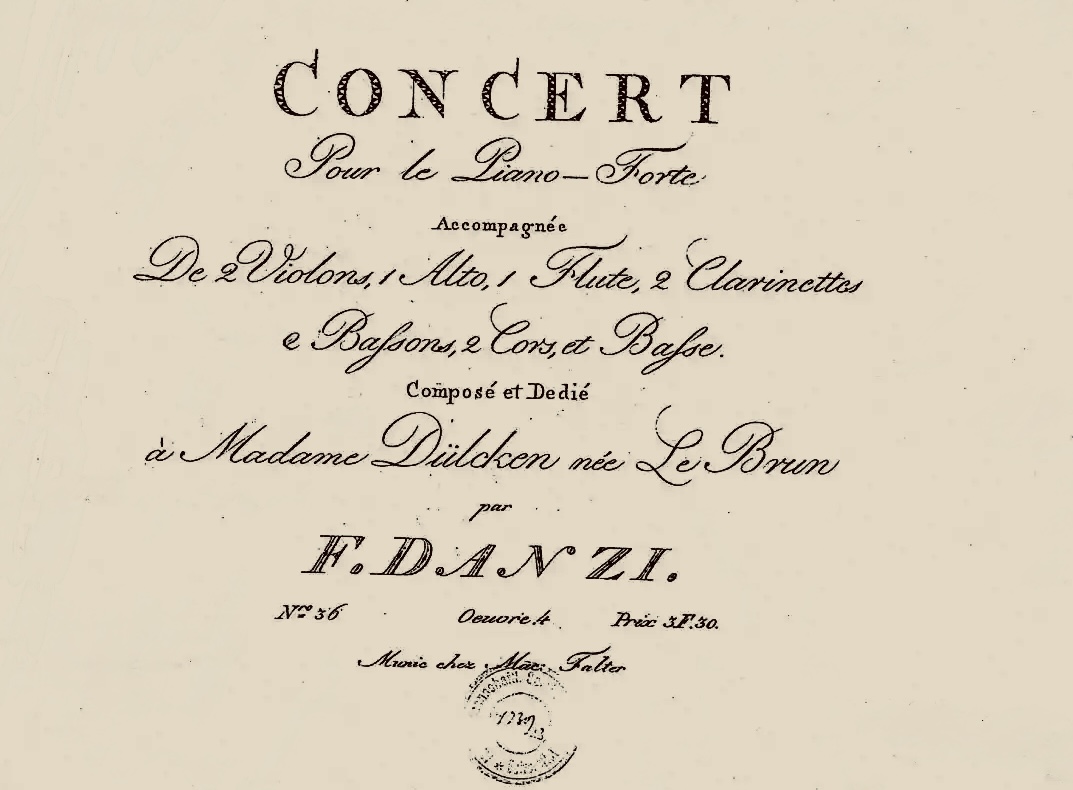
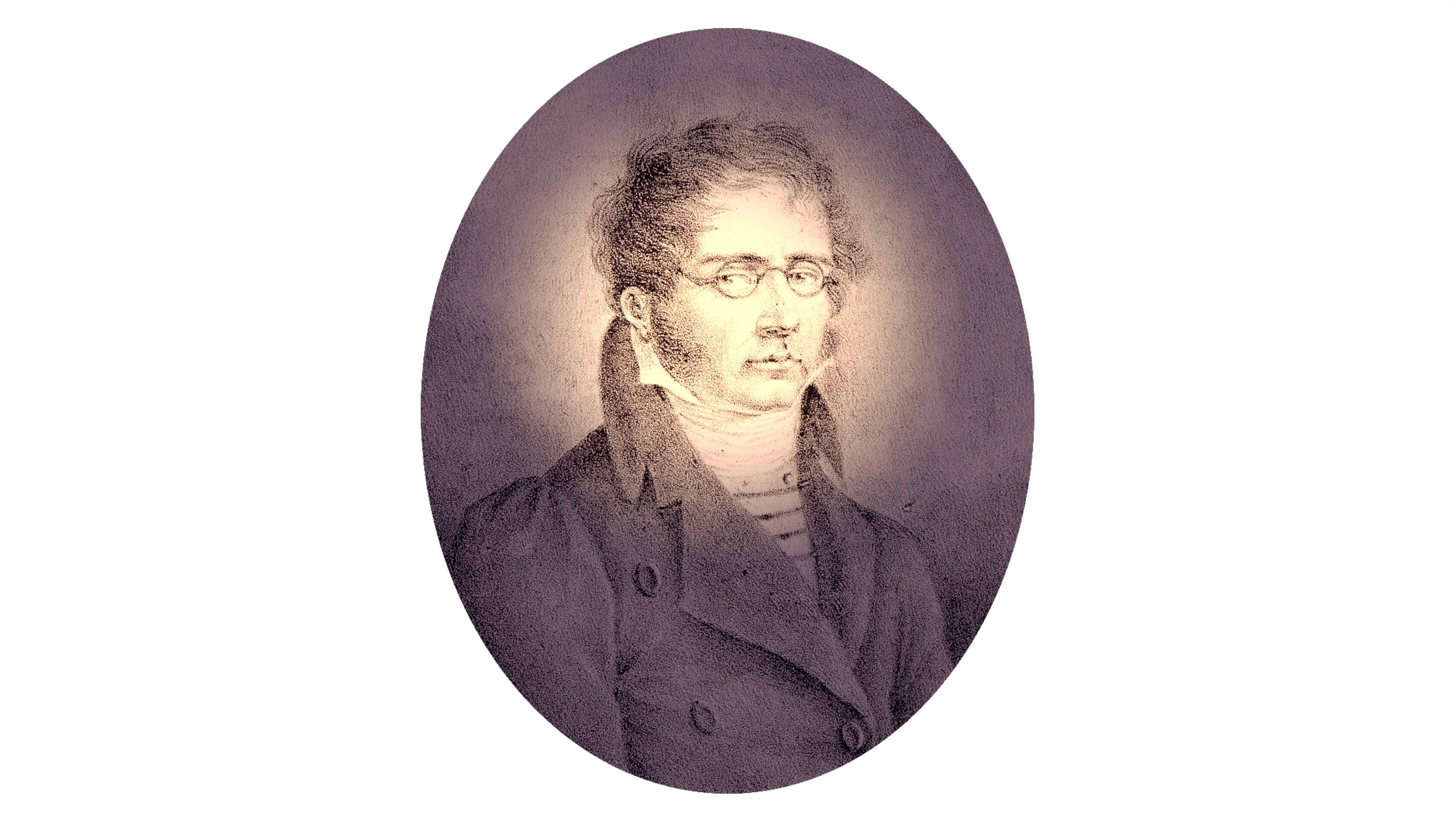
Franz Danzi - Composé et Dedié à Madame Dülcken née Le Brun
Concerto pour le Piano-Forte avec Accompagnement de 2 Violons, Alto, Basso, 2 Flutes, 2 Hautbois et 2 Cors, composé et dédié à Madame Sophie Dulcken née Lebrun par son Oncle Franz Danzi. Oeuvre 4
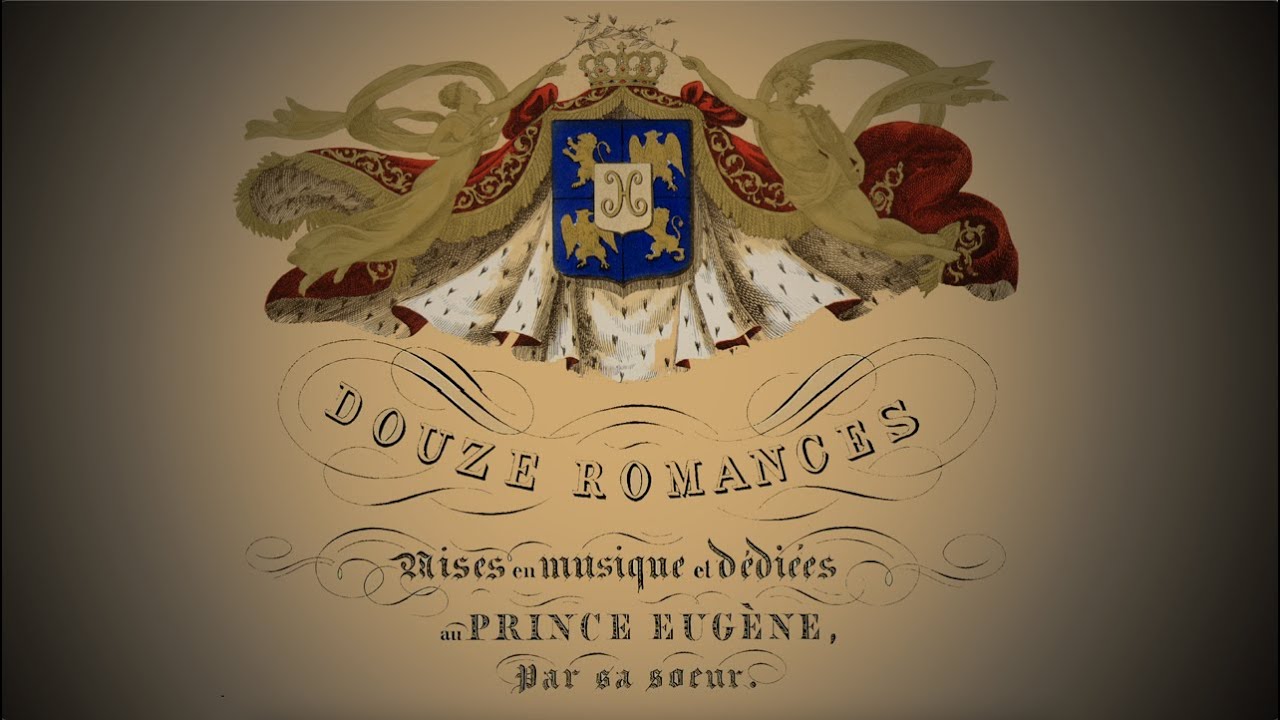
Click on the photo above to start the film.
KINDEREN uit huwelijk 27 December 1799 Jan Lodewijk (Louis)Dülken x Sophia Lebrun
1800 - Theobald Ludovicus, zoon van Jan Lodewijk (Louis) en Sophia
1801 - Philippus Henricus, zoon van Jan Lodewijk (Louis) en Sophia
1803 - Louise, dochter van Jan Lodewijk (Louis) en Sophia
Female piano prodigies:(with their ages at the time of their first public performance)
Louise Dulcken, married to Bohrer (1803–1857), aged 11
Leopoldine Blahetka (1809–1885), aged 8
Fanny Sallamon (1809–after 1839), aged 10
Antonie Oster (1811–1828), aged 10
Louise David, married to Dulcken (1811–1850), aged 10
Marie Moke, married to Pleyel (1811–1875), aged 8
Delphine Schauroth (1813–1887, aged 9
Josephine Seipelt (1816–1841), aged 9
Clara Wieck, married to Schumann (1819–1896), aged 10
Freia Hoffmann, Instrument und Körper, Frankfurt am Main, Leipzig 1991, chapter ‘Wunderkinder’, pp. 309–335; Ingrid Fuchs, ‘,Bewundrungswerthes Kind! deß Fertigkeit man preißt …’
Louise Dulcken, along with her sister Fanny, received piano lessons from their mother.
Their first public performance took place in Munich in 1814.
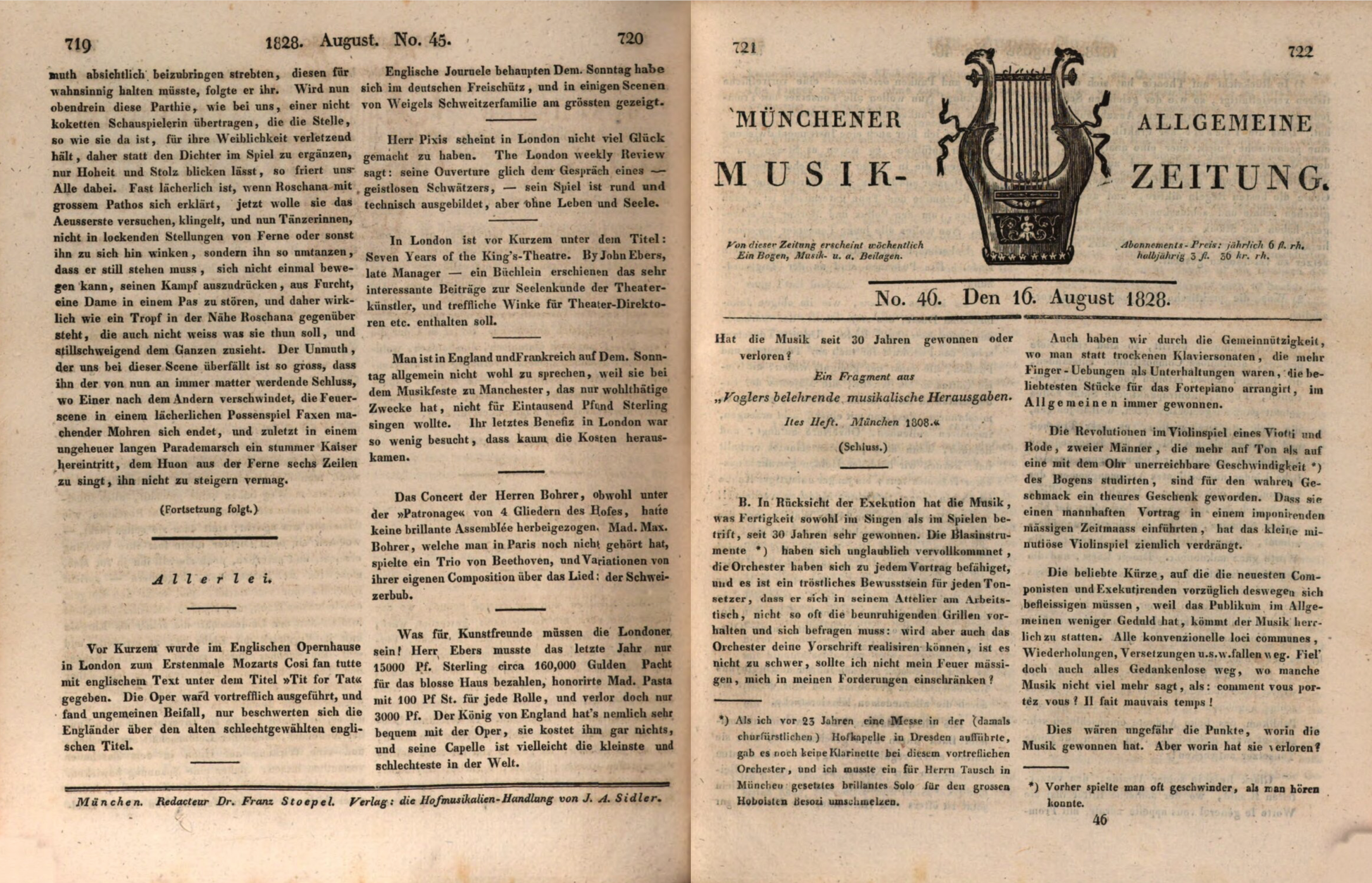
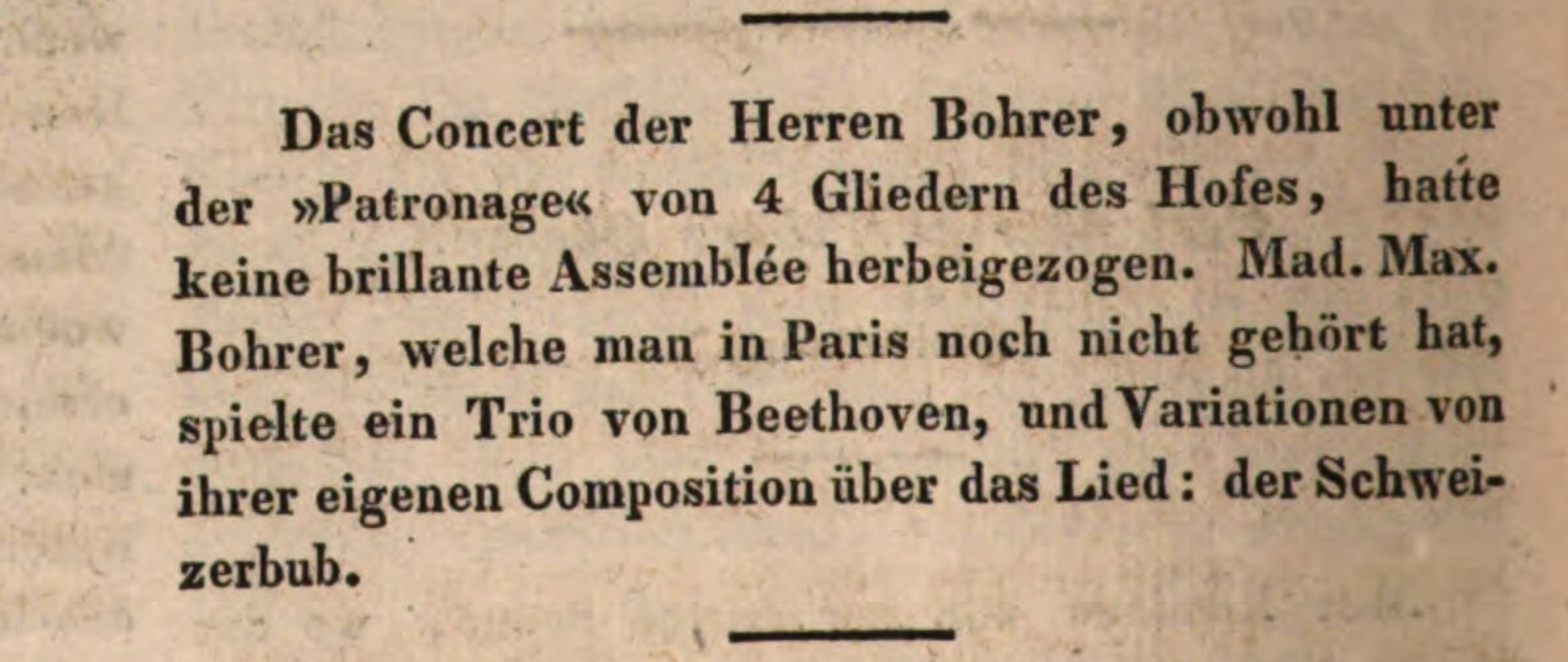
On July 20, 1824, she married the cellist Max Bohrer (1785–1867). Her sister Fanny married his brother, Anton, on the same day—July 20, 1824. In 1826, their son Carl Theodor was born. In 1827, both couples moved to Paris, where they gave concerts together. In August 1828, the *Münchener Allgemeine Musik-Zeitung* reported on a concert in Paris: "Madame Max Bohrer, who had not yet been heard in Paris, played a trio by Beethoven and variations of her own composition on the song 'Der Schweizerbub'" (*Münchener aMZ* 1828, col. 720).
During these joint concerts—which featured works by Beethoven, Mozart, and Haydn—Louise Bohrer also performed solo pieces, such as works by Henri Herz. Displaced by the July Revolution of 1830, the Bohrers left Paris, moving first to London and subsequently to Stuttgart.
From around 1831, Louise Bohrer served as a court pianist and as a piano teacher to the princesses in Stuttgart.
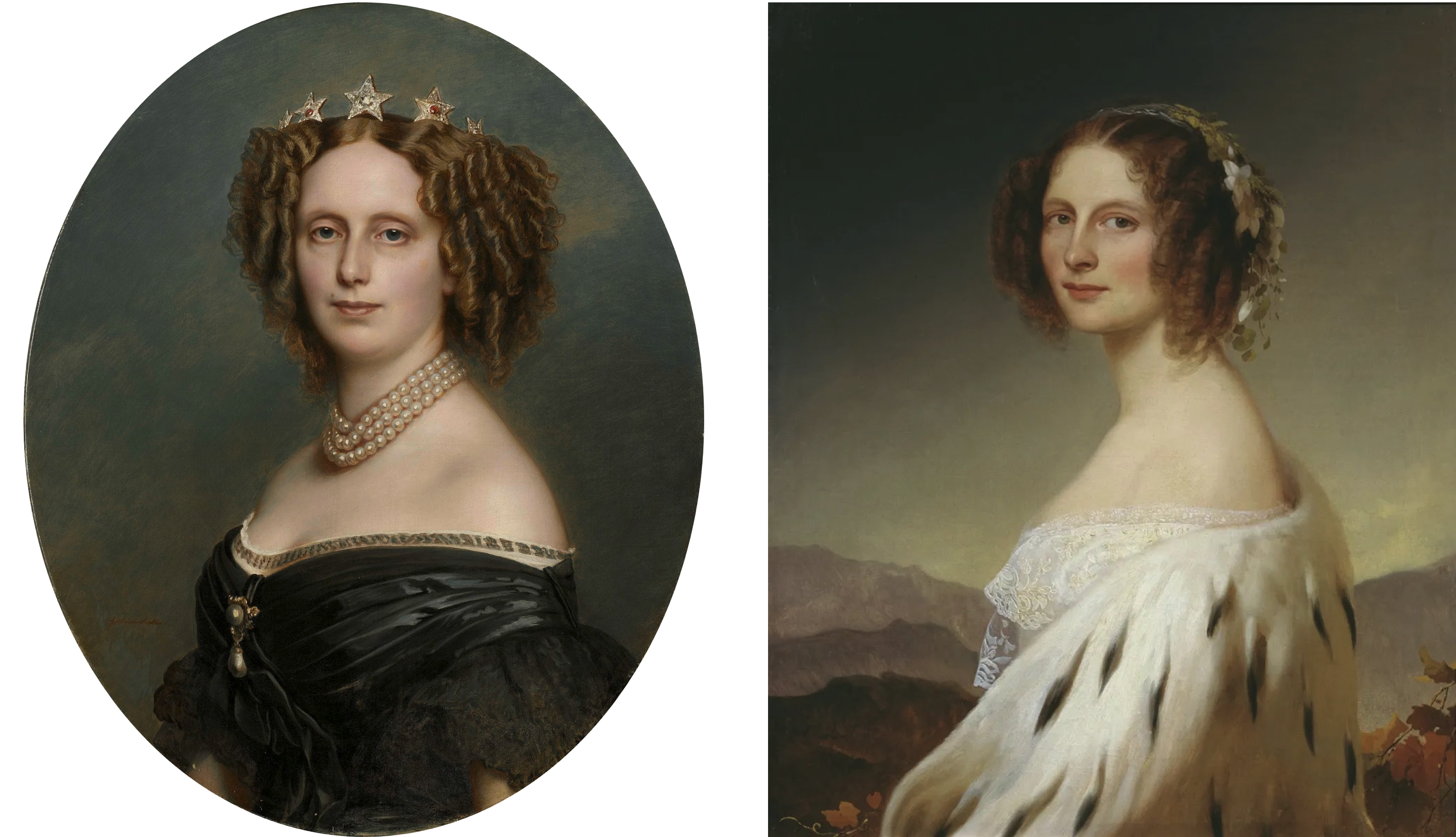
Prinzessin Sophie Friederike Mathilde von Württemberg & Prinzessin Marie Friederike Charlotte von Württemberg
Sophie Friederike Mathilde Princess of Württemberg (born 17 June 1818 in Stuttgart; died 3 June 1877 in Huis ten Bosch) was Queen of the Netherlands from 1849 to 1877 as the first wife of King William III of the Netherlands. Prinzessin Sophie Friederike Mathilde von Württemberg (1818–1877) was the first wife of King William III of the Netherlands and the Queen consort of the Netherlands and Grand Duchess consort of Luxembourg from 1849 until her death in 1877. Born in Stuttgart on June 17, 1818, she was the daughter of King William I of Württemberg and Grand Duchess Catherine Pavlovna of Russia. This made her a first cousin to her future husband, King William III, as her mother was the sister of his mother, Anna Pavlovna of Russia. Sophie married William, then the Prince of Orange, on June 18, 1839. The marriage was challenging, marked by personality clashes and differing views, but she was widely known as an intellectual, a collector, and a devoted mother. She was also a prominent figure in Dutch society, known for her strong will and engagement in various social causes.
See the births of Wilhelm Maria Friederich & Sophie Marie Johanne Together with her husband and his brother Anton Bohrer, Louise Bohrer gave concerts in Stuttgart in 1833 and 1834. In September 1835, their son Wilhelm Maria Friedrich was born, followed by their daughter Sophie Marie Johanne in 1837. In 1842/43, Max Bohrer undertook a concert tour to America. It cannot be determined whether Louise Bohrer accompanied her husband.
Louise Dulcken and her sister Fanny received piano lessons from their mother. Their first public performance took place in Munich in 1814.
On 20 July 1824, she married cellist Max Bohrer (1785-1867). Her sister Fanny married his brother Anton on 20 July 1824.
In 1827, both couples moved to Paris, where they gave concerts together.
In August 1828, the Münchener Allgemeine Musik-Zeitung wrote about a concert in Paris: “Mad. Max. Bohrer, who had not yet been heard in Paris, played a trio by Beethoven and variations on her own composition on the song: der Schweizerbub”. (Münchener aMZ 1828, Sp. 720).
During the joint concerts, at which works by Beethoven, Mozart and Haydn were played, Louise Bohrer also performed solo pieces, for example works by Henri Herz. Driven out by the July Revolution in 1830, the Bohrers left Paris and moved first to London and then to Stuttgart.
From around 1831, Louise Bohrer was court pianist and teacher to the princesses in Stuttgart.
See the births of Wilhelm Maria Friederich & Sophie Marie Johanne
Together with her husband and his brother Anton Bohrer, Louise Bohrer gave concerts in Stuttgart in 1833 and 1834. In September 1835, their son Wilhelm Maria Friedrich was born, followed by their daughter Sophie Marie Johanne in 1837.
In 1842/43, Max Bohrer undertook a concert tour of America. It is not known whether Louise Bohrer accompanied her husband.
1805 - Franzisca Magdalena , dochter van Jan Lodewijk (Louis) en Sophia Francisca (Fanny) kreeg, net als haar zus Louise, les van haar moeder. In 1824 trouwde ze met de violist Joseph Anton Bohrer (1783-1863) en verhuisde in 1827 met hem, haar zus en diens man Max naar Parijs.
Over haar concertactiviteiten kunnen geen betrouwbare uitspraken worden gedaan.
In de “Allgemeine musikalische Zeitung” worden vaak concerten van “Mad. Bohrer” vermeld, maar een eenduidige toewijzing aan Fanny Bohrer is niet mogelijk. Volgens Schilling stond ze “als praktisch pianiste vrijwel op gelijke voet” met haar zus, waardoor kan worden aangenomen dat ze net als haar zus samen met haar man optrad en in een trio of mogelijk ook in een kwartet met Max en Louise Bohrer speelde.
Ze is de moeder van Sophie Bohrer.
Like her sister Louise, Francisca (Fanny) was taught by her mother. In 1824, she married the violinist Joseph Anton Bohrer (1783–1863) and moved with him, her sister and her sister's husband Max to Paris in 1827. No reliable statements can be made about her concert activities, although the Allgemeine musikalische Zeitung frequently mentions concerts by “Mad. Bohrer”, although it is not possible to clearly identify these as Fanny Bohrer. According to Schilling, she was “probably quite equal to her sister as a practical pianist,” so it can be assumed that, like her sister, she performed with her husband and played in a trio or possibly also in a quartet with Max and Louise Bohrer.
She is the mother of Sophie Bohrer.
1807 - Violanda Dulcken, dochter van Jan Lodewijk (Louis) en Sophia
1808 - Juliana Johanna , dochter van Jan Lodewijk (Louis) en Sophia
1813 - Alexander, zoon van Jan Lodewijk (Louis) en Sophia
1817 - Carolina Charlotte, dochter van Jan Lodewijk (Louis) en Sophia
Met dank aan Sándor Krause en Ivo de Bruin
His Work
Throughout his long career, Dulcken evolved by constantly experimenting with new improvements. His work reveals the influence of various traditions. From his father and grandfather, he learned how to optimize the construction of his instruments. His method of securing the soundboard, for instance, is a technique he brought with him from his family background. Similarly, his practice of gluing the sides of the instrument’s case to the bottom—a step performed before proceeding with the rest of the fortepiano’s construction—is a tradition he carried over from the Hasselt/Antwerp school. The specific thicknesses he chose for various components also reflect the influence of his father and grandfather. Furthermore, he was influenced by the Augsburg-based piano maker Andreas Stein, as well as other instrument builders from Southern Germany. Music experts of the time regarded Louis Dulcken as the most successful piano maker in Munich. His instruments were highly praised for their quality; they were noted for having a "pure, resonant tone," maintaining a "stable tuning," and—thanks to a cleverly integrated mechanism—being capable of imitating the sounds of a bassoon, harp, or harmonica. Characterized by an "elegant and tasteful construction," his instruments were widely respected and sought after. In short, Dulcken was a genius in his approach to craftsmanship, capable of eliciting sounds from his instruments that left listeners spellbound. His pianos also garnered formal recognition: he was awarded a medal for his exceptional fortepianos at a major exhibition in Munich in both 1819 and 1820. His father, Johannes Lodewijk Sr., lived long enough to witness his son’s success. Louis Dulcken signed his later instruments—those built after 1820—as "Louis Dulcken et fils," "Louis Dulcken et fils in Münich," or "Louis Dulcken und Sohn in München." On June 25, 1831, Dulcken stepped down from his position as royal keyboard instrument maker; he passed away five years later. In his will, Dulcken named his heirs: his wife, Sophie Lebrun (born in London, June 20, 1781; died in Munich, July 23, 1863); his sons, Theobald and Heinrich; his married daughters, Louise and Franziska Bohrer; and his daughters who were unmarried at the time—Violande, Johanna, and Caroline Dulcken. Theobald, serving as business manager, and Heinrich, as the instrument maker, evidently fulfilled their father’s obligations following his death, but they soon closed the shop. Both sons eventually moved to London, where Theobald became a wool merchant and Heinrich an organist. Louise and Franziska were married to the brothers Max and Anton Bohrer; Louise became a court pianist in Stuttgart, while Violande became a concert singer in Munich.
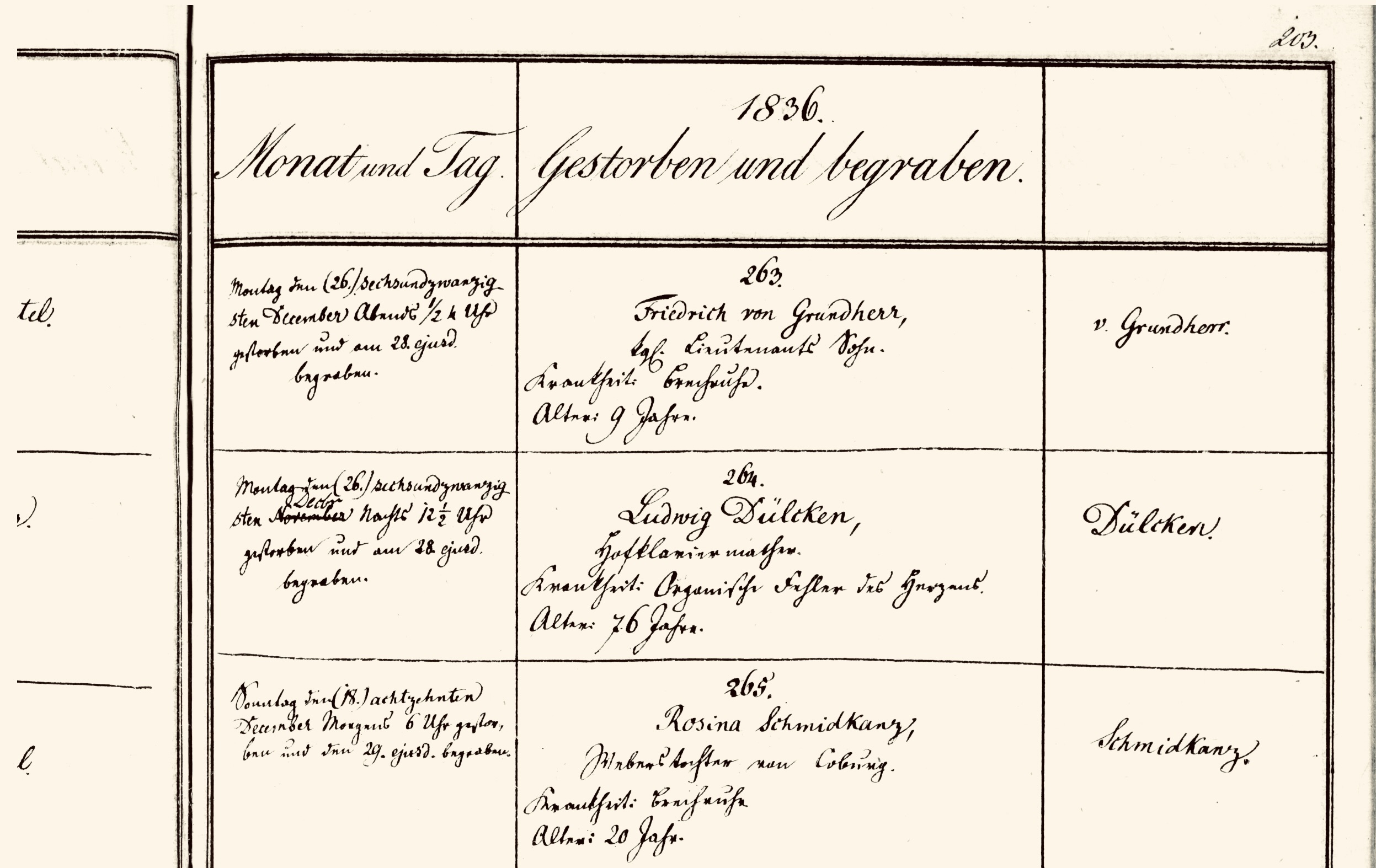
Ludwig Dülcken, Hofklaviermacher. Krankheit: Organische Fehler des Herzens. Alter: 76 Jahre.
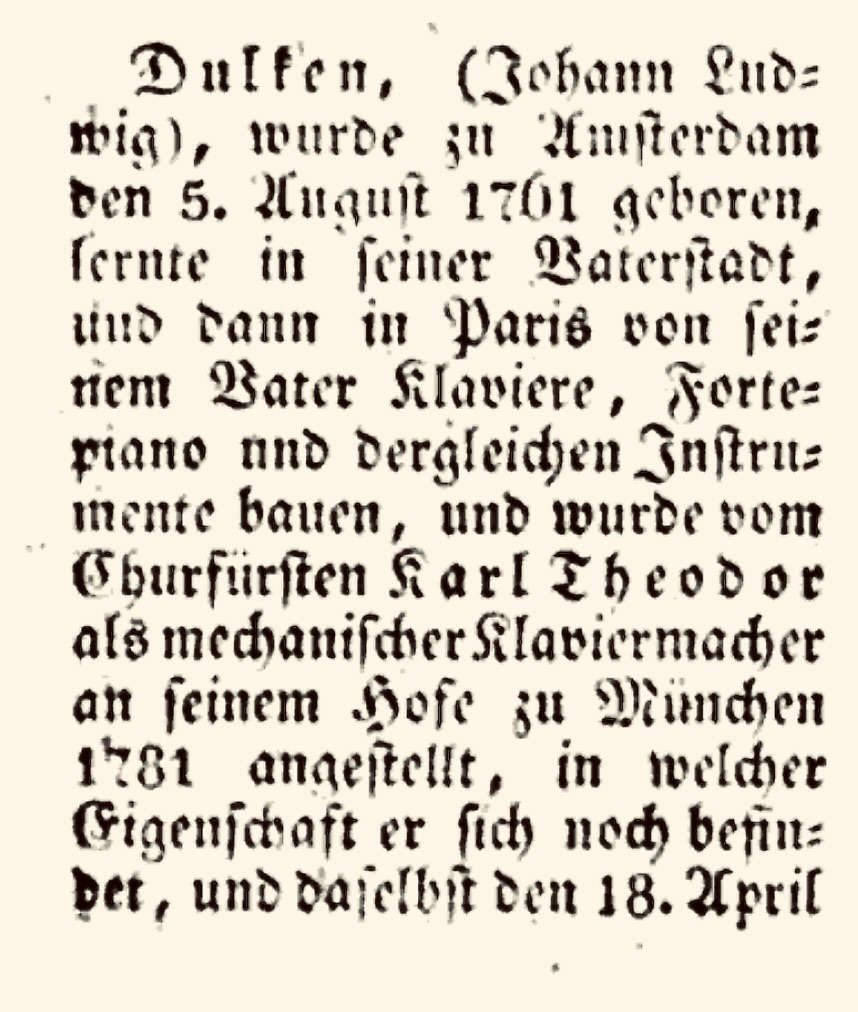
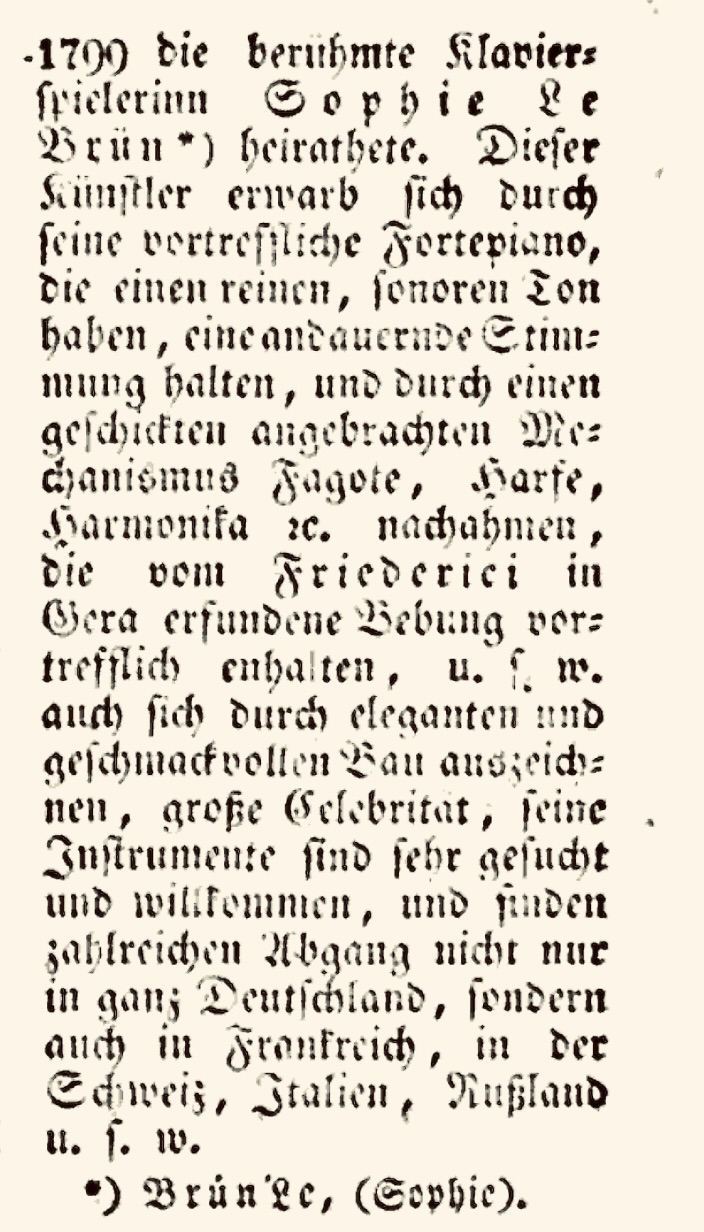
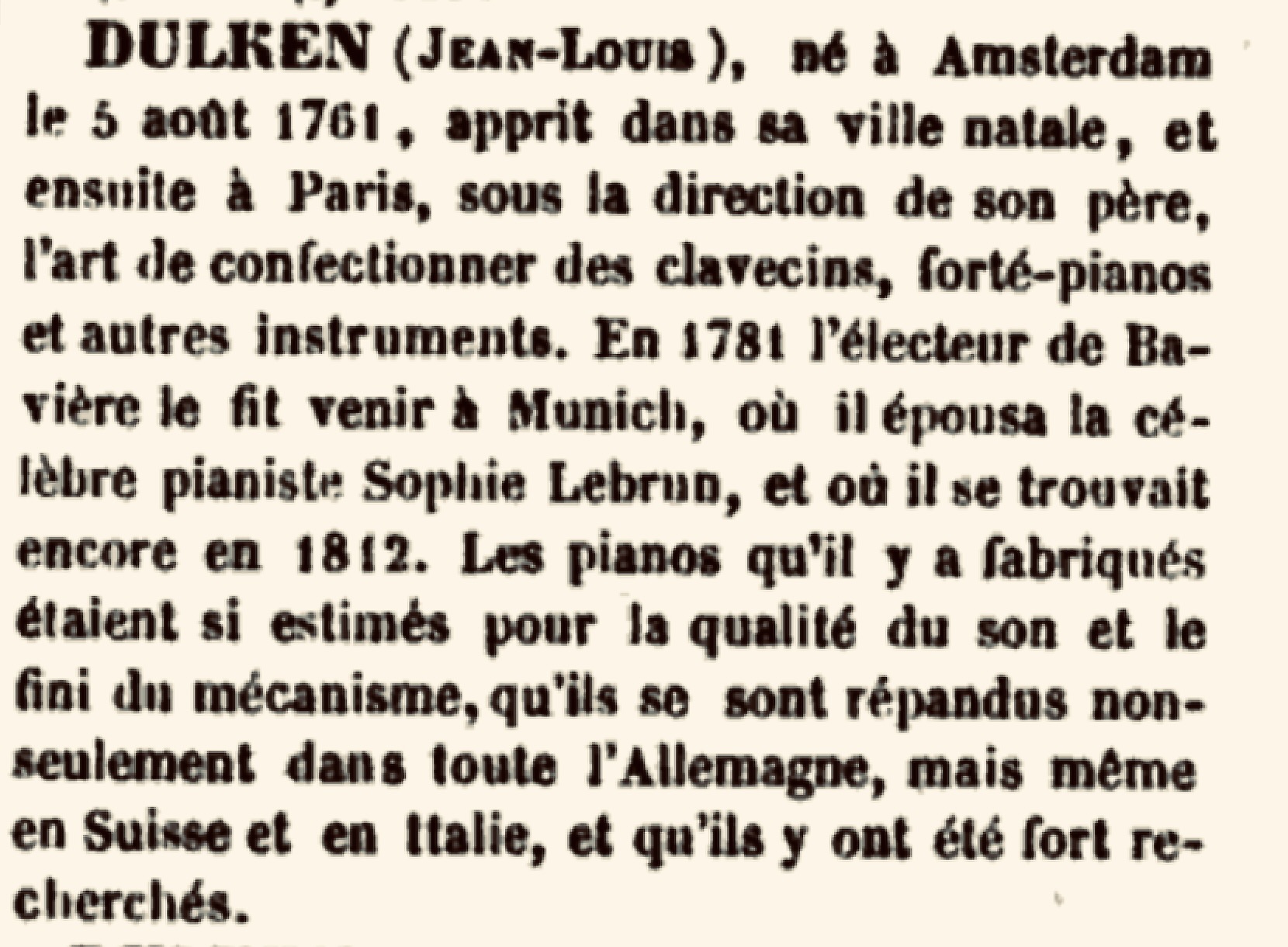
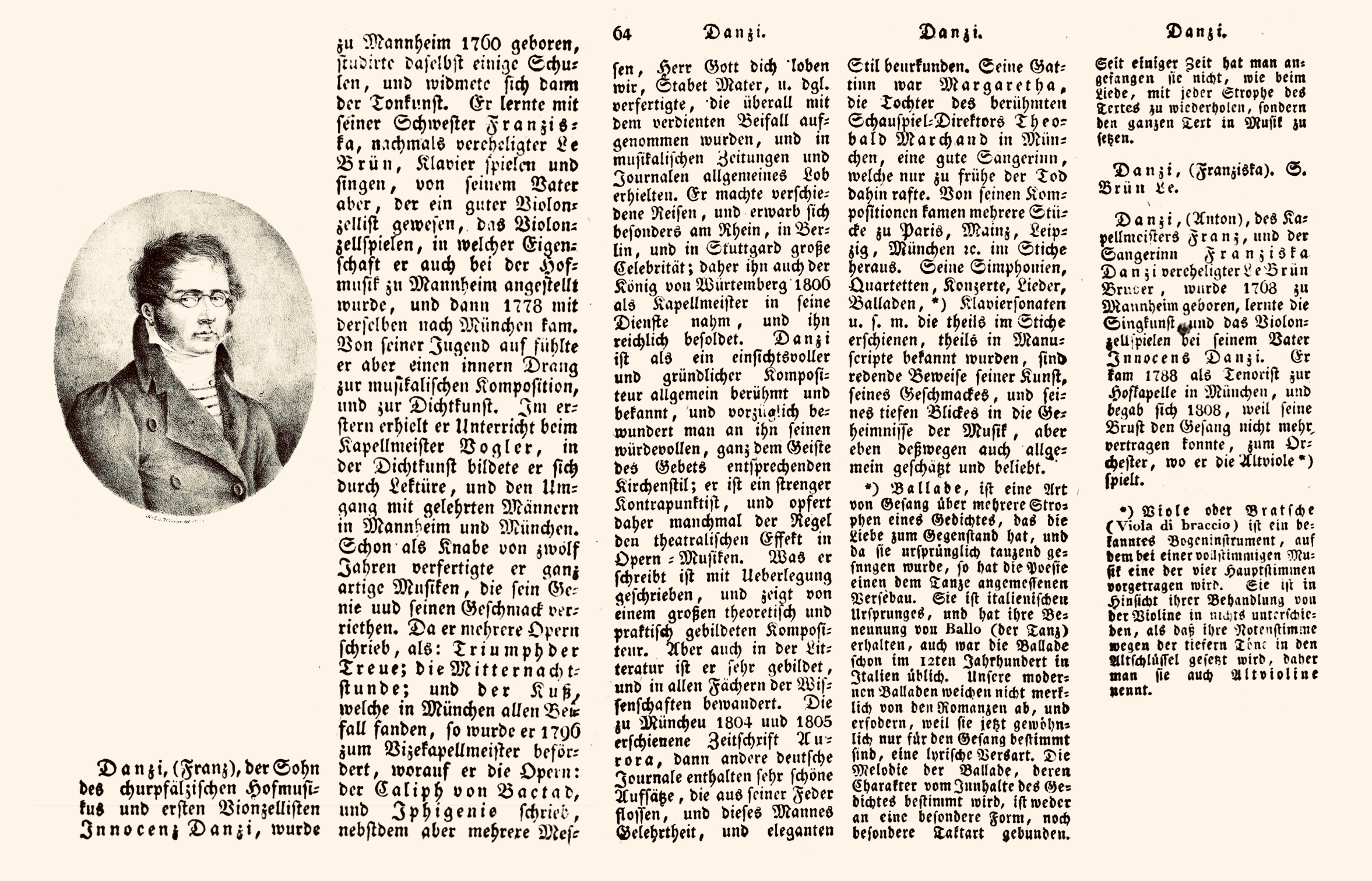
"Dulken, (Johann Ludwig), wurde zu Amsterdam den 5. August 1761 geboren, lernte in seiner Vaterstadt, und dann in Paris von seinem Vater Klaviere, Fortepiano und dergleichen Instrumente bauen, und wurde vom Churfürsten Karl Theodor als mechanischer Klaviermacher an seinem Hofe zu München 1781 angestellt, in welcher Eigenschaft er sich noch befindet, und daselbst den 18. April 1799 die berühmte Klavierspielerinn Sophie Le Brün heirathete. Dieser Künstler erwarb sich durch seine vortreffliche Fortepiano, die einen reinen, sonoren Ton haben, eine andauernde Stimmung halten, und durch einen geschickten angebrachten Mechanismus Fagote, Harfe, Harmonika etc. nachahmen, die vom Friederici in Gera erfundene Bebung vortrefflich enhalten, u. s. w. auch sich durch eleganten und geschmackvollen Bau auszeichnen, große Celebrität, seine Instrumente sind sehr gesucht und willkommen, und finden zahlreichen Abgang nicht nur in ganz Deutschland, sondern auch in Frankreich, in der Schweiz, Italien, Rußland u. s. w." Baierisches Musik-Lexikon, 1811, p. 70
Ludwig Dülcken, Court Piano Maker. Cause of death: Organic heart disease. Age: 76 years.
"Dülcken (Johann Ludwig) was born in Amsterdam on August 5, 1761. He learned the craft of building harpsichords, fortepianos, and similar instruments in his native city and subsequently in Paris under his father. In 1781, he was appointed by Elector Karl Theodor as a mechanical piano maker at his court in Munich—a position he still holds. On April 18, 1799, in that same city, he married the renowned pianist Sophie Le Brün. This artist earned great renown for his excellent fortepianos, which are distinguished by their pure, sonorous tone and their ability to maintain stable tuning. Through a skillfully integrated mechanism, they can imitate the sounds of a bassoon, harp, harmonica, etc., and they incorporate—to great effect—the *Bebung* (vibrato/tremolo effect) originally invented by Friederici of Gera. Furthermore, the instruments are noted for their elegant and tasteful construction. They are highly sought after and well-received, finding a ready market not only throughout Germany but also in France, Switzerland, Italy, Russia, and beyond." *Baierisches Musik-Lexikon* [Bavarian Music Lexicon], 1811, p. 70